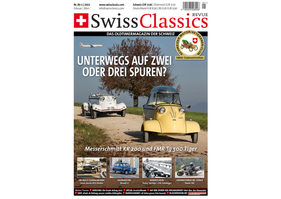

The brand-new SwissClassics Revue 89-1/22 is already in our subscribers' mailboxes and, as always, can of course also be purchased at newsstands or on order. The cabin scooter, once aimed at a down-to-earth clientele, now stands out from the crowd. The unique Lancia Aurelia, on the other hand, has always been reserved for the well-heeled. You can also read about what to consider when buying a Renault 4 and looking for spare parts, the weaknesses of the super-powerful Honda CBX and how two Langenthal racing drivers shaped European motorsport.
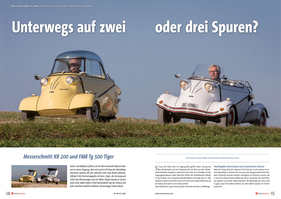
Economical compact cabin and sharp small caliber
After the Second World War, there was a lack of intact infrastructure and liquid funds in large parts of Europe. During this difficult period of reconstruction, Fritz Fend designed a vehicle that would mobilize the masses again through the economical use of resources. The cabin scooter was born and was very popular, not only in Germany. Constant modifications kept pace with the economic miracle, and in 1957 a four-legged, sorry, four-wheeled sports version even appeared. We went in search of traces.
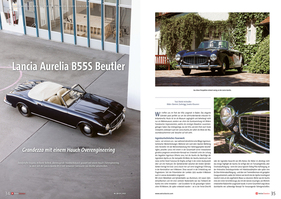
The grace from Turin and Thun
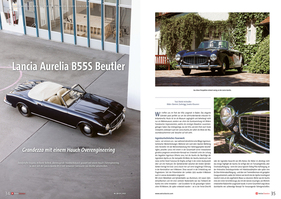
Lancia is rightly regarded as a manufacturer of sophisticated and technically as well as aesthetically superior automobiles. With the Lambda model 100 years ago, many pioneering innovations were brought onto the road and introduced into vehicle construction. Around three decades later, the Turin-based company launched the Aurelia, which was clothed by the factory as well as by well-known coachbuilders. The Thun-based company Beutler also produced a neat hood, which perfectly emphasized the harmonious and noble character of the car. Read the story of this very special pleasure vehicle...
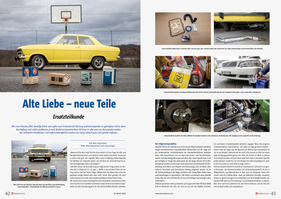
The thing with the parts
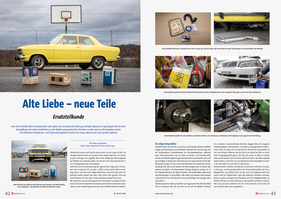
With all classic cars, parts have to be replaced over the decades, there's simply no getting around it. The search for suitable components differs from model to model, and the supply of parts also plays an important role when buying or selling a classic car. This special explains what you should and shouldn't do when looking for suitable components.
Old love that rusts
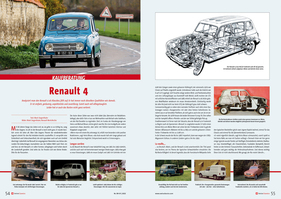
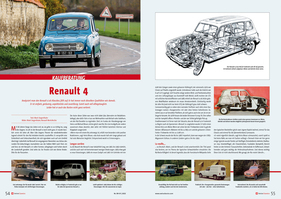
Pragmatic, affordable, likeable - the Renault 4 symbolizes carefree "savoir vivre" like almost no other car and shows, even more than 60 years after its premiere, that happiness doesn't require much more than a reliable friend and helper. The compact French car is only more popular with rust than with people, which it has nothing to oppose. We explain what you should bear in mind when buying a "Quatrelle".
Raw power and weak bones
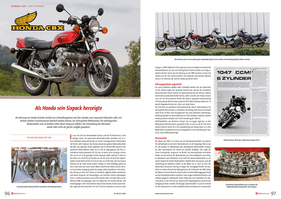
Honda didn't do things by halves in the mid-sixties. The racing motorcycles were powered by large four-stroke engines with up to eight gears and won many a victory. However, when the world championship regulations changed in 1968 to the disadvantage of the world's largest motorcycle manufacturer at the time, Kawasaki, Yamaha, Suzuki and Co. were increasingly left behind on the public roads. The comeback was supposed to succeed with a drumbeat of an engine, a six-cylinder with just as many carburetors and 24 valves. Unfortunately, the remaining components of the supersport bike were of rather slender stature...
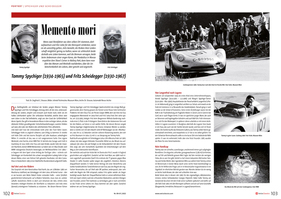
How two Langenthalers lived, raced and tragically crashed
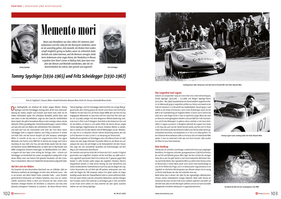
Tommy Spychiger and Fritz Scheidegger grew up in the same town, but under different circumstances. They also took different paths in motorsport, where they both became respected greats in their respective fields. Spychiger drove for Carlo Abarth and together with Herbert "Stumpen-Herbie" Müller, while Scheidegger was the first Swiss ever to win a world championship in sidecar racing. With the end of their careers in sight, they both died as racing drivers. We remember two forgotten greats of Swiss motorsport.
Would you like to order one or more issues?
Click here for the current issue. To take out a subscription visit this page. You can download all previous issues here.