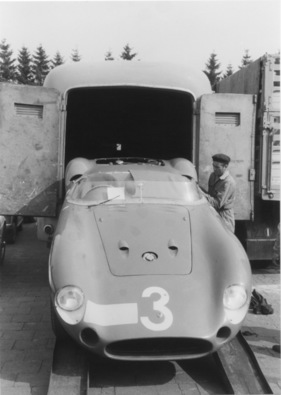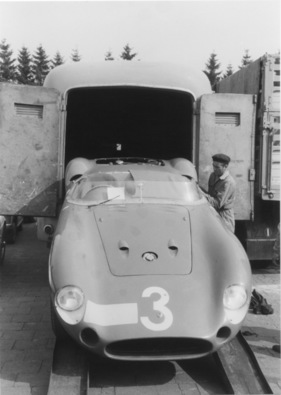




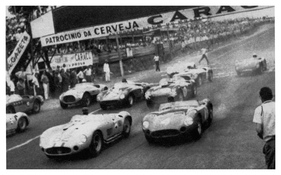
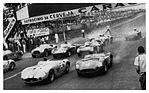
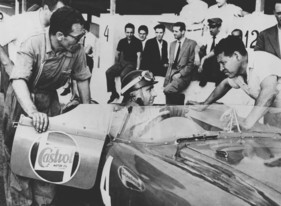

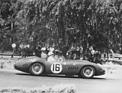
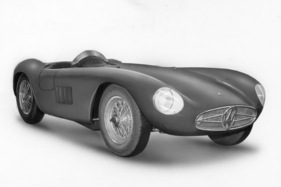
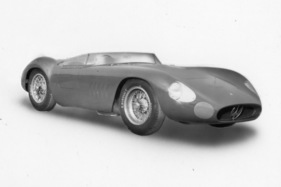
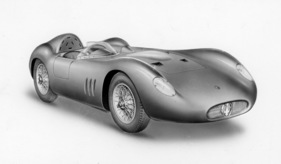
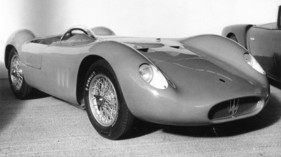
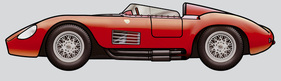
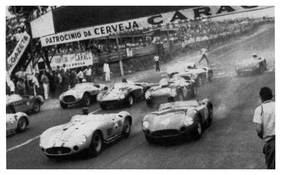
On November 6, 1955, the Maserati Tipo 300S with Juan Manuel Fangio at the wheel was the first to cross the finish line at the Venezuelan GP, heralding the beginning of two years of great successes that boosted the reputation of the Trident at international level.
Today, Maserati is commemorating this important victory to underline its strong links with the world of motorsport. Because Maserati was born on the racetrack, endowed with a unique racing DNA based on the audacity of the Maserati brothers and the bravura of the drivers. On the roads and racetracks of the world, the Trident became the epitome of Italian excellence with its victories.
Racing has always been the natural breeding ground for Maserati. The legend of the brand was born in competition, and even now, with the new era, the brand continues to draw on its roots. With the new MC20 super sports car, Maserati is returning to the world of racing.
The Maserati Tipo 300S
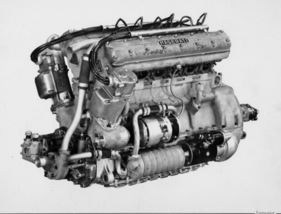
The Tipo 300S was created in 1955 as a further development of the A6GCS/53 and was Maserati's flagship in international motor racing until 1959. As early as 1954, with the development of the 250S prototype, which was initially equipped with a 230 hp 2.5-liter engine, the Maserati technical team began to increase the displacement and power. The result was a 6-cylinder in-line engine with 3.0 liters of displacement, more powerful and performing than its predecessor, but with less mechanical stress thanks to the lower compression ratio and a relatively low engine speed, despite the higher piston speed.
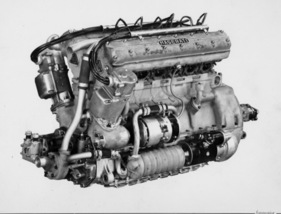
The rest of the engine architecture corresponded to that of the 2.5-liter inline six-cylinder engine, including two overhead camshafts and dual ignition. The design concepts of the F1 had been transferred to a GT sports car, and the same mechanics were to be adopted for series production in the future.
From a technical point of view, the 300S was a masterpiece. The seats of the large valves and the recesses for the two spark plugs for the dual ignition were clearly visible in the engine's hemispherical combustion chamber. The front suspensions consisted of double wishbones and a coil spring with a coaxial telescopic shock absorber. Finally, the brake drum was a real masterpiece: the light metal casting had radial ribs and holes for heat dissipation.
The chassis was also modified to respond to the higher loads resulting from the increased weight, with a frame made of oval and round tubular parts.
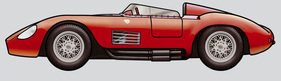
The exterior, with sleek bodywork by Fantuzzi, appeared solid yet attractively proportioned. The large air intake at the front bore the traditional trident framed by aluminum sections, and the driver's seat was protected by a small windscreen. Ribbed ventilation openings on the sides ensured that the air in the engine compartment did not stagnate. Two exhaust pipes ran along the bottom of the left-hand side of the car and ended near the rear wheel. Finally, the rear was somewhat bulkier because it housed the 150-liter fuel tank, the 20 kg side oil tank and the spare wheel.
In the mid-1950s, new insights into aerodynamics emerged, and so the body of the 300S underwent a series of improvements during its lifetime in order to increase efficiency.
Successful right from the start
The 300S showed its sporting qualities immediately after its debut in 1955, and its success on numerous race tracks was the reason for numerous orders from racing teams and gentlemen drivers. Giulio Alfieri introduced a series of experimental improvements to the car to make it ever more competitive, such as fuel injection. The car was very successful in Italian and international races and became the brand's best model for two seasons.
In 1955, the Tipo 300S won the Venezuelan GP with Juan Manuel Fangio at the wheel, but the year with the most triumphs was 1956, when it narrowly missed out on the World Sports Car Championship. The reliability of the engine and the perfect responsiveness of the chassis were the two main features that made the Tipo 300S so successful.
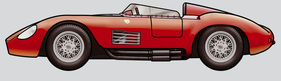
In 1956, Stirling Moss and Carlos Menditeguy won the 1000-kilometer race in Buenos Aires aboard their 300S. In the same year, Pietro Taruffi won the Targa Florio in the 2000 cc class. Finally, also in 1956, the car took a brilliant victory in the 1000-kilometer race at the Nürburgring, with Stirling Moss, Jean Behra, Pietro Taruffi and Harry Schell taking turns at the wheel.
The new, more powerful 450S was introduced in 1957, although the 300S remained in production until 1959.
From 1955 to 1959, a total of 27 Tipo 300S were built.