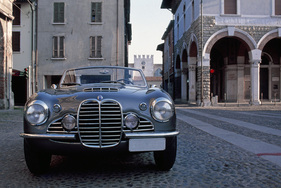
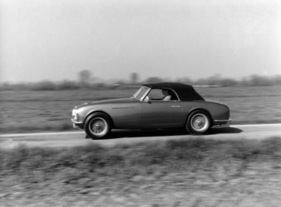
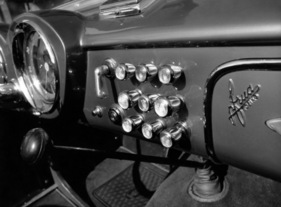
From 1947 to 1956, Maserati built the A6 series, which was named after Alfieri Maserati (hence the letter A), while the 6 stood for the engine type (inline six-cylinder). The first A6G 2000 was delivered exactly 70 years ago, in February 1951. The new model replaced the series-produced A6 1500 sports car. The name is made up of the Italian word for the engine block ("ghisa") made of cast iron ("G") and the displacement of 2,000 cc.
The Italians wanted sports cars
Italy's economic growth at the time led to an increasing demand on the domestic market for more powerful sports cars. In order to meet this development and exploit the full potential of the A6 chassis, Maserati decided to modify the engine of the A6GCS.
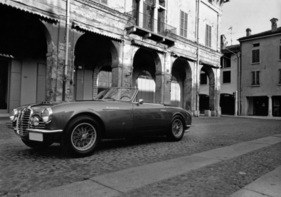
Precise engineering on the stroke and bore of the straight-six engine was required to increase the displacement compared to the previous A6 model. The revised engine then had a displacement of 1,954.3 cm3 with an output of 90 to 100 horsepower, depending on the final version. With a top speed of 180 km/h, Maserati impressively demonstrated the first-class, sporty temperament of its vehicles.
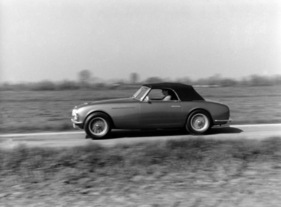
The A6G 2000 celebrated its glamorous premiere at the 1950 Turin Motor Show, where Maserati offered it in two versions: a 2-door, 4-seater coupé designed by Pininfarina and a convertible designed by Pietro Frua.
Between 1950 and 1951, 16 vehicles were produced: nine with the Pininfarina body and five convertibles and one coupé by Pietro Frua. Alfredo Vignale built another A6G 2000, a two-tone coupé to which he lent his distinctive, sporty character.
An icon even then
Rear-wheel drive, four-speed transmission plus reverse gear and single-disc dry clutch were part of the concept of the new A6G 2000, as were the individually suspended front wheels and the rear rigid axle with leaf springs. Hydraulic drum brakes on all wheels and solid steel or spoked wheels completed the carefully selected blend of craftsmanship and technical progress. All this made the A6G 2000, which was reserved for only a few, an icon of automotive engineering even then.
Uniqueness, sportiness and Italian engineering are the absolute focus at Maserati. A trait that has lost none of its charisma today and is consistently embodied in the new vehicles, in which the use of state-of-the-art technology will determine the course of the coming years. Innovative by nature: Maserati looks to its own future.