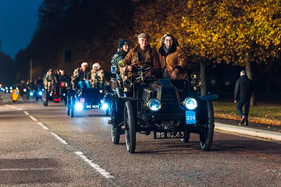
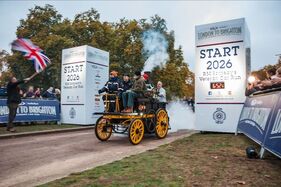
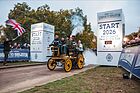


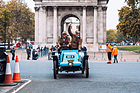


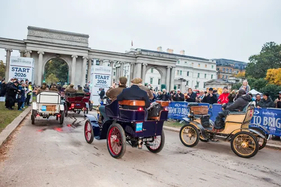
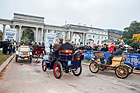


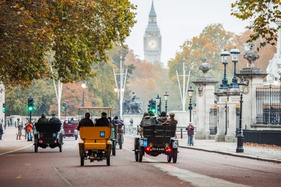
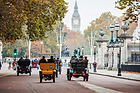
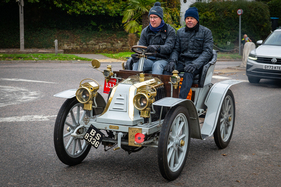
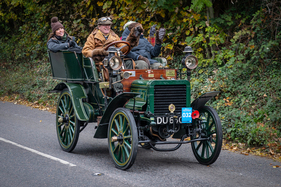
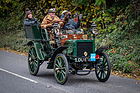


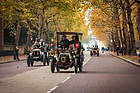
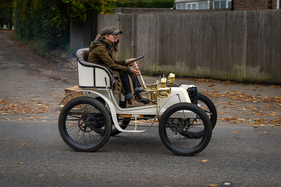
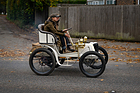


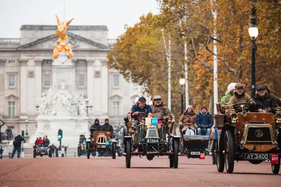

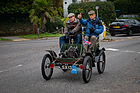
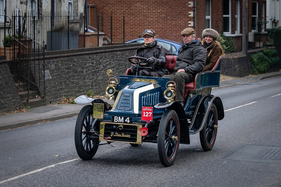
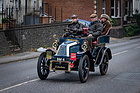


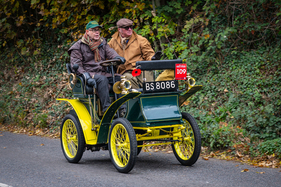


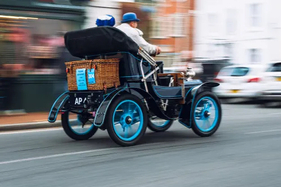
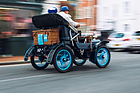


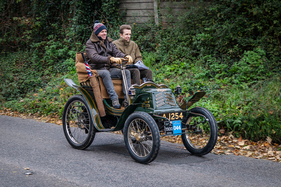
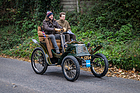


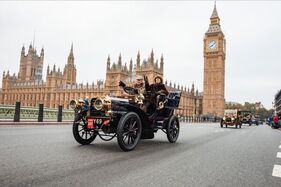
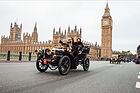
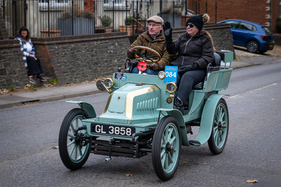
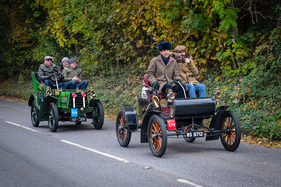
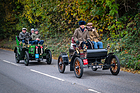
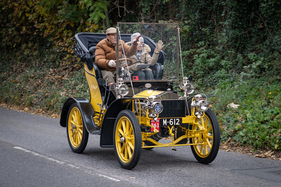
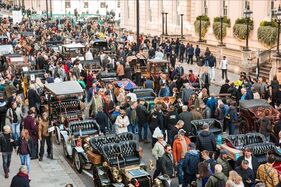
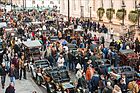
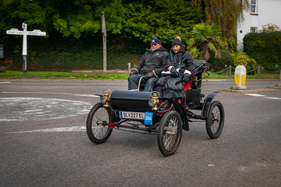

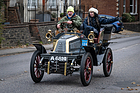
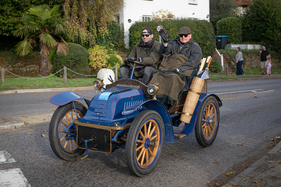
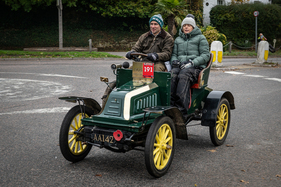
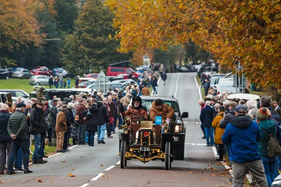


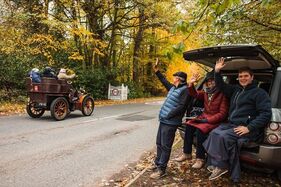
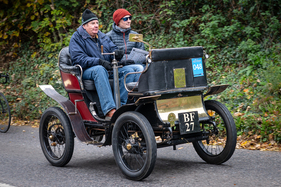
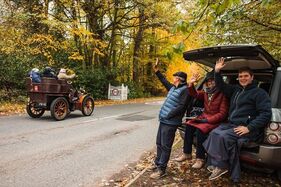

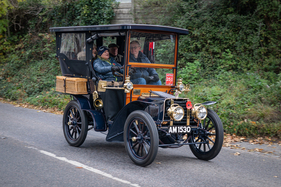
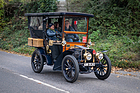
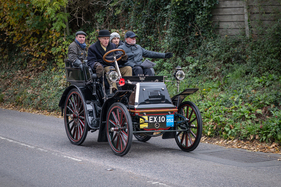
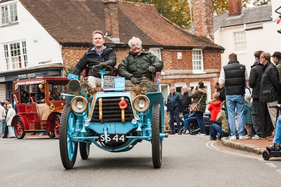
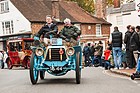
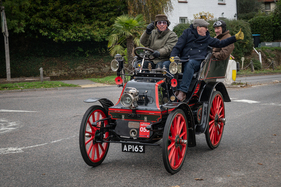
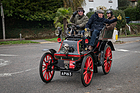
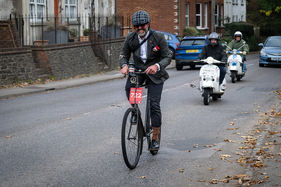
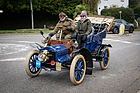
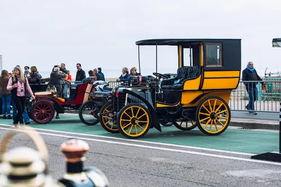
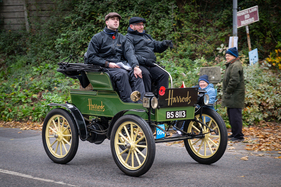
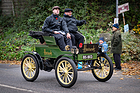




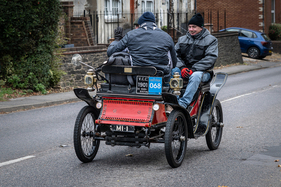
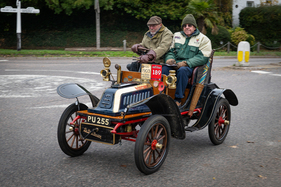
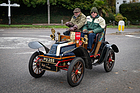
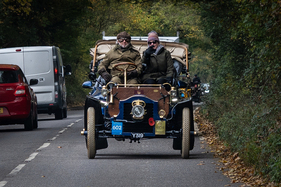
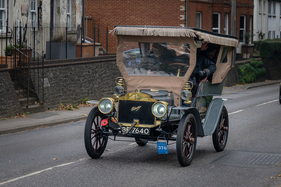
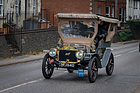
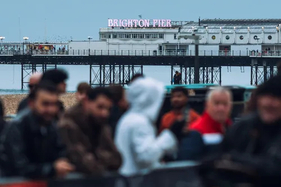
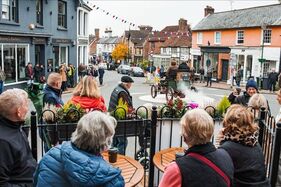
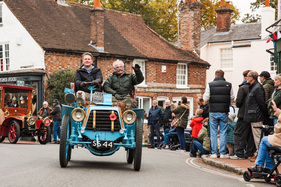
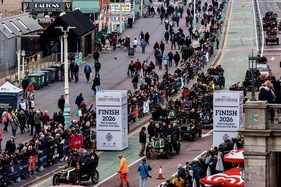
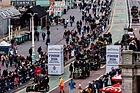
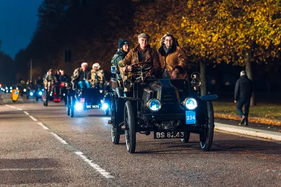
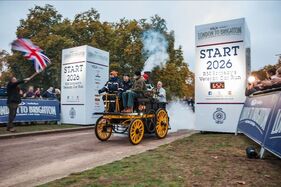
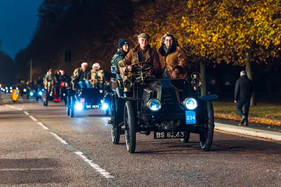
On Sunday morning, November 1, in a dark London that was surprisingly mild for autumn, nearly 400 vintage cars—all at least 121 years old—gathered in Hyde Park. Along with them came intrepid drivers, brave passengers, and a large crowd of enthusiastic spectators. Everyone was waiting for the first light of day—the starting signal for the “London to Brighton Veteran Car Run,” the world’s oldest continuously held motorsport event.
The so-called Emancipation Run took place 130 years ago, in 1896. It celebrated the recently passed “Locomotives on Highways Act.” This groundbreaking law raised the speed limit for “light locomotives” from 4 to 14 mph (about 6 to 23 km/h). It also abolished the requirement that a man carrying a red warning flag had to walk in front of every motor vehicle.
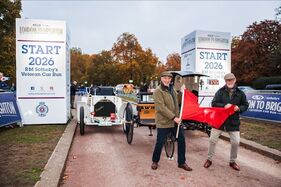
As a symbol of this newfound freedom for early automobiles, the legendary tribute began again this year with the symbolic tearing of the red flag. This year, the pre-sunrise ritual was performed by Marcus Breitschwerdt, Head of Mercedes-Benz Heritage, and Duncan Wiltshire, Chairman of the Royal Automobile Club. The club has been organizing the run since 1930.
Benz Anniversary at the Start
Breitschwerdt was bestowed this honor because the 2026 edition commemorated the 140th anniversary of the Benz Patent Motor Car. The revolutionary vehicle designed by Carl Benz, who filed the patent for it in Berlin in January 1886, is widely regarded as the world’s first mass-produced automobile. To celebrate the anniversary, a replica of the groundbreaking three-wheeler was on display at the ceremonial start.
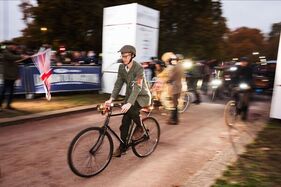
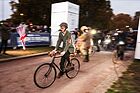
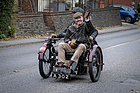
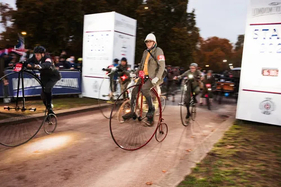
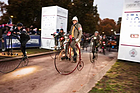
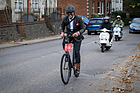
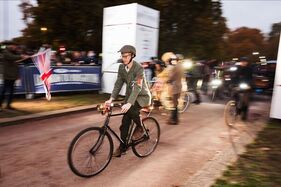
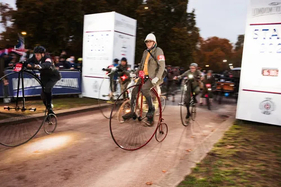
At first light, Wiltshire sent a field of motorized vehicles and bicycles on their way to Brighton. The high-wheel cyclists drew particular admiration on their ride to Madeira Drive along the Sussex coast. At exactly 6:53 a.m., the first group of “horseless carriages” from before 1905 crossed the starting line and headed toward Hyde Park Corner.
Age Over Speed
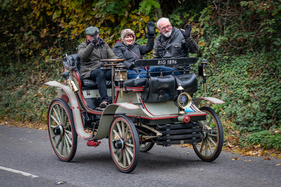
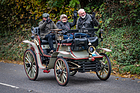
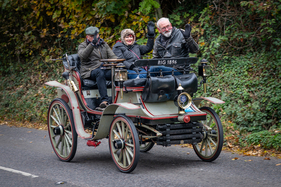
As always, the vehicles left Hyde Park in order of their age. The oldest started first and thus had the most time to reach Brighton. A total of 396 vehicles from the early days of the automobile were sent on the route—349 of them reached the Sussex coast.
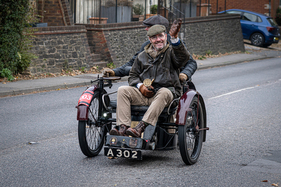
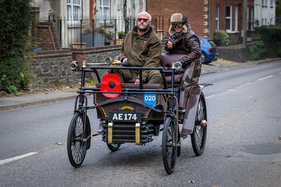
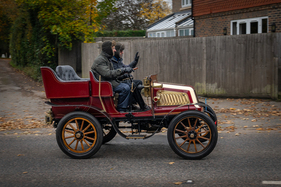
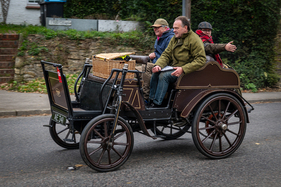
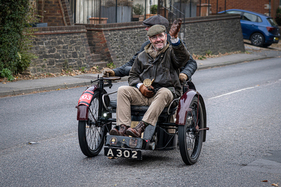
Among the early starters was the ever-popular Salvesen steam car—essentially a steam locomotive for the road—complete with a stoker shoveling coal into the firebox. Also present were several vintage motor tricycles, many of them with drivers and passengers in period attire.
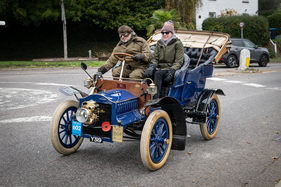
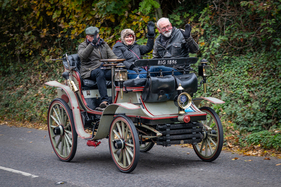
This was followed by an astonishing variety of technology from the very earliest era of automobile manufacturing. Steering was sometimes via a steering wheel, sometimes via a steering lever, or a ship-style steering wheel. The vehicles were powered by gasoline, steam, and even battery power. Most were open-top and, as expected, offered little in the way of comfort.
Through the Heart of London
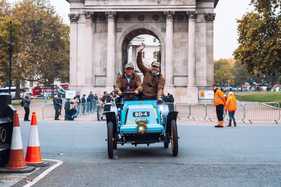
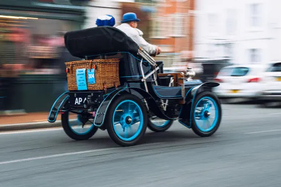
Led by the most venerable Victorian “light locomotives,” the procession chugged, puffed, and hissed through Wellington Arch and across Constitution Hill. It continued past Buckingham Palace, Admiralty Arch, and through Whitehall to Parliament Square. Under the watchful eye of Big Ben, the vehicles crossed Westminster Bridge.
There, the approximately 97-kilometer-long route split into two branches to better distribute traffic in southern London. One half followed the classic A23 through Kennington, Brixton, and Streatham Common. The other half took the Lambeth Bridge and drove through Vauxhall, Clapham Common, and Tooting.
North of Croydon, both routes rejoined on the A236. Together, the procession then tackled the inclines of the South Downs, all the way down to the beach promenade on Madeira Drive.
Old and Prominent
One of the most remarkable participants was the world’s oldest surviving Rolls-Royce. The day before, the Type A 10 hp had been named Best in Show at the well-attended St. James’s Concours on Pall Mall. The 1904 car once again shines in its original primrose yellow.
It is the fourth of only 17 cars ever built—the first three are lost to history. Prominent figures also took the wheel, including Pink Floyd drummer Nick Mason, TV personality Alan Titchmarsh, and Andy Green, the man behind record-breaking drives.
The diversity of powertrains reflects the pioneering spirit of the fledgling automotive industry. Back then, various technologies were vying to shape the coming century of automotive development.
More than a hundred years later, the global automotive industry faces a similar question when it comes to the mobility of the future. In keeping with this theme, several classic cars were driven this year using sustainable e-fuels provided by the official partner, Sustain.
First place: a Lacoste et Battmann
As it does every year, the run brought to life a time when automotive technology was still in its infancy. Thousands of spectators cheered on the vehicles along the entire route. Entries included models from Australia, Belgium, Germany, France, Hong Kong, Ireland, Italy, Canada, Monaco, the Netherlands, Austria, Portugal, Sweden, Switzerland, Slovakia, Spain, and the Czech Republic. Twenty-one participants alone traveled from the U.S.
More than 100 brands were represented, ranging from Ader, Albion, Argyll, and Aster to Warwick, Waverley, Winton, and Yale. Some of these—such as Cadillac, Ford, Renault, Peugeot, and Mercedes—are still familiar today. The vast majority, however, have long since disappeared into automotive history.
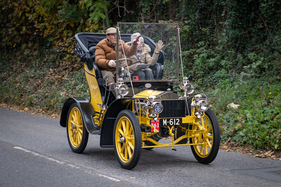
Most participants reached Brighton well before the 4:30 p.m. finish deadline. They were rewarded with the coveted finisher’s medal and a well-deserved hot toddy from The Macallan. The Run is not a race, but the first to reach the coast was German participant Wolfgang Kraemer in a 1903 Lacoste et Battmann. The French single-cylinder car took barely more than three hours to cover the route from the capital to the sea.
Belated Satisfaction for Andy Green
Andy Green—the world’s fastest driver—set another land speed record earlier this year with the hydrogen-powered JCB Hydromax, reaching over 400 mph (about 644 km/h). In Brighton, he was among the last to finish in a 1904 Stanley steam car. He was all the more delighted to reach Madeira Drive, as he had dropped out a year earlier.
“Last year, the boiler gave out in Brixton. The fact that we made it all the way to Brighton this time is definitely a success story—I’m very, very happy,” said Green. “The run itself was fantastic. The marshals did an excellent job, as always, and made the drive as easy as possible for us.
The spectators along the route were simply incredible. I don’t know of any other motorsport event in the world where thousands of people come out to the roadside in any weather, with big smiles on their faces, just to watch the cars go by. There’s nothing else like it.”
"One of the Best Runs"
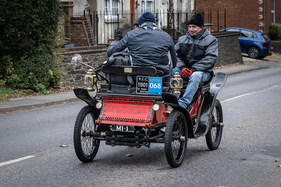
Duncan Wiltshire of the Royal Automobile Club arrived in Brighton behind the wheel of the Royal Automobile Club’s 1901 Mors, which bears the special license plate “RAC 1.” He, too, was thrilled by an event that many considered one of the best in recent years.
“That was an exemplary vintage car run and one of the very best I can remember,” said Wiltshire. “We had an outstanding field of participants, exceptionally favorable weather, and, above all, huge crowds of spectators along the entire route. Everyone I spoke with was thoroughly delighted.
After 130 years, it’s remarkable how vibrant this quintessentially British event has remained and how it continues to attract participants and spectators from all over the world. It is a significant part of Britain’s automotive heritage. For the Royal Automobile Club, it is a great privilege to preserve and promote this wonderful tradition for future generations.
My thanks go to everyone who set out on the journey in their cars and on their bicycles. I would especially like to thank our 350 volunteer marshals, whose dedication and enthusiasm make the Run such a special event. It was a magnificent celebration of the past, present, and future of the automobile."
The Veteran Car Run marked the culmination of the Royal Automobile Club’s London Motor Week, with its numerous events. The day before, the well-attended St. James’s Motoring Spectacle took place on Pall Mall, along with the record-breaking RM Sotheby’s London Sale. The next “London to Brighton Veteran Car Run” will take place on Sunday, November 7, 2027.