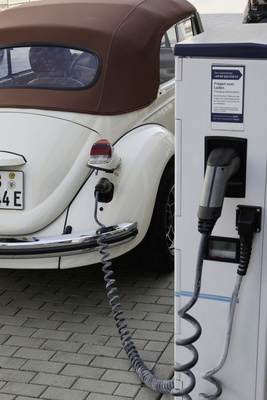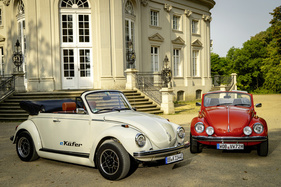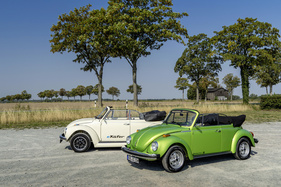
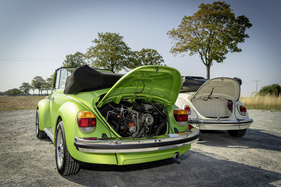
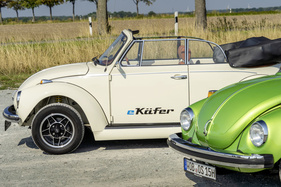
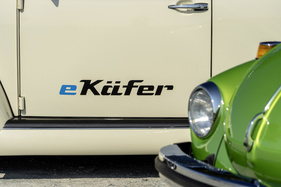
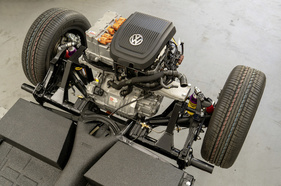
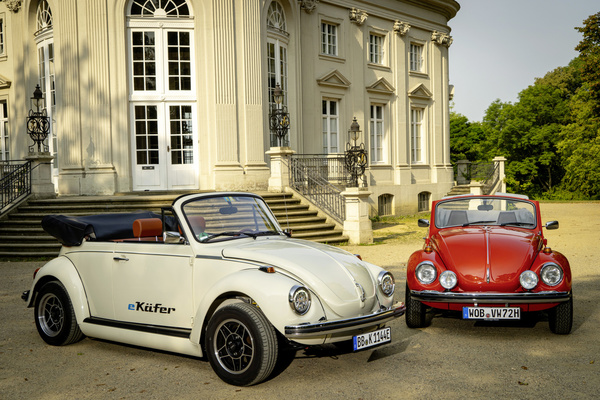
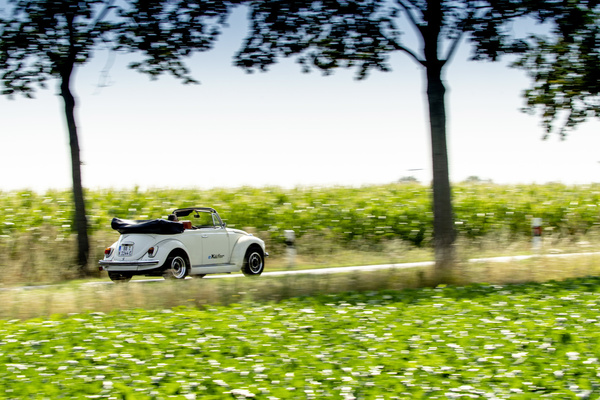
Together with partner company eClassics, Volkswagen Group Components is presenting a holistic concept for retrofitting historic Volkswagen Beetles with electricity. For the conversion, only coordinated new parts from Volkswagen Group Components' series production are used. The electric drive, the 1-speed gearbox and the battery system are based on the new VW e-up!
Conversion by a specialist
The conversion of the historic Beetle is carried out by the specialist eClassics. A near-series study of the e-Beetle is celebrating its premiere at the International Motor Show (IAA) in Frankfurt.
"The electrified Beetle combines the fascination of our classic cars with the mobility of tomorrow. Under the hood are innovative e-components from Volkswagen Group Components, which we use to emotionally charge historic vehicles with electricity," explains Thomas Schmall, CEO of Volkswagen Group Components. "At the same time, we are providing Beetle owners with a professional conversion solution with series production parts of the highest quality."
Components from mass production
The technical basis for the conversion is provided by the tried-and-tested series parts of the new e-up! from Volkswagen. They are manufactured at the Volkswagen Group Components production sites. The electric motor and the 1-speed gearbox come from Kassel, while the battery system components are supplied from Braunschweig.
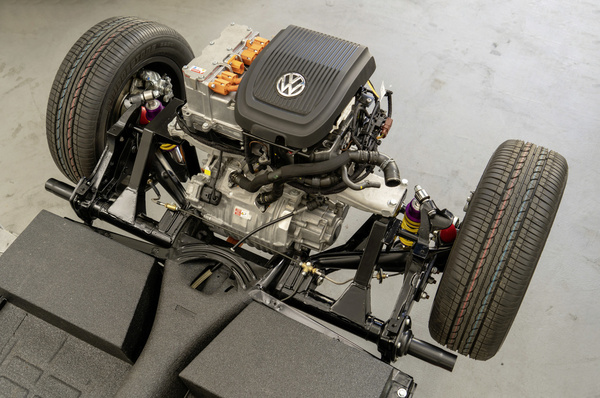
The components from Kassel and Braunschweig form a drive technology alliance in the e-Beetle, in which the electric motor achieves 60 kW / 82 hp at peak performance. The battery system is installed in the floor of the car and consists of up to 14 modules, each with a capacity of 2.6 kWh. Taken together, the modules of the lithium-ion battery deliver an energy content of up to 36.8 kWh. The higher output and the increased weight due to the electrification volumes require the chassis and brakes to be adapted and reinforced. Despite the new total weight of 1280 kg, the electrified Beetle accelerates to 50 km/h in just under four seconds and to 80 km/h in just over eight seconds.
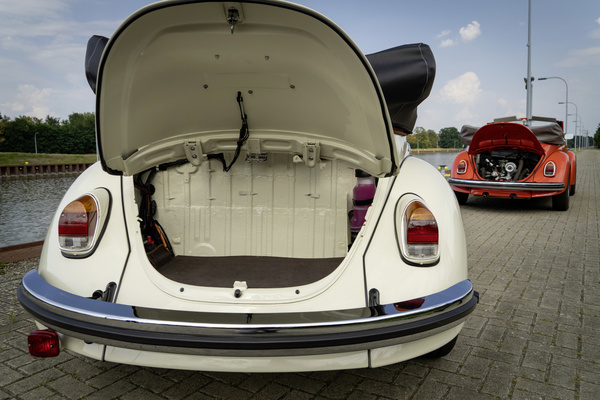
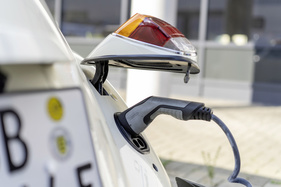
The range of the up to 150 km/h fast e-Beetle is over 200 km - a sufficient distance for a relaxed trip with the electrified classic car. And if the e-Beetle does run out of power on the road, the installed high-volume components enable CCS fast charging. This allows energy for more than 150 additional kilometers to be stored in the e-Beetle in around an hour.
Concept can also be transferred to other historic vehicles
In principle, this concept can also be used as a basis for the subsequent electrification of other historic vehicles. Schmall: "We are already working together to prepare the platform for the Bulli. The 356 Porsche is also conceivable as an e-version." The use of the modular e-drive kit (MEB) is also being considered. This opens up further perspectives, particularly in terms of performance and range.
Conversion carried out by specialized partner company
While Volkswagen Group Components supplies the standard parts for the electric drive and the battery system, the actual conversion of the Beetle is carried out by the partner company eClassics from Renningen near Stuttgart. A great deal of know-how has gone into the realization of the electrified Beetle.
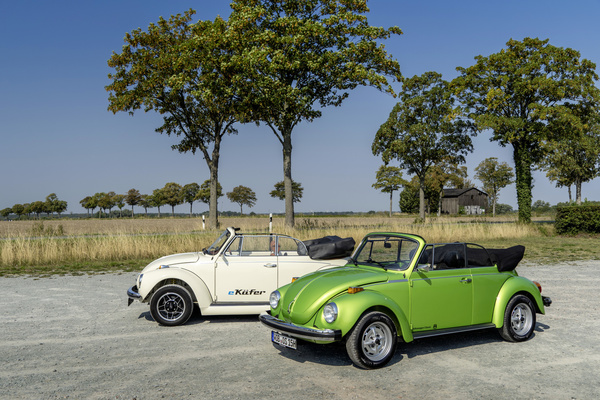
Volkswagen Group Components contributed a great deal of experience from its specialized employees and was on hand to advise the eClassics company.
Not cheap!
A complete VW Beetle Cabriolet costs around EUR 98,000, while the basic platform without bodywork costs just under EUR 40,000. If you deliver a Beetle, you can get it back electrified for around EUR 50,000. That's not cheap, but at least the conversion is supposed to be reversible so that no valuable cultural assets are destroyed. Although this would certainly need to be looked at in more detail ...
It should be noted that an electric conversion may do a lot for environmental friendliness, but the safety aspects naturally remain at the same level as before.