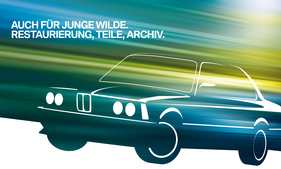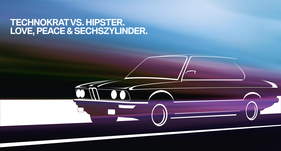

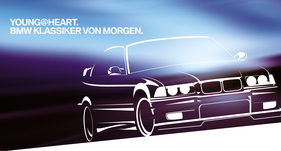
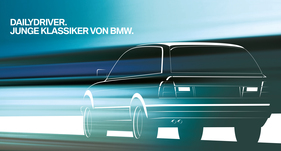

The growing enthusiasm for vehicles that are maintained and admired as so-called youngtimers characterizes the appearance of BMW Group Classic at the Techno Classica 2015 in Essen.
For visitors to the world's largest trade exhibition for classic automobiles and motorcycles, this means a reunion with selected models that are now between 25 and 40 years old and therefore well on their way to becoming classics.
In addition, numerous other chapters from the history of the BMW, MINI and Rolls-Royce brands will be opened in Hall 12 of the exhibition grounds from April 15 to 19, 2015. Among other things, spectacular sporting successes on two and four wheels, the model diversity of the classic Mini and the first generation of the Rolls-Royce Phantom presented 90 years ago will be commemorated.
1250 exhibitors in 20 halls
At Techno Classica 2015, more than 1250 exhibitors will be presenting their vehicles and products in 20 halls and on the open-air grounds of Messe Essen.
BMW Youngtimer: unmistakable and timelessly fascinating
When looking at the model and brand history of BMW, vehicles produced in the 70s, 80s and early 90s of the last century have been in the spotlight for some time now. During this era, innovative vehicle concepts were realized and the foundations were laid for numerous model series that are still successful today. This resulted in unmistakable and timelessly fascinating models, many of which enjoy special appreciation today as youngtimers. Selected representatives of this category will be presented at Techno Classica 2015 - models that bear witness to an exciting past, are still present on the roads and at the same time are already looking forward to a promising future as collector's items. For automobile enthusiasts, they offer ideal opportunities to trace the tradition of the joy of driving and to enter the exclusive world of experience of historic BMW vehicles.
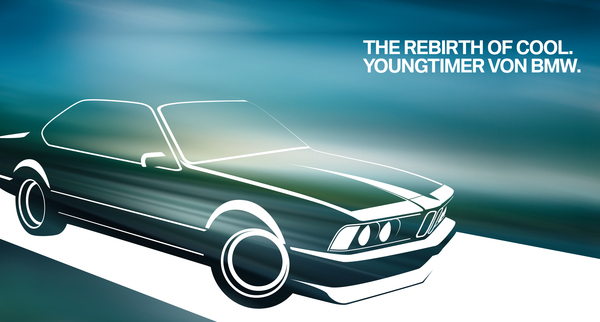
At the BMW Group Classic stand, the tradition of sporty, elegant coupés from BMW is represented by two models: the first-generation BMW 6 Series and the BMW 8 Series. In 1976, the BMW 6 Series Coupé replaced the CS models in the luxury class, which had also been successful in motorsport for a long time. The new development with the wedge-shaped lines drawn by chief designer Paul Bracq also offered significant advances in the areas of motorization, luxury and safety. The first generation of the BMW 6 Series was built until 1989. In the same year, the BMW 8 Series came onto the market - even more luxurious, even more exclusive and even more avant-garde in design. Particularly as the BMW 850i with a twelve-cylinder engine, the coupé was also impressive proof of the company's development expertise.
The BMW Z1, which also hit the road in 1989, was "born" as an innovation leader. The two-seater roadster was originally a research project of the newly founded BMW Technik GmbH and was shown to the public for the first time in 1987 at the International Motor Show (IAA) in Frankfurt. The design and construction method with a hot-dip galvanized sheet steel monocoque, floor assembly and outer skin made of plastic and vertical sliding doors were not only met with enthusiasm by technology fans. The announcement of small series production of the brand's first roadster since the legendary BMW 507 met with an overwhelming response. At the start of production, around 4,000 orders had already been signed. By June 1991, a total of 8,000 BMW Z1s had been built. The extravagant two-seater also stands not least for the revival of BMW's roadster tradition, which now extends to the current BMW Z4.

The model history of the BMW 5 Series is characterized by significantly higher unit numbers and technology highlights of a completely different kind. The third generation of the saloon, produced from 1988 to 1996, was distinguished from its predecessor not only by its sporty, elegant, aerodynamically optimized design and significantly improved body rigidity. For the first time, it also featured a folding rear seat backrest with through-loading function, an on-board computer with fault memory, Automatic Stability Control (ASC), electronically controlled injection systems for all drive systems and, from 1990, four-valve technology for the six-cylinder in-line engines. The special appeal of the third generation of the BMW 5 Series also resulted from a new type of model diversity. In 1991, a Touring model and electronically controlled all-wheel drive were introduced in this model series for the first time.
In addition to their interesting model history, the four representatives of the Youngtimer category on show at Techno Classica have another thing in common. They served - in some cases several times - as inspiration for renowned artists, who thus made their contribution to the globally unique series of BMW Art Cars.
Winning streaks and records in motorsport
At this year's trade fair appearance in Essen, BMW Group Classic is also commemorating historic successes in motorsport. The production model of the first BMW M3 was presented 30 years ago. It became the basis for the most successful touring car in BMW's history. The spectacular winning streak began when Roberto Ravaglia won the World Touring Car Championship in 1987 and continues to this day, as the most recent overall victory for Marco Wittmann in the BMW M4 DTM at the 2014 German Touring Car Masters shows. Racing versions of the BMW M3 from three model generations will be on display at Techno Classica.

They are joined by two legends of the Mille Miglia: the BMW 328 touring Coupé and the BMW 507. 75 years have passed since the BMW 328 touring Coupé won the endurance race through Italy, and five years ago the same vehicle also won the new edition of the Mille Miglia, which is now held as a reliability race for historic automobiles.
The BMW 507 was used in 1957, the last time the Mille Miglia was held as a race.
MINI model history: diversity with tradition
In addition to exhilarating driving fun and individual style, model diversity is a defining feature of MINI's brand history. Even with the classic Mini, the principle of creative use of space devised by its designer Alec Issigonis was not limited to a single model. The classic body concept of the compact space miracle was joined by the Mini Van and Mini Estate models in the very first year of production.
Various other variants were added in the following years, which are still very popular with classic Mini fans today. Together with the classic Mini club scene, BMW Group Classic is presenting an attractive selection of historic vehicles at Techno Classica 2015 that reflect the multifaceted character of the British original. A Mini pick-up, a convertible version of the classic Mini and the all-round open Mini Moke will be on display, as will the two extravagantly styled and elegantly equipped Wolseley Hornet and Riley Elf variants.
The MINI 5-door proves that, despite this range, not all possibilities have been exhausted and that the latest generation of the MINI therefore still offers scope for completely new variants. The second body variant of the new MINI is the first five-door small car in the history of the brand.
Rolls-Royce Phantom: the epitome of the pursuit of perfection for 90 years
From the very beginning, the name Rolls-Royce has stood for automobiles of uncompromising quality, engineering excellence and absolute reliability. With the introduction of the first Rolls-Royce Phantom 90 years ago, exclusivity and luxury were added. Powered by a 7,668 cc six-cylinder engine, the model followed on from the Rolls-Royce Silver Ghost, which had already been in production for 18 years. It initially bore the name Rolls-Royce New Phantom, but the first part of the model designation was retroactively dropped after the second generation appeared in 1929. Since then, a Roman numeral has sufficed to distinguish between the six historic model series of this type.
Each generation of the Rolls-Royce Phantom is associated with special features of automotive history. The Rolls-Royce Phantom III, for example, was the first model of the British marque to be powered by a twelve-cylinder engine. Only 18 examples of the Rolls-Royce Phantom IV were built exclusively for governments and heads of state. Regardless of this, the model name is still an expression of the unconditional pursuit of perfection in automotive engineering.
At Techno Classica 2015, a Rolls-Royce Phantom II Continental with a fixed-head coupé body by Gurney Nutting and a separate luggage case at the rear will give visitors an impression of the exquisite flair of driving and traveling in the 1920s and 1930s. A Rolls-Royce Phantom of the latest generation represents the current understanding of the highest level of automotive engineering.