




The fundraising campaign of the non-profit organization "Lebenshilfe Giessen" was a complete success. The winners are listed here . A total of 1.25 million euros was raised for a good cause. The association now wants to use the money to expand its workshop for people with disabilities.
New year, new fundraising campaign
The next fundraising campaign has already begun, the 25th, which means that this charitable campaign is celebrating a milestone birthday and Lebenshilfe Gießen is even 60 years old. Accordingly, this time the donors did not let themselves be lumped in favor of the good cause and provided strong prizes:
1st prize Mercedes Benz 180 C (1961) - donated by TV icon Günther Jauch
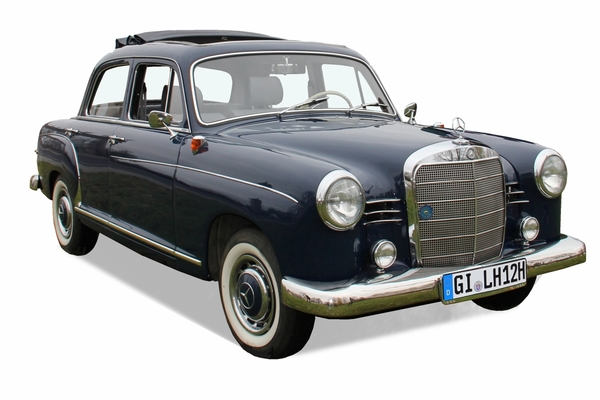
To anticipate the incredulous questions: Yes, it's him! TV icon Günther Jauch donated this magnificent classic Mercedes to support the classic car fundraiser. And what a beauty it is - a Mercedes 180 C from 1961, better known as a Ponton-Benz. It is a car like a living room, dignified, cozy, conservative and beyond any sportiness or speed. This black Mercedes 180 C is preferably driven on picturesque country roads in bright to cloudy weather, time pressure and the need to get there quickly are taken off the driver right from the start and the Swabian engineering skills under the hood do their work calmly:
The upright four-cylinder four-stroke engine from the M 121 IV-b series produces a comparatively powerful 68 hp at 4400 rpm, its power transmitted by the four-speed manual gearbox with steering column shift. The Mercedes was capable of 135 kilometers per hour when it left the factory, cracking the 100 km/h mark in a relaxed 21 seconds. The 180 C saloon was built from June 1961 to October 1962, during which time a good 9100 units were produced. Our Ponton-Benz is fitted with whitewall tires and, with its first registration in June 1961, is one of the very first vehicles in this series, which differs visually from its predecessor models with its wider radiator grille and lack of bumper horns. We have the license for relaxed Benz driving - redeem it with a bit of luck and by taking part in the classic car donation campaign 2019!
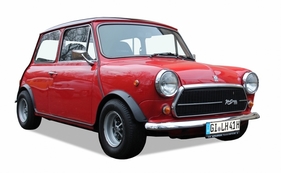
2nd prize Innocenti Mini Cooper 1.3 built in 1975 - donated by Frank Rückriegel
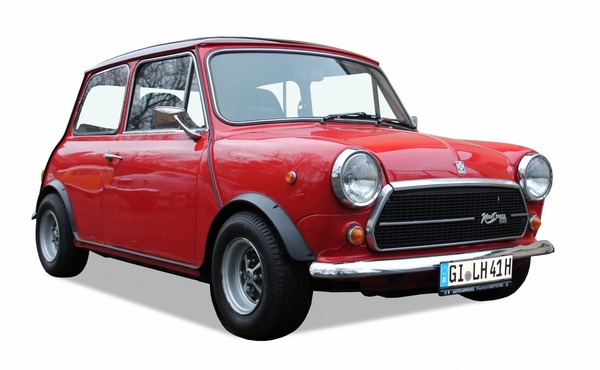
We predict one thing for the winner of the second prize: When he is on the road with the Innocenti Mini, the beginning of the sentence "Yes, but" will faithfully accompany him. Because the little red car arouses sympathy in every passer-by - and even the automotive layman will recognize that it is a Mini. But what they don't know is that this Mini is Italian. The need for explanation will be correspondingly high!
The story is quickly told: The Milanese car manufacturer Innocenti, known among other things as the manufacturer of the two-stroke Lambretta scooter, produced the British Mini under license between 1965 and 1975. And to ensure that it was not just a copy, the iconic small car was embellished: a modified radiator grille, opening triangular windows, a nicer interior with a leather steering wheel and better-finished seats. Our bright red Mini is also a real sports car: the 1300 Cooper has sports rims, an oil cooler, a really powerful engine with 64 horsepower and an extremely easy-to-handle body that is a real pleasure to drive at a top speed of 155 kilometers per hour. Frank Rückriegel, Druckriegel Frankfurt, donated this classic to the 2019 classic car fundraising campaign - and thus helped one lucky person to own an Italian Mini, which many connoisseurs consider to be better than the real thing from England...
3rd prize Bentley T1, built in 1975 - donated by Andreas Rübenach
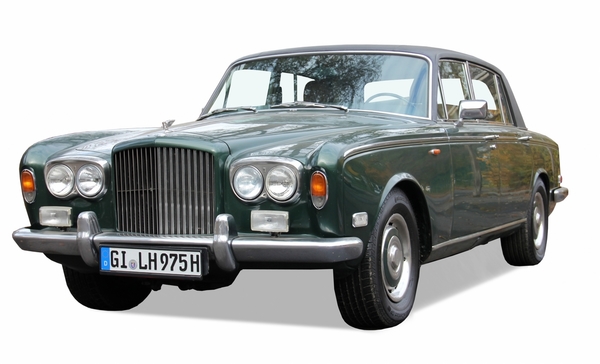
Certain clichés simply cannot be avoided with this vehicle: it is British, a kind of leather armchair turned automobile and its regular parking space must actually be at the end of an endless driveway: The Bentley T 1 is a vehicle with unique travel comfort (level control and four-disc brakes) and a dignified ambience. Used as a chauffeur-driven vehicle in Switzerland, there is a partition to the rear. The T 1 differs visually from the Rolls Royce Silver Shadow only in its emblem and radiator grille; the chassis is somewhat firmer than that of the Rolls. This beautiful classic from the island was donated to us by Andreas Rübenach.
The British restraint may be evident in many places, but not in the key data of this vehicle: neither the external dimensions - 5.17 meters long, wheelbase 3.03 meters, width 1.82 meters - nor the internal values of the Bentley T 1 are evidence of restraint: All right, the ever-popular "enough" came easily from the lips of the British engineers when asked about the T1's performance - but behind it lay a whopping 180 hp from a again relaxed 6250 cubic centimeters. Less would also have been unhealthy, because the more than two tons of unladen weight of the Briton ultimately need to be moved in such a way that - attention, next cliché! - the ticking of the on-board clock always drowns out the sound of the eight cylinders. A lucky person will soon be able to see for themselves whether this is possible: The Bentley T 1 from 1975 is the third prize in the 2019 classic car fundraiser.
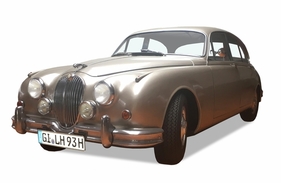
4th prize Jaguar Mk II/Daimler, built in 1967 - donated by Norbert Gallée
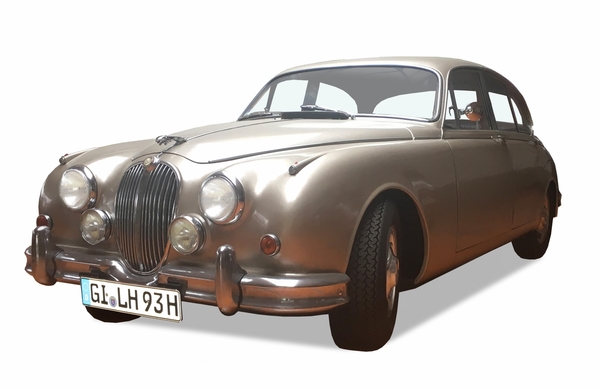
Whoever owns this car has a choice: racetrack or manor house driveway, dignified gliding or sporty cornering. The mixture of sportiness and British solidity, limousine attitude and inner values suitable for the racetrack make the Jaguar MK II (Daimler) a character head among British limousines. The British original is of course based on the classic Jaguar Mark II. Visual details and a somewhat finer interior distinguish the British car, built in Coventry, from the form-giving saloon from Jaguar, to which Daimler had belonged since 1960. Under the hood is an engine from the Jaguar range: the straight-six is 3.8 liters in size - a unit that is highly appreciated by connoisseurs. Our fourth prize was provided by Norbert Gallée. The British car dates back to 1967, making it a genuine classic car and giving the winner of this prize in the classic car fundraising campaign the choice between a restrained glide and sporty progress.
5th prize BMW 525e, built in 1984 - donated by PS Speicher in Einbeck
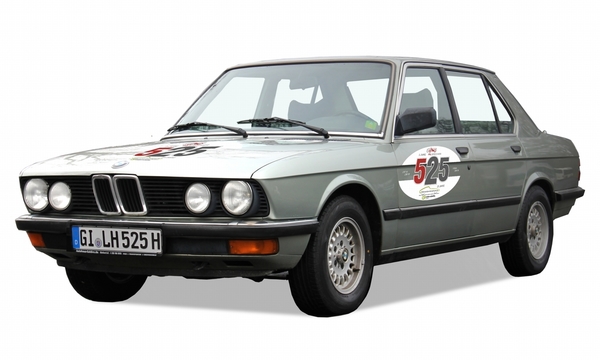
Here comes the energy-saving car - at least according to its name: the BMW 525 bears the nickname "e", which in turn stands for particularly effective energy use. The concept behind it was not yet widespread until the "e" BMW was presented in Europe in 1983. In simple terms, it is based on the formula "less revs with effective fuel use". The upper limit was already reached at 4500 revolutions per minute, but the 2693 cubic centimetre in-line six-cylinder engine delivered powerful torque (240 maximum Newton meters to be precise) and promised comparatively low fuel consumption. It is said to have been lower than that of the 520i - but of course driving pleasure and driving comfort did not fall by the wayside: car testers gave the 125 hp engine the attribute "silky", the 525e has a sporty attitude simply because it is a BMW! This 525e was registered for the first time in December 1984. The chic Bavarian was donated by PS-Speicher in Einbeck, Lower Saxony, and the deal is complete: the fifth prize for the 25th anniversary of the classic car donation campaign is the 525 BMW!
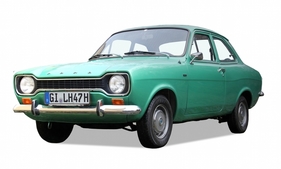
6th prize Ford Escort MK I, built in 1974
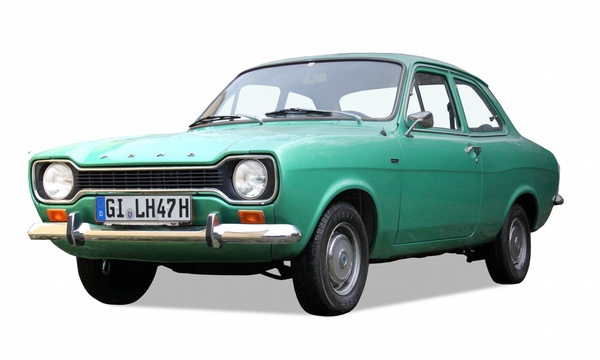
In the vehicle documents, the sixth price is designated as "Ford ATH". Ford connoisseurs know immediately where it is going, others know the car from the lower middle class simply as the Escort I and the nickname "dog bone" is not without reason: just look at the radiator grille and the headlights! Ford's presentation in 1968 already indicated that the new car knew no boundaries: Presentation in Morocco and later in Brussels, production in Saarland and England, among other places. Decades later, the company celebrated the "world car" Ford Mondeo with much fanfare - the Escort I then earned itself at least the title of "European car". No limits, no limits: the British car was never able to assert itself against the powerful competition from Opel and Volkswagen, even though the Escort I was able to score points with body variants - it was available as a two-door, four-door and estate car - and a robust rally version. This Escort, first registered in November 1974, is clearly a representative of sensible driving: 44 hp are coaxed from the 1.1-liter engine, but only a slim 825 kilos have to be moved. The Saarland car with British roots is therefore easy to drive and, as a two-door model in light green, is a thoroughly elegant appearance. If you want to have fun with this classic from the 70s: a donation to the classic car campaign 2019 can make it possible!
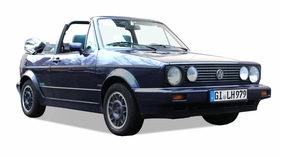
7th prize VW Golf I Cabriolet, built in 1990 donated by Michael Noll
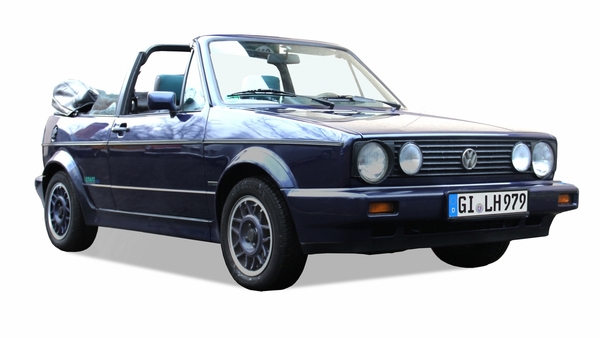
We have the invitation to an uncomplicated open-top ride: Solid and proven large-scale production technology meets fresh-air speedster - the Golf 1 Cabrio is ready! In 1990, this Golf with the 1.8-liter four-cylinder petrol engine under the hood made its first meters on the road, since then it has always been cared for and protected and the long-time sponsor Michael Noll from Kelkheim finally gave the keys and papers to the Verrein: Free ride for the classic car donation campaign 2019!
The Golf 1 was Volkswagen's second convertible offshoot after the open-top Beetle and went down in the company's history as a great success: almost 390,000 units were built, many of which have survived to this day thanks to special convertible care and winter breaks and are now popular classic cars. Our open-top model is from the second generation of the Golf 1 Cabrio: from 1987, the fresh-air Golfs were given a facelift, with wider wheel arches and sills, a different radiator grille and a much more modern look than the original model. What's more, our convertible is the special Coast model, just right for the relaxed and carefree summer tours that the seventh prize has on board!
8th prize Peugeot 205 GTI, built in 1968 - donated by Autohaus Meizer
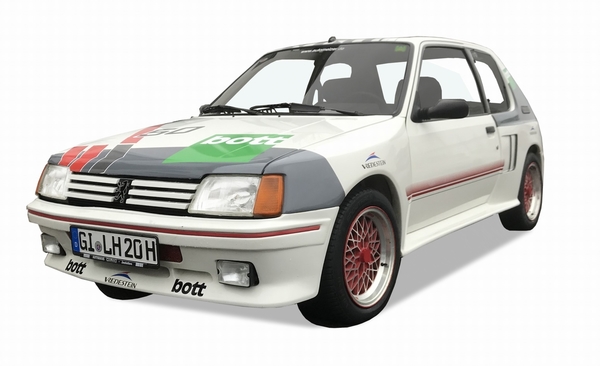
This little one, donated by the Melzer car dealership, makes no secret of the fact that it is made for big things. Gutmann, the Peugeot specialist among tuners, fitted the 205 GTI with a body kit, lowered it, rolled it on - naturally registered - 195/50 Exip alloy wheels, gave it a torsion bar adjustment and Koni dampers, a Tezet manifold and a Sebring exhaust system. In other words, this 205 GTI is about as far removed from a friendly, practical small car as a Korean estate car is from cult status. The 3.70-meter-long, cheeky Frenchman has a 1.6-liter petrol engine with 115 hp and an official top speed of 195 kilometers per hour. In view of the unladen weight of just 850 kilograms, it is clear that a real performance athlete is waiting for the winner of the eighth prize in the 2019 classic car fundraiser!
9th prize Viktoria moped - donated by the Theo-Lorch workshops
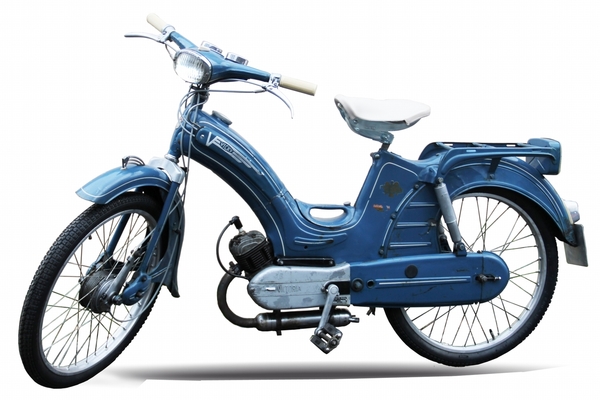
Vicky drives up: The moped from Nuremberg is a real popular choice - and not just because of its chic color and curved lines. The manufacturer, Viktoria-Werke, can look back on a long two-wheeler tradition: The first motorcycles were built as early as 1901, and models with up to 20 hp were produced up until the Second World War. After the end of the war came the time of the Vicky: the petite moped with the 38 cubic centimeter flat-piston engine produced 1 hp on the road. Even today, that's still enough for a trip into the countryside or a little shopping in between - and friendly glances from the roadside are guaranteed! The Viktoria moped was expertly restored by the Theo-Lorch workshops for people with disabilities (Ludwigsburg district) and then made available for the 2019 vintage car donation campaign.
You can take part in the donation campaign online or by fax at www.oldtimerspendenaktion.de, where further information about the campaign is available
