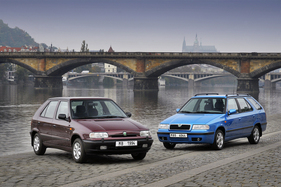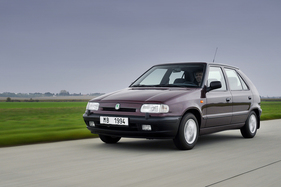
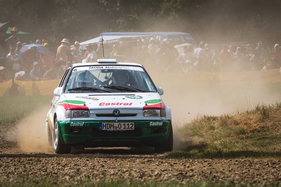
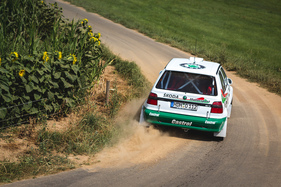
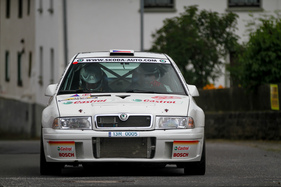
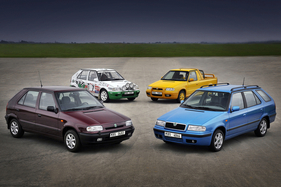
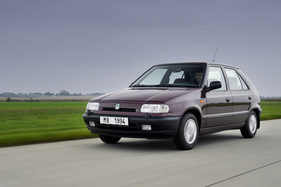
Production of the Škoda Felicia of the 1990s began in Mladá Boleslav on October 17, 1994: 25 years ago, the successor to the Favorit was the Czech car manufacturer's first model to be developed under the umbrella of the Volkswagen Group. Successful in motorsport, the Felicia was also extremely popular with customers. By 2001, more than 1.4 million units of this model family had been produced at the Mladá Boleslav, Kvasiny and Vrchlabí plants, including the Felicia Combi, Pick-Up, Vanplus and Fun versions in addition to the hatchback saloon.
Extensive further development
A new chapter in the history of Škoda Auto began a quarter of a century ago with the Škoda Felicia. The company had already been part of the Volkswagen Group since 1991 and had continuously modernized the acquired Favorit, Forman and Pick-Up model series. However, the introduction of the Felicia was a milestone for Škoda: 1,187 newly developed vehicle components were used in the technically sophisticated and extensive further development of its predecessor. In the hatchback, Combi, Pick-Up, Vanplus and Fun model variants, it combined modern technology and fresh design with a spacious interior and an attractive price/performance ratio.
Three first Felicia models christened with Moldau water
Pre-series production started on September 5, 1994 at the Vrchlabí plant with the first 50 prototypes. The experience gained with these vehicles was used to optimize Felicia production in Mladá Boleslav, which started on Monday, 17 October. The first production model rolled off the production line at 10:20 a.m. that day. Nine days later, on October 26, 1994, Škoda presented three units of the new Felicia in the hatchback version to the public - they were painted in the colors of the Czech national flag. The mayor of Prague at the time christened them with Vltava water on the Charles Bridge.

Škoda had chosen the model name Felicia very deliberately: on the one hand, it referred to the iconic convertible of the late 1950s and early 60s, and on the other, it was also reminiscent of the Latin word for happiness - Felicitas. So it was only natural that Škoda Auto gave one of the first vehicles to the Ondráček family, who were celebrating the birth of quadruplets at almost the same time as the Felicia was christened.
Production and assembly met strict quality standards
The five-door hatchback version was 40 millimetres longer and 15 millimetres wider than the Favorit. The luggage compartment increased by 21 liters. The body was characterized by a significantly higher torsional rigidity, which - in combination with new wheel carriers, improved front axle geometry and an additional stabilizer for the rear wheels - enabled noticeably better noise and suspension comfort. Added to this was the higher level of safety, which was confirmed by a crash test carried out by TÜV in 1995. Production and assembly of the new model also met strict quality standards, as demonstrated by certification in accordance with the ISO 9002 standard. The engine production in Mladá Boleslav was the first Škoda Auto plant to meet the high requirements. The basic engine for the Škoda Felicia was a four-cylinder petrol engine with a displacement of 1,289 cm3, which was available in 40 kW (54 hp) and 50 kW (68 hp) versions. In 1995, the more powerful 1.6 MPI engine with 55 kW (75 hp) and a 1.9-liter diesel with 47 kW (64 hp) were added.
Commercial vehicle variants write a success story
In 1995, Škoda added the even more spacious Felicia Combi to the model family and, from August of the same year, the Felicia Vanplus van variant and the Felicia Pick-Up also rolled off the production line at the Kvasiny plant. Around 4,000 leisure vehicles called Felicia Fun were also produced on the basis of the platform van version - the trademark was the variable interior as a 2+2-seater in addition to the yellow-painted body. The commercial vehicles were very popular: between 1996 and 2000, Škoda produced almost 19,000 units, which were successful in Latin America under the name 'Volkswagen Caddy'.
The Felicia introduced numerous modern equipment options to the Škoda model range, such as ABS, up to four airbags, air conditioning, power steering, height-adjustable and heated front seats, high-quality leather seat covers and the on-board computer. As a tribute to the 100th anniversary of the company's founding, the Czech brand also presented the luxury edition Felicia Laurin & Klement in 1995. Other attractive special models followed, such as the Felicia Atlanta to mark the 1996 Summer Olympics. Thanks to their attractive design and particularly good price/equipment ratio, they were also very popular.
Felicia competes in the World Rally Championship as a kit car version
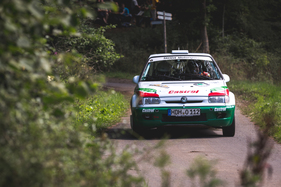
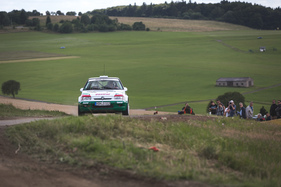
The Škoda Felicia also proved its versatility in motorsport. Between 1995 and 1997, a corresponding kit car version competed in the World Rally Championship and took third place in its class in the very first season. In 1996, the Swedes Stiq Blomqvist/Benny Melander finished third overall in the English RAC Rally and won the kit car class up to 2.0 liters displacement.
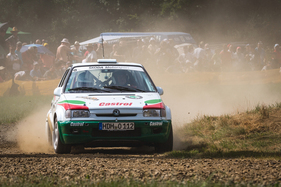
In 1997, Škoda took second place in its class in the WRC with the Felicia. The new Octavia kit car and, from the 1999 season, the Octavia WRC World Rally Car (WRC) continued the success story of the Felicia kit car.
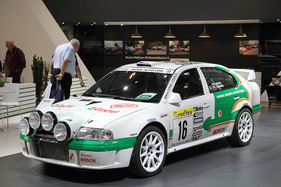
In February 1998, Škoda launched the facelift of the Felicia. The product upgrade also included modern headlights and a modified radiator grille. The entry-level model thus adopted the new design language that already characterized the larger Octavia. In June 2001, the career of the Škoda Felicia came to an end after 1,401,489 units had been produced. Its successor is the Fabia, which is still successful today and whose first generation was launched in 1999.
Further information
Further information can be found on the Škoda website.