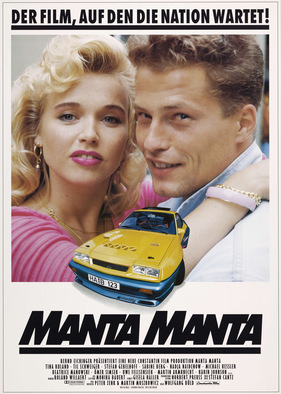
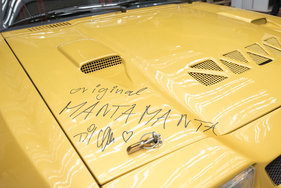
The first exhibit for the new exhibition "Loved - Used - Hated. The Germans and their cars", which opens at the Haus der Geschichte in Bonn on March 9, 2017, the original Opel Manta from the film "Manta, Manta" entered the exhibition on Monday, February 6, 2017 at 11:00 a.m.
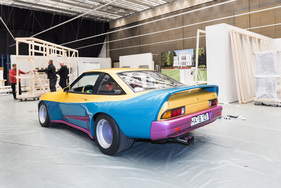
Around 1.2 million people saw this comedy with Til Schweiger and Tina Ruland, and around 11.5 million watched the movie later on television. The yellow-blue Opel coupé with rear spoiler and rear apron became the secret star.
The film succeeded in combining the already existing Manta image, which was transported via numerous Manta fan clubs in the Federal Republic, with elements of a love and action story. However, the comedy also self-deprecatingly incorporated the numerous jokes that made fun of "snobbish" Manta drivers into the film plot.
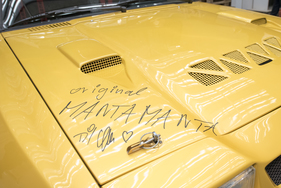
In the exhibition "Loved - Used - Hated. Germans and their cars", the Manta is an example of how the choice of a particular make of car and its equipment can be interpreted as a reflection of a social milieu of personality.
With around 800 exhibits, this interesting exhibition is dedicated to a mass product that fascinates people like no other - but also triggers heated debate.
Gleaming chrome classic cars and swanky sleds - CO2 guzzlers and car sharing: hardly any other mass product exudes such fascination as the automobile, and hardly any other is so controversial at the same time.
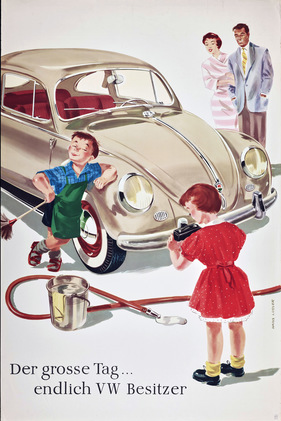
Advertising and marketing strategists invest millions every year to emotionally "charge" their product. Environmental pollution, congested highways and city centers, on the other hand, are increasingly gnawing away at the "joy of driving". But the "German's favorite child" also remains an important economic factor: hundreds of thousands of jobs depend directly or indirectly on the automotive industry. Selected vehicles such as a Mercedes Pullman 600 and the film Manta, as well as objects, media stations, posters, photos and documents illustrate the fascination of this product. The exhibition describes the social and cultural significance of the car in Germany against the backdrop of economic and political conditions.
Symbol of freedom: Since its beginnings, the automobile has enabled individuality and autonomy. With increasing motorization, a growing number of road users are using their cars to get to work or for excursions and vacations. For a long time, for young people it was also a step towards detachment from the parental home.
Car advertisements, pop songs and films tie in with these characteristics, promising "freedom and adventure". "Free travel for free citizens" was propagated by the ADAC in the 1970s.
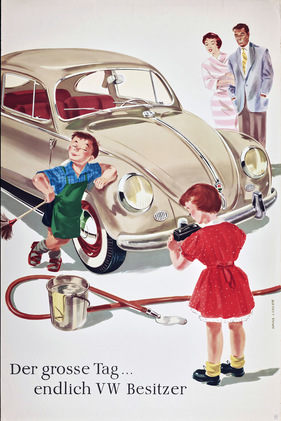
Identity: While the car was still an expression of social status and income differences at the beginning of motorization, the cultural function of the car is increasingly changing: car brand, equipment, design and accessories create a variety of ways to express oneself. The image of a brand and the emotional charge of the product is becoming the central task of marketing and advertising in the car industry. Like-minded people come together in car and fan clubs, such as the VW Beetle or Opel Manta.
Men and women: Cars are a man's thing - at least at the beginning of mass motorization. This is reflected above all in product advertising. It is only in the course of emancipation that the proportion of female drivers increases. The car industry discovers the female buyer. Scantily clad models lolling on cooling hoods are increasingly disappearing from brochures and trade fair presentations.
Cars and power: The car is also a means of political communication. The choice of state car signals the status of the politician across all political systems. In ministries and offices, the size of the car reflects the hierarchy within the institution. After entering the German Bundestag in 1983, the Greens set a new accent with their official bicycles, drawing attention to the environmental impact of car traffic.
The future of cars: The euphoria of the early years of the automobile has largely disappeared: Environmental pollution and congested roads in cities and on highways are diminishing the joy of driving. For young people, the car is no longer much in demand as a status symbol. In the cities, the idea of car sharing has found many supporters, while people in rural areas remain dependent on cars.
The car industry is responding to the social debate. The development of low-emission electric cars is becoming increasingly important for them.
The exhibition opens on March 9, 2017 and will be open until January 21, 2018. Further information on the exhibition can be found on the Haus der Geschichte website. The "Haus der Geschichte" is one of the largest museums in Germany and is located at Willy-Brandt-Allee 14 in Bonn.