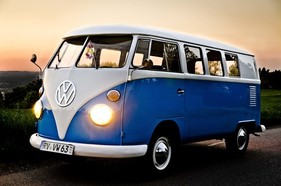
It stands for adventurous experiences, interpersonal anecdotes and a wide variety of customization options: the VW Bus T1 to T6, affectionately known as the Bulli. Built in the early 1950s as a multifunctional car, it was primarily intended to be a practical, simple and affordable transporter, but quickly developed into a cult car with character and a large fan base. At Motorworld Classics Bodensee in Friedrichshafen from May 10 to 12, the classic car will be making a big splash.
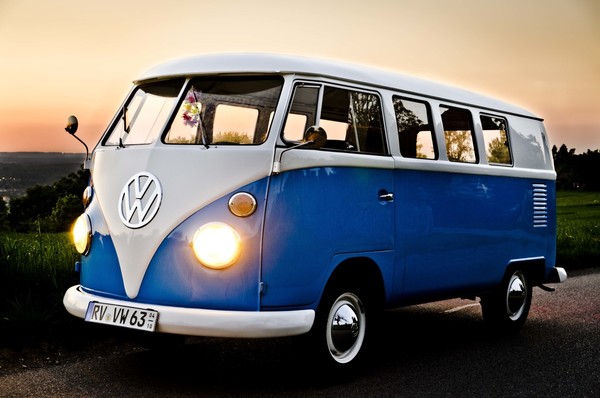
The best ideas are often born out of necessity - and the VW Bulli is no exception. Originally designed as a panel van in which car parts from the popular VW Beetle were installed, the simple factory-internal vehicle was turned into a powerful transporter: the T1. Not much wider than a Beetle, the first VW buses reached almost 100 km/h thanks to their 25 hp boxer engine. At the time, this was still located in the rear of the van and was air-cooled. It quickly became clear that the VW T1 was one thing above all: versatile. A maneuverable car that could be used as a bus, delivery van or transporter. It also looked very good with its beefy design, glossy paintwork, chrome bumpers and split front bumper. Just under a year later, the Samba version of the Bulli appeared with eight seats in three rows as well as additional doors and windows.
The perfect prerequisites for converting it into an all-round motorhome. Thanks to the vehicle conversion company Westfalia, the Samba could easily be transformed into a camper if required. The successor model T2 with side sliding door then became a symbol of hippies touring the world. The vintage character of the first VW buses still appeals to countless globetrotters and classic car fans today.
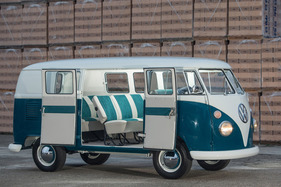
One of them is Aladar Duck from Ravensburg. Together with his wife and two grown-up sons, he owns two T1 and two T2 buses, among others, which he will be presenting together with other VW bus classics in Hall A2 at the trade fair in Friedrichshafen. "In my youth, we lined the interior of a T2 with velour carpeting and drove to the Atlantic," recalls the 54-year-old family man. When the VW bus eventually gave up the ghost, Duck became interested in other cars suitable for families.
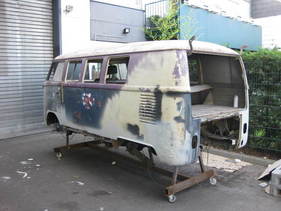
Many years later, he was sitting in front of the television one evening with his 17-year-old first-born. The two of them were fascinated by a report on the restoration of a T1 Samba model. His son's comment afterwards: "Dad, can't we do something like that?" After careful consideration, the two finally found a 1963 VW bus for 4000 euros at the Red Cross, which was in "relatively poor condition". With the help of an acquaintance who made his garage available to them on Saturdays, father and son spent a year and a half getting the T1 rust bucket back into shape. "We invested a total of 1,300 hours," says Duck, who is a mechanical engineer by trade.

But the restoration was anything but smooth. In the TV documentary, the bodywork had been sandblasted. "Unfortunately, the side panels were deformed in the process and we were pretty frustrated." So the pair had to shell out more money and order new side panels in the original style from England, which were then painstakingly welded in. "We could never have done it without the help of experts," says Aladar Duck. In the summer of 2011, the Samba bus was finally finished and passed its MOT straight away. In the meantime, the family has repaired three more buses, which they not only take on vacation in the summer, but also use in everyday life. Because driving a van is fun, even if such a bus swallows ten liters of fuel per 100 kilometers.
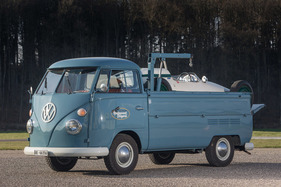
Aladar Duck founded the "VW Stall" club a few years ago - a loose group that meets once a month at Gasthof Kreuz in Ravensburg-Bavendorf for a regulars' table and occasionally goes on trips together. There has also been a Facebook group for a long time. It now has around 110 members from all over the world: from Europe to Mexico and Brazil. In the forum, people give each other tips on repairing or buying VW buses. The club will be presenting several T1 and T2 models at Motorworld Classics Bodensee. And not just a lovingly converted motorhome, but also a craftsman's vehicle with a flatbed, a people carrier or a lowered model from the USA.
Travel photographer Peter Gebhard will also be on hand to report on his tours in a red Bulli from Istanbul to the North Cape and across Iceland. And there will also be plenty of rock music to bring that "Woodstock" feeling to the exhibition grounds. The Bulli has become a successful model for Volkswagen worldwide and especially in America. This was initially due to the surf-loving Sunny Boys in warm California and not least the long-haired hippies who idolized the Bulli as an ideal means of sleeping and transport. The fact that this summer marks the fiftieth anniversary of the legendary "Summer of 69" and the biggest open-air concert of all time in Woodstock will also be honored at the special Bulli show in Hall A3.
One of the most beautiful hippie samba buses of all time will serve as a focal point for those who experienced this summer live. But people who, for certain reasons, no longer remember those wild times or simply weren't even born yet will also be thrilled. What wasn't possible back then: anyone who has their photo taken in front of the van in a hippie outfit will receive their own personal souvenir on a special Facebook and Instagram page.
Opening hours
Motorworld Classics Bodensee is a joint project of Messe Friedrichshafen GmbH and MOTORWORLD Consulting GmbH & Co KG. Motorworld Classics Bodensee will take place from Friday, May 10 to Sunday, May 12, 2019 at the exhibition grounds in Friedrichshafen.
Further information can be found on the Motorworld Classics Bodensee website.