




The Bremen Classic Motorshow opens the vintage and classic car season on January 31 to February 2, 2019. There are plenty of attractions, a small selection of which is already announced here:
Duel of the road rivals
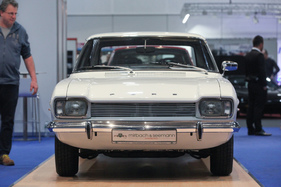
"Battle for precedence, rivalry": This is how simply the dictionary defines the term rivalry. What do innocent motor vehicles have to do with these very human endeavors? Viewed purely as a means of transportation, nothing at all. But as projection surfaces for competitive contemporaries, they are stylized as bitter duelists. "In other words, the rivalry between Ford Capri and Opel Manta fans turns the Ford Capri and the Opel Manta into rivals themselves," says Frank Ruge, project manager at Messe Bremen. From Friday to Sunday, January 31 to February 2, 2020, the two legendary coupés will face each other again - alongside six other famous pairings of classic rivals from automotive history. "Rivals!" is the title of the traditional special show.
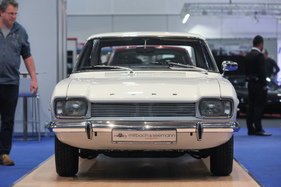
Manta versus Capri: this sparring match shaped the car world of the 1970s like no other. The rivalry between the two brands existed long before that, as the special show illustrates with the Opel Rekord P2 and the Ford "bathtub" Taunus 17M. But it only reached its climax with the duel between the family coupés in fashionable, racy sports dress. "Because their buyers didn't make their decision based on sober reason, but out of enthusiasm," explains Frank Ruge. A fact that can be reduced to a simple formula: the more emotional a car model, the greater its potential for rivalry. The emotional factor can arise in many different ways. By means of ingenious technology or superior driving performance, for example. Or - see the Manta and Capri - through exciting design.
The people who turn innocent cars into rivals are even more multifaceted. They include corporate executives, engineers, advertising copywriters, dealers and buyers. Above all, however, there are admirers of all ages, whose adored cars remain eternal dreams - from the children's bedroom wall to the senior citizens' regulars' table. During the economic miracle, the Mercedes-Benz 300 SL and BMW 507 luxury roadsters were considered epochal dream cars. A good decade later, around 1970, Italian super sports cars such as the Ferrari Daytona and Lamborghini Miura were vying for pole position in party room decoration. And in the late 1980s, the high-tech marvel Porsche 959 and the Spartan Ferrari F40 contested the race for first place as a poster motif. It is a matter of honor that the Bremen Classic Motorshow also presents these historic duels.

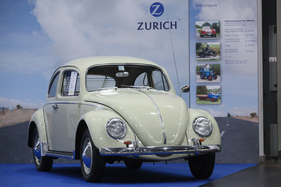
At the other extreme of the rivals are down-to-earth economy cars such as the VW Beetle and DKW Junior. Four-stroke, air-cooled, rear-wheel drive versus two-stroke, water-cooled, front-wheel drive: a battle of concepts that their missionaries fought with almost religious fervor around 60 years ago. Just like the followers of the Opel Kadett GT/E and the VW Golf GTI much later. These social wars of position distil into another mathematical equation: the more enthusiastic the supporters of a car type, the more passionate its opponents. Visitors to the Bremen Classic Motorshow 2020 can therefore look forward not only to a rendezvous with their favorite classic cars - but also, and especially, to a reunion with their old rivals.
Duel of the motorsport rivals
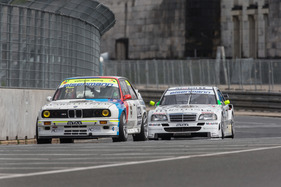
What better place for a duel between automotive rivals than on the racetrack? Mercedes-Benz versus BMW is one of those classic pairings whose duels in the German Touring Car Championship (DTM) thrill the spectators and reignite the controversies of their fans time and again. Two cars that dominated the DTM were the Mercedes-Benz 190 E and BMW M3 evolution models. "For many motorsport enthusiasts, these are absolute heroes that are rarely seen today. At the Bremen Classic Motorshow 2020, from Friday to Sunday, January 31 to February 2, the original racing cars will meet again," announces Frank Ruge, Project Manager at Messe Bremen.
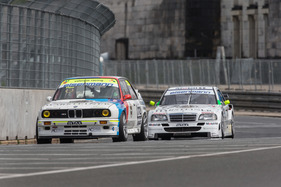
17 of the 150 members of the Kult-Blech-Szene association are currently creating the perfect setting for this rivalry rendezvous. The group has set up a temporary workshop in a former car dealership in Emsland. "We want to set up an oversized Carrera track in Hall 4 on just under 100 square meters, on which the two racing cars will be placed. That's why we now need a correspondingly large area," says Bernd Ramler. Ramler, deputy chairman of the association, was responsible for drive development in the motorsport division until the mid-1990s, first at Mercedes-Benz and then at AMG. "While the standard engines only produced 230 hp, the racing cars of the 1992/93 seasons were equipped with 370 hp. Depending on the track and rear axle, speeds of up to 300 kilometers per hour were possible - for both the Mercedes-Benz and the BMW," says the engineer.
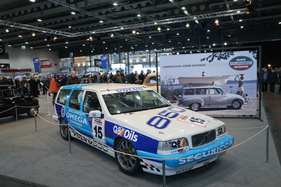
The models from the Young Generation trade platform in Hall 6 also boast plenty of horsepower under the hood this year. In contrast to the Young Classics next door, which are largely offered in their original condition and with low mileage, ten cars from the 1980s to 1990s, some with high engine power, will be for sale there. The trade fair organizers are supported by an Essen-based leasing company in the design of the area. "We see the potential of this format. Today, newcomers are looking for a BMW M3, an Audi RS2 or a rally Golf, for example," says Marcus Keller, Head of the Classic Cars division. "In other words, models whose windows they used to press their noses against as children and teenagers."
Speed was also what mattered to one of the two-wheeler special show lenders when he started looking for a scooter in 2011 after passing his driving test. "The privilege of Simson models being able to outpace the competition at a top speed of 60 kilometers per hour was the deciding factor in buying a 1976 matt black Schwalbe," says Martin Klein. A number of breakdowns awakened the then schoolboy's ambition as a mechanic, whose YouTube tutorials now provide help for self-help and achieve several hundred thousand clicks.
He now has fans from all over the world writing to him, which led to the idea of traveling all the way to Vietnam with the Schwalbe. Klein spent six months on the road in 2019 on his KR 51/2 from 1986. "We first dismantled the Schwalbe in Georgia in order to transport it in packages on two handcarts on the Trans-Siberian Railway," reports the former geography student. Together with the members of the Simson Club of Hanoi, he rebuilt the scooter and later dismantled it for the return flight. His "Vietnam Swallow" is one of more than 20 exhibits reflecting 70 years of scooter culture in Germany in Hall 1.
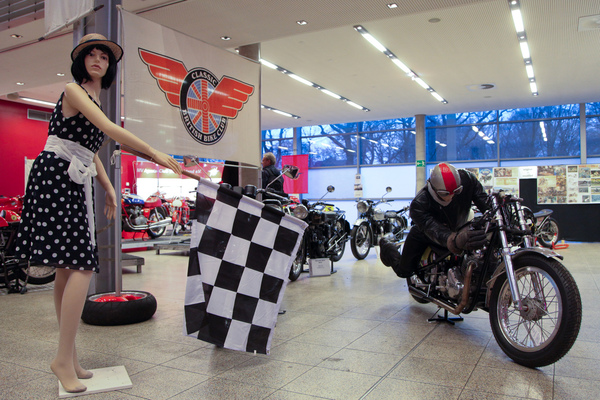
There will be more rarities on two wheels in the foyer of Hall 1. The special show "Collectors' dreams of the 70s and 80s" comprises eight racing bikes. The exhibits, including a 1986 Cinelli Laser and the 1987/88 Passoni titanium racing bike, come from the collection of bike enthusiast Wolfgang Hagemann. "Each of the 300 Cinellis was made by hand, so no two Lasers are the same," says Hagemann, explaining the appeal of the 1980s design icon and the exclusivity of the exhibition.
Scooter culture in Germany
Whether Vespa, Lambretta or Schwalbe - even 70 years after the start of the scooter wave in Germany, it is hard to imagine city centers without these small, agile two-wheelers. Purchased after the end of the Second World War as a replacement for the unaffordable car, the scooter quickly became a cult object for an entire generation in the 50s and 60s. "Scooters are clearly a vehicle that is as nostalgic as it is contemporary," says Frank Ruge, project manager of the Bremen Classic Motorshow. From Friday to Sunday, January 31 to February 2, 2020, the special two-wheeler show at the first classic car trade fair of the year will demonstrate how urban mobility is and was lived on small wheels. "With the 20 exhibits, we are taking a look back at the beginnings of mass motorization as well as at the mobility of the present," says Ruge about the concept of the exhibition in Hall 1.
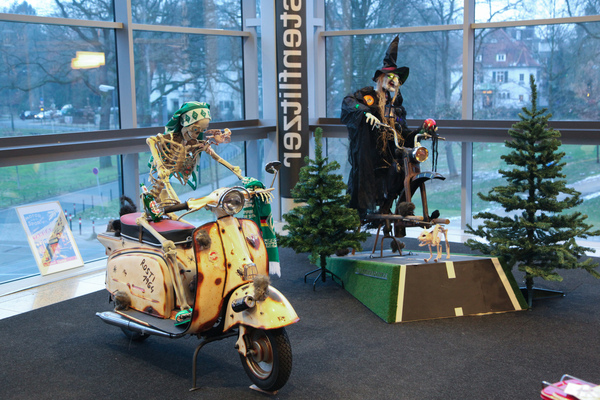
But back to the beginnings: Although the scooter is almost as old as the motorization of transport, until the middle of the 20th century all attempts to establish scooters as a two-wheeled alternative in Europe had failed. This changed with the Corgi and Cushman scooters of the Allies in Italy. From Pontedera and Milan, the Piaggio and Innocenti scooters began their triumphal march around the world at the end of the 1940s. In 1950, the wave of scooters also reached the roads north of the Alps.
The Italian models Vespa and Lambretta won over licensees such as Hoffmann and NSU. The models inspired imitators in the East and West to promote the civilization of the motorized two-wheeler with their own ideas. Inventors such as the Stüdemann brothers from Hamburg with their "Fibs", August Falz in Döbeln with the "Sibylle" and Achilles-Werke West in Wilhelmshaven quickly followed suit. Their "Sport" was based on the Swiss AMI scooter.
In 1951, Glas in Dingolfing created the new genre of large touring scooters with wanderlust guaranteed. The Goggo scooter, developed by engineers from outside the industry in 1951, became the market driver in 1953 in the 200 cc version; the ultimate Bastert single-track car made any thought of mobility without chic disappear. The Maicomobil offered good weather protection and plenty of storage space. With sidecars, it made entire families mobile before the advent of small cars. The Zündapp Bella, for example, which will be on display at the Bremen Classic Motorshow in a special export version for the USA, stands for the worldwide sales success of the German touring scooter.
Constructive passion gave rise to anti-Vespas: Lino Tonti's Aermacchis Cigno fought Vespa dominance with motorcycle-like driving dynamics. A Heinkel Tourist from endurance racing featured a GRP body and a rapidly revving four-stroke far removed from any petticoat idyll.
Racing spirit and stylish subculture are not mutually exclusive in the world of scooters and come together with all the two-wheelers mentioned in Bremen. A stylish Lambretta Skleleton stands for the pop culture of the 60s, while the popper Vespa PX belongs to the era of the 80s. With the Schwalbe to Vietnam or with the Vespa on the drag strip - the special show in Bremen also focuses on the escapist side of scooter culture.
At the end of the 20th century, the high volume of traffic in urban areas created new problems. Solutions were presented by Honda with the Helix and BMW with the C1 model.
Further information can be found on the Bremen Motorshow 2020 website.


