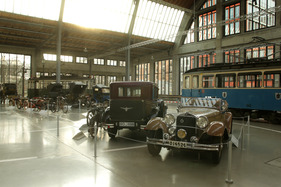
More than 100,000 visitors have become acquainted with the www.oldtimermuseen.de website since the beginning of the year alone. Real visitors, mind you, not software programs. The need for orientation is enormous, because the scene of small and large exhibitions with historic buses, two-wheelers, cars, engines, commercial vehicles and fire departments is extremely colorful and complex - and sometimes confusing. But first things first.
Discovering trouvailles
 If Dieter Lammersdorf had had the right handbook for classic car museums at the turn of the millennium, he would have come across the motorcycle collection in Pleidelsheim near Stuttgart much earlier. At the end of the 1990s, he was often on the road in southern Germany and only found out about the interesting (and unfortunately abandoned) exhibition in a former tobacco shed by chance. "That annoyed me at the time, because the museum would have deserved more visitors," says Dieter Lammersdorf, who bought a Heinkel scooter as a 17-year-old and has been passionate about classic cars ever since.
The civil engineer, special needs teacher and passionate mechanic didn't want to leave anything to chance in future and wrote the first classic car guide, which is divided into regions. Whoever went on tour in Germany could use the handy reference book to see where there were exciting things to discover from vehicle history nearby. The spiral book provided the most important information, contact details and images for a total of 164 museums. But the research was time-consuming, there was hardly anything to be found on the Internet. "I searched through all the classic car magazines and then sent questionnaires to the museums," says the author. The "German Museum Route" association with its then chairman Hans-Holger Frenzel also provided important support. In the end, the volume "Oldtimermuseen in Deutschland" was a success and is currently available in its fifth edition with more than 250 museums.
From book to online tool
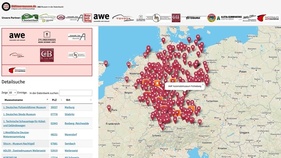
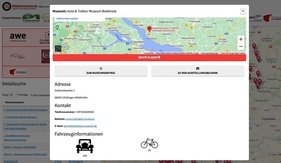
Spurred on by this, Dieter Lammersdorf launched his next major project in March 2022: building on the book, his completely revised website www.oldtimermuseen.de went online. Once again, the primary goal was to show classic car fans the way to publicly accessible collections quickly and easily. The centerpiece is a map of Germany, which now lists more than 350 locations, linked to the most important brief information about the museum. In addition, 20 museums for historic buses can be located throughout Europe.
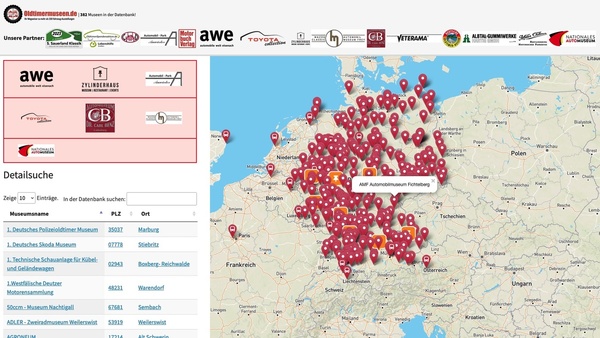
This time, Lammersdorf filled a digital gap in the market: after just a short time, more than 10,000 visitors per month were using the service. "The fact that interest has stabilized at such a high level speaks for the great added value that the site offers," says the classic car expert, who continuously updates his database and of course visits as many museums as possible himself. The range on offer is unique in Germany in this level of detail.
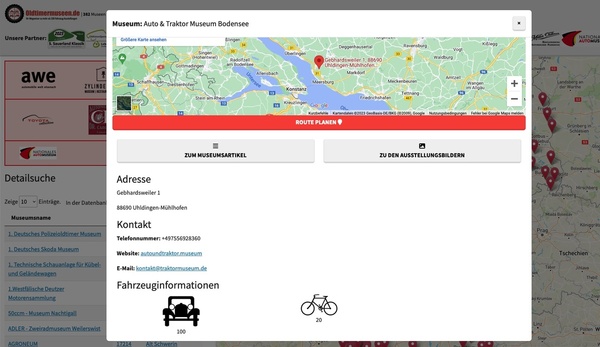
Free of charge for users
Dieter Lammersdorf promises that the use of www.oldtimermuseen.de will remain free of charge in the future. The cooperation with several advertising partners makes this possible. The 65-year-old puts a lot of work and passion into his project. But he never loses sight of what it is all about, namely his passion for classic cars. Not only has he dedicated two specialist books to his favorite brand Heinkel. In his home region of Sauerland, Dieter Lammersdorf can always be found on his 1960 Heinkel scooter. Or working on his Heinkel Trojan cabin scooter from 1963. What fascinates him about classic cars? "The fact that such fantastic vehicles were built back then with very simple means that still work today." This is not something you would expect from modern cars.
Further information can be found on the classic car museum website.