




The Nürburgring invites you to join in the celebrations this year. The anniversary will be the focus of numerous activities throughout the year. The Ringwerk Motorsport Experience Museum is setting up a historical themed report that charts the ninety-year history. There will be information boards in many places around the paddock and around the track, inviting visitors on a journey of discovery. In addition, the backstage tour takes a look behind the scenes and at the history of the race track.

A highlight of the anniversary year will be the Nürburgring Classic from June 16 to 18, 2017. This weekend marks the 90th anniversary of the Nürburgring's inaugural race. A perfect opportunity to revive the "Eifel Race" with a historic automobile race. The 90th anniversary of the traditional circuit will also be a theme at other events.

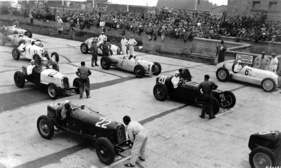
Countless anecdotes, legends and heroic stories are associated with the Nürburgring. The stories of stars and local heroes, events that have attracted worldwide attention and side notes in motorsport history fill entire bookshelves. Even the 1927 Eifel race became a legend. The winner of the sports car category, Rudolf Caracciola, made history with his supercharged Mercedes-Benz and became an icon himself. In 1934, the "Silver Arrows" were born here when, according to legend, Mercedes race director Alfred Neubauer had the white paint sanded off his competition cars in a night-time operation in order to meet the weight limit of 750 kg prescribed by the regulations. The era of the great Grand Prix duels between Auto Union, Mercedes and their Italian rivals in the 1930s was followed by the war years, during which motorsport came to a standstill.

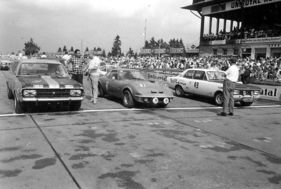
But soon after the war, the engines were rattling again - the first production facility for the "Veritas" racing cars was located here in 1947 and the first post-war race took place in August of that year. In 1950, a new generation of drivers competed in the German Grand Prix: Alberto Ascari wins three years in a row, Juan Manuel Fangio takes the hat-trick in Mercedes, Lancia and Maserati from 1954. In the 1960s, it was the endurance races, among other things, that fascinated fans - Formula 1 also offered great races on the Nordschleife, but these led to ever greater safety concerns. Niki Lauda beat the seven-minute mark for the first time in qualifying in 1975 and was seriously injured in a spectacular fire accident in 1976 - a dramatic conclusion to the decision to end formula racing in the "Green Hell".

Extensive construction work on the Nordschleife and the new construction of the Grand Prix circuit laid the foundation for today's layout - and it proved to be a stage for great sport. Michael Schumacher, Jacques Villeneuve and Mika Häkkinen were the stars after Formula 1 returned in the mid-1980s. A second major construction phase followed from 2007, during which the track and its surroundings were given their current appearance.

Find out more on the official website...

