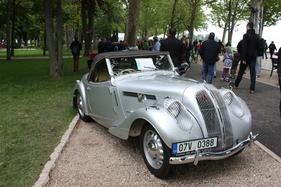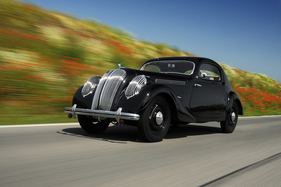



The Zdeněk Pohl/Jaroslav Hausman team, who started as outsiders, took second place in the class up to 1500 cm3 at the 1936 Monte Carlo Rally with a modified Škoda Popular roadster. The company took this achievement as an opportunity to launch a limited series of sporty models with a striking design - the Škoda Popular Sport Monte Carlo. Exactly 80 years ago, it celebrated its trade fair premiere at the International Motor Show in Paris.

Similar to the rally car, the customer vehicles also had the more powerful four-cylinder engine with a displacement of 1.4 liters and 31 hp from the Rapid model under the hood. The top speed was around 110 km/h and the hydraulic brakes rounded off the sporty nature of the Škoda Popular Monte Carlo.
The first two Škoda Popular Monte Carlo vehicles were built in July 1936, the last example - a coupé with dark gray metallic paintwork - was delivered on January 13, 1939.

Of the 70 cars produced, 24 were light roadsters with simpler equipment. In addition, 17 more comfortable roadsters with crank-operated side windows instead of top-mounted windows, 23 coupés, two cabriolets, two chassis for individual body construction and two chassis or just engines were produced.

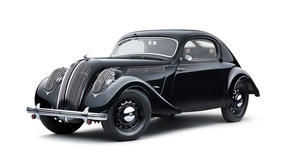
Two roadsters presented by the Czechoslovak government in 1938 to the head of state of the allied state of Yugoslavia, the fourteen-year-old King Petar II Karađorđević, were particularly luxurious. Discerning private customers could opt for the two-seater coupé Škoda Popular Monte Carlo. It was 4.20 meters long, 1.50 meters wide and 1.37 meters high and weighed 960 kg.
The facelift model went on sale in October 1937; its technical features were a modified suspension and set-up as well as an extended wheelbase. The compact body bore many elements of the streamlined design of the time, and the headlights were partially recessed into the fenders.
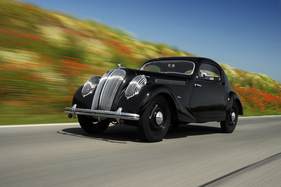
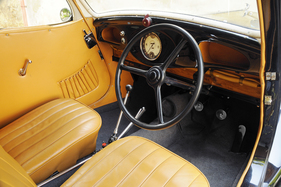
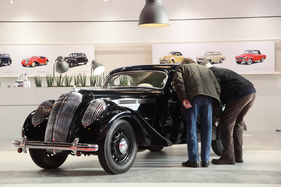
Today, around a dozen cars of the Škoda Popular Sport Monte Carlo type have been preserved. Back in 1968, the then newly founded Škoda Museum acquired a black coupé built in 1937, which was carefully restored at the turn of the millennium. Since then, the two-seater has been used for presentations on the history of the brand and has taken part in numerous classic car events. Another example from the limited Popular Sport Monte Carlo series is currently being restored in the workshops of the Škoda Museum.