



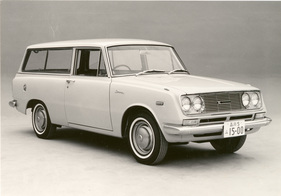
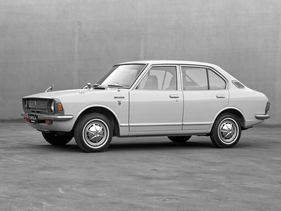
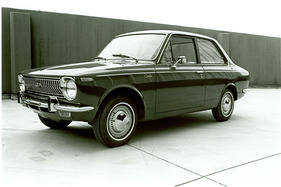
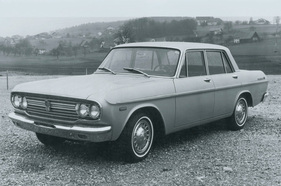
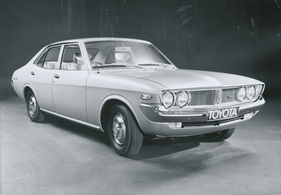
The first Toyotas rolled onto Swiss roads in 1967. This marked the beginning of the rapid rise of a brand that had previously been completely unknown in this country.
Today, Toyota is the largest car manufacturer in the world. The unprecedented success story began when Sakichi Toyoda (1867-1930) wanted to make his mother's hard life as a hand weaver easier. He developed a steam-powered weaving machine, and in 1924 he applied for a patent for what was probably his greatest invention: the "Toyoda Automatic Loom". His son Kiichiro entered the car manufacturing business and launched the Toyoda AA, the first model on the Japanese market, in 1936. The Toyota Motor Company was established the following year. Hardly anyone in the rest of the world took any notice of the new competitor from Asia.
Imports to Switzerland from 1967
This was to change abruptly in Switzerland when the Emil Frey Group founded Toyota AG in 1967 to import vehicles of the eponymous brand.
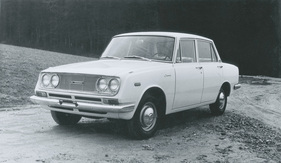
The Automobil Revue reported on the new importer in February 1967:
"Toyota AG, Zurich-Urdorf, was established with the aim of helping Toyota brand products to achieve a breakthrough in Switzerland as well. This is a subsidiary of Emil Frey AG, which is also the general agent for the Austin, Austin-Healey, Innocenti, Jaguar and Vanden Pia Princess brands.
Aware that Swiss motorists were understandably somewhat skeptical about buying a car from so far away, the introduction of Toyota products was meticulously prepared.
The main concern was the question of spare parts and the expansion of customer service. Initially, 10,000 spare parts items worth a quarter of a million Swiss francs were procured for the Toyota cars to be sold in Switzerland, while the technical staff of the Toyota sales organization received thorough training at the European subsidiary, Toyota Motors Sales Co. Ltd. in Copenhagen.
In addition, a Toyota dealer organization was set up that covers the whole of Switzerland. At the same time, the sales and service outlets in the other countries of the European continent are also being greatly expanded; a central European warehouse being built in a European port will also soon reduce the long distances from Japan to European distances.
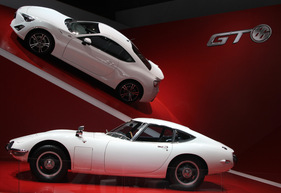
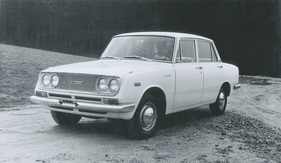
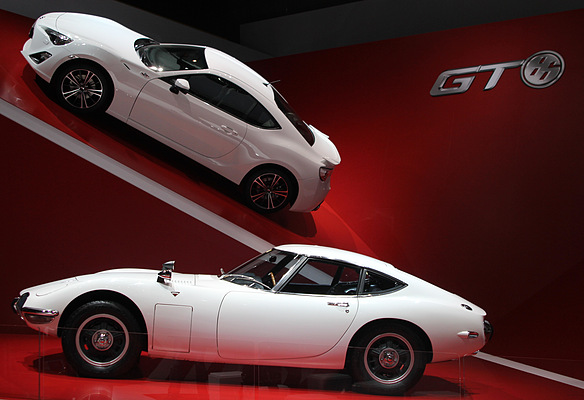
While Toyota Motor Co.'s passenger car range extends from the two-cylinder Toyota 800 Deluxe small car to the luxurious Crown Eight V8 saloon and the 2000 GT high-performance sports car (with three world records and thirteen international class records), the Swiss sales program concentrates on the three types Corolla, Corona and Crown."
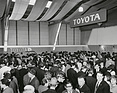
Present at the 1967 Geneva Motor Show
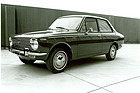
The Corolla 1100 was available as an entry-level model from 6975 francs. In contrast to the established competition, which initially sneered at the newcomer, later observed it with suspicion and finally fought it with all its might, Swiss motorists quickly took a liking to the practical vehicles.
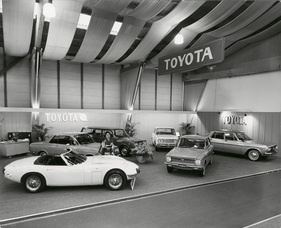
This was certainly made easier by a compelling sales argument: the cars were fully equipped, there was no extra charge list for extras. Rear window heating, cigarette lighter and radio in the more expensive models - all included! What's more, the quality was so excellent that the dealer workshops complained about a lack of work.
Rapid growth
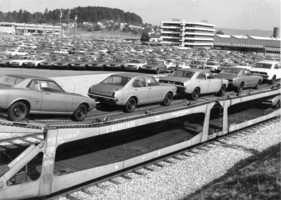
By 1972, 22,680 Toyotas had already been sold in Switzerland, and in 1976 the importer came up with another pioneering achievement: the 3-year warranty with unlimited mileage.
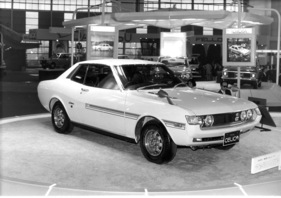
This was followed by cult cars such as the Celica, the Landcruiser, the MR2 and the GT86; Toyota was also the first manufacturer to launch a compact leisure SUV on the market with the RAV4, and with the Prius, the first full hybrid in large-scale production (1997), Toyota focused early on environmentally friendly drive systems and economical energy consumption.
Toyota also made a name for itself in motor racing. In the 1970s and 1990s, the Japanese dominated rallying and won three manufacturers' and four drivers' world championships (WRC).
Anniversary models
In the anniversary year, Toyota is launching a strictly limited edition anniversary model every month, which can only be ordered online. The numbered "50 Years Edition", marked with a badge, is distinguished by its exclusivity and unique added value.
The anniversary editions can be viewed and ordered online.