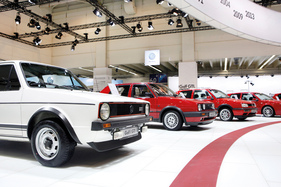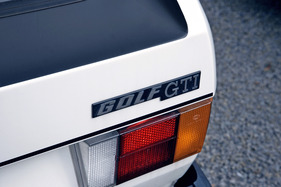
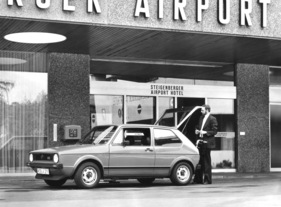
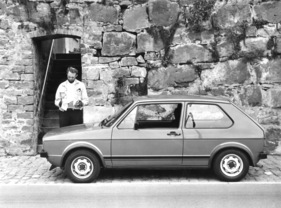
When is a car actually born and when should you celebrate its birthday? The start of production and the presentation are often months or even years apart. This was also the case with the Volkswagen Golf GTI. It was announced in the early fall of 1975 and the press reported extensively on the new arrival.
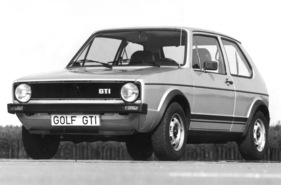
It was then on show at the IAA in Frankfurt in the second half of September 1975, but the fun runabout was not put in the garage until the summer of 1976.
The surprisingly successful first edition
Volkswagen had actually expected a 5000 series and then called it a day. But demand far exceeded expectations. The German market alone demanded significantly more GTIs per year and in Switzerland the GTI was one of the most successful Golf models ever.
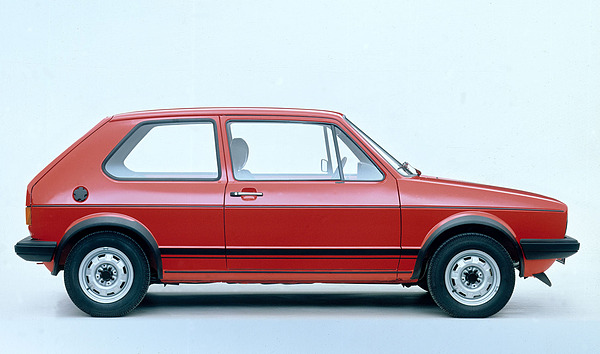
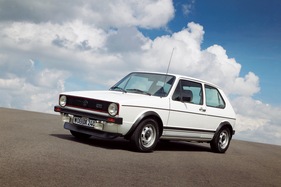
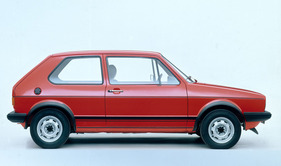
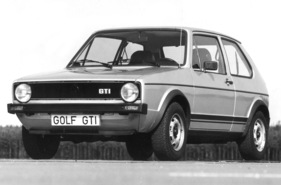
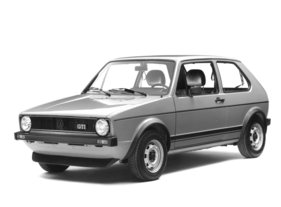
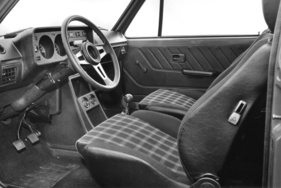
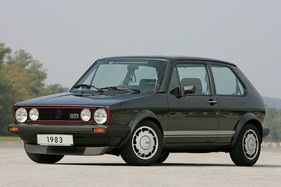
The recipe was relatively simple. They simply put the new 1.6-liter injection engine, which first appeared in the Audi 80 GTE, in the front of the Golf, modified the suspension and brakes and decorated the car with side stripes, a matt black rear window trim, plastic fender extensions and a red-edged radiator grille. Inside, there were Recaro sports seats (with a check pattern), the so-called "spittoon" steering wheel and a golf ball as a gear knob.
Just under nine seconds were enough for the 810 kg light compact sports car to sprint from 0 to 100 km/h. From then on, BMW and its ilk were no longer safe from the Golf on the highway. And a new vehicle category was born, the GTI concept was imitated by many different parties.
Evolution and tuning
The Golf GTI was, of course, developed further, and from 1982 it was also available with a 1.8-liter engine for the first series and, finally, as a special "Pirelli" model with special alloy wheels.
And logically, the tuners, e.g. Zehnder, Oettinger, Rinspeed, also took up the Golf GTI. It was available with gullwing doors (Rinspeed Aliporta), with a 16-valve engine (Oettinger, France only), etc.
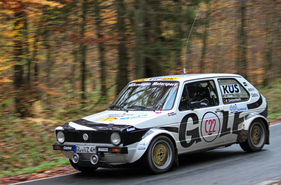
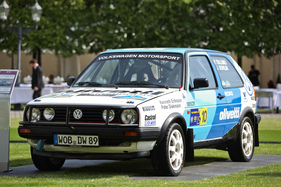
And the little one also made an appearance in motorsport.
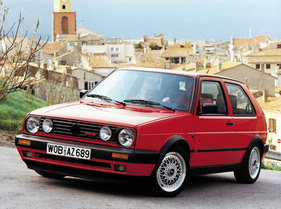
Of course, there were also GTI variants of the successor series, the Golf II even with a G-charger and 160 hp, but also significantly heavier.
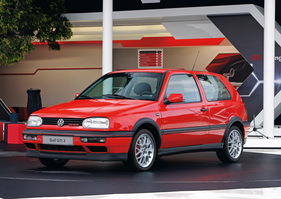
In the Golf III, the GTI no longer played the same role as in the previous series; the top-of-the-range engine was now the VR6.
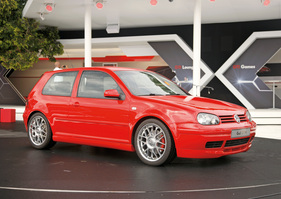
In the Golf IV, the GTI also received a five-cylinder engine and the 1.8 turbo already produced 180 hp.
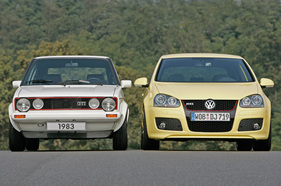
The Pirelli special model was revived in the Golf V, but the R32 now took over the leading role in terms of performance.
In the Golf VI, the GTI then developed 211 PS with a 2.0 TSI engine, while the Golf R inherited the R32.
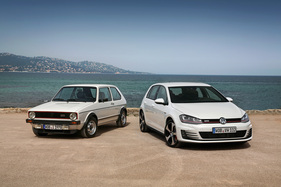
The same concept was also used for the Golf VII, with the "normal" GTI now having a maximum output of 220 hp, the "Performance" version 230 hp and the "R" now having an all-wheel-drive 300 hp.
Volkswagen will celebrate the GTI's birthday in 2016 and will certainly present an Edition 40, as corresponding special models were already available earlier with the Editions 20, 25 and 30.