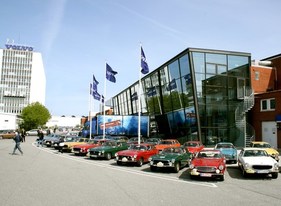
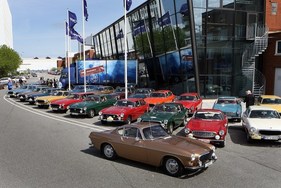
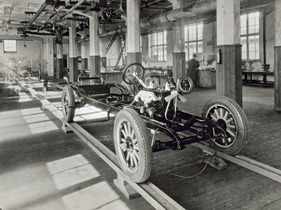
Volvo is celebrating the 25th anniversary of its company museum, one of the most popular visitor attractions in the western Swedish port city of Gothenburg. On May 30, 1995, the Volvo Museum was opened in the Torslanda district on the historic grounds of the island of Hisingen, which has been the headquarters of the Swedish premium car manufacturer since the start of production of the first Volvo ÖV4 "Jakob" in 1927.

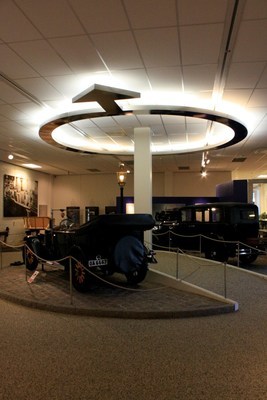
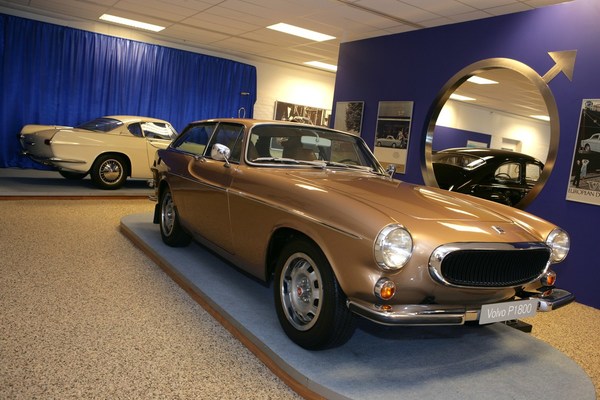
In the museum, visitors can expect a fascinating journey through time to around 100 Volvo classics and concept cars, developed under the leitmotif of innovative safety. In addition to cars, commercial vehicles, buses and construction machinery are also on display, as the Volvo Museum is operated jointly by Volvo Cars and Volvo AB.

Past, modernity and future combined
The location of the Volvo Museum on the site of a former shipyard directly on the banks of the Göta Älv river and with a panoramic view of the harbor and Gothenburg archipelago is unique for a collection of classic vehicles. The proximity to Volvo's main plant in Torslanda bridges the gap between tradition and modernity, but the museum itself also presents the forward-looking innovative power of the Volvo brand.
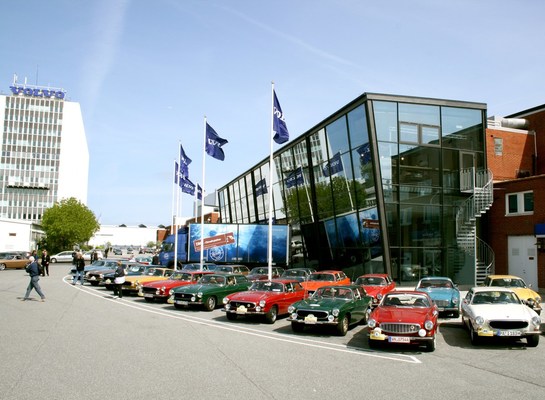
The exhibition concept is also extraordinary: on two levels with a total area of 8,000 square meters, a chronologically guided tour of the museum features around 100 Volvo series vehicles and concept cars as well as many other exhibits from the world of Volvo, including trucks, buses, construction machinery, aircraft with Volvo technology and boats with Volvo Penta engines. There are also exciting themed islands, for example about Volvo in motorsport, while changing special exhibitions showcase cult classics, such as the Volvo 240. More than 90,000 museum visitors experience this fascinating journey through the history of Volvo every year.
A tradition of pioneering safety technology
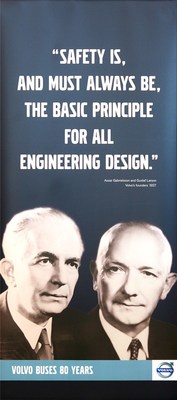
As unique as Volvo's success story is the motto that the company founders Assar Gabrielson and Gustav Larson postulated and according to which all Volvo automobiles are still developed today: "Cars are driven by people. The guiding principle for everything we do at Volvo is therefore safety". These sentences are at the beginning of the museum tour, which first leads to the desk of the company founders and then vividly presents all the great inventions of Volvo safety technology.
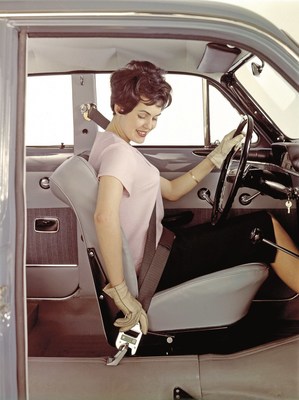
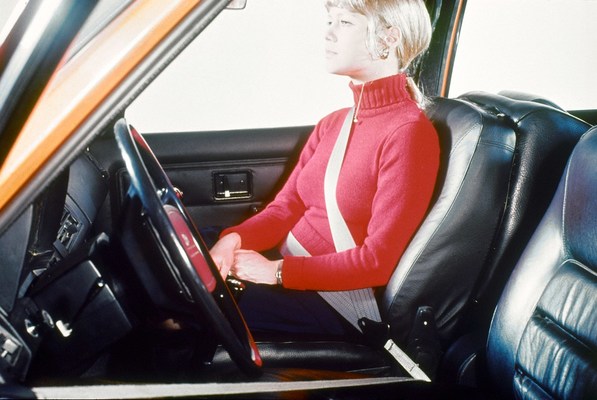
First and foremost, of course, the life-saving three-point safety belt, developed by engineer Nils Bolin and first introduced in 1959 in the Volvo PV544 and Volvo P120 Amazon models. As is the case today with the E.V.A. digital safety library, Volvo put social progress above financial gain even back then and released the patent for the three-point safety belt for use by all other vehicle manufacturers: "A bit of Volvo is in every car", the museum therefore rightly states.
Almost all essential Volvo safety innovations are explained in the museum, such as the side impact protection with side airbags introduced in the Volvo 850 in 1995 or the advances in protection for the little ones, such as the first rear-facing child seat in the Volvo 144 from 1972. Many pioneering protection systems first made their debut in concept cars and there are also several of these to discover in the Volvo Museum. For example, the Volvo VESC driving test laboratory from 1972 with anti-lock braking system, seatbelt reminder and reversing camera, or the Volvo Safety Concept Car (SCC) from 2001 as a forerunner of the later Volvo C30 series model.
A crowd favorite: Concept with gullwing doors
The two absolute crowd favorites in the museum are also concept cars. One is the spectacular Volvo YCC (Your Concept Car) gullwing door study from 2004, which was the first Volvo to be developed by a team made up entirely of women. In fact, the Volvo YCC not only became a dream car for women, its cool, award-winning design also inspired men.
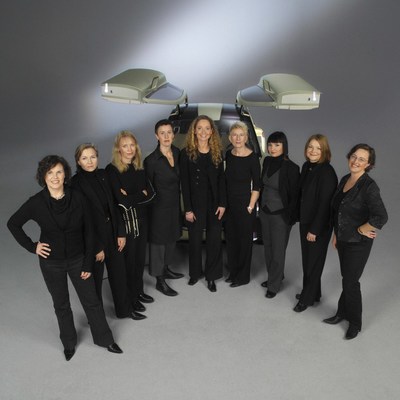
With new technologies such as automatic door opening, autonomous parking assistant and online communication with service workshops, the Volvo YCC pointed far into the future.

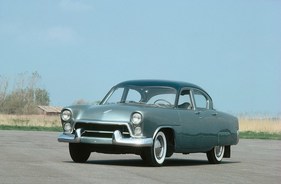
In contrast, the Volvo Philip presented in 1952 embodied the prototype of the Swedish dream car with glamorous lines, inspired by the US style of the Golden Fifties by Volvo designer Jan Wilsgaard. The first Volvo V8 engine under the hood of the Volvo Philip was a perfect match.
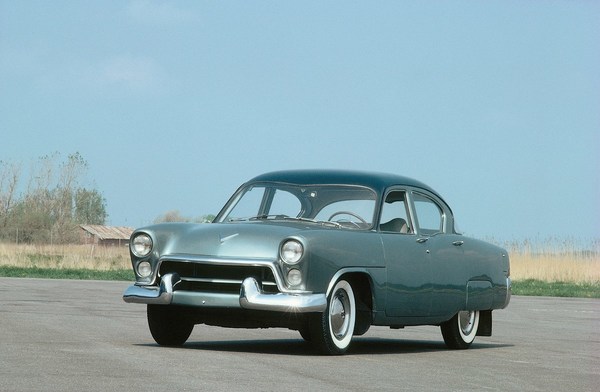
Just how important sustainable technology has always been for Volvo is demonstrated in the museum by historic Volvo prototypes with electric drive, the first three-way catalytic converter with lambda sensor and lightweight materials.
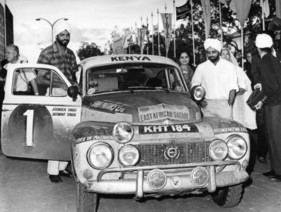
Racing can also drive technical developments forward, and Volvo was involved in rallies as early as 1928. This was followed by legendary victories with the Volvo PV544 in the Safari Rally, with the Volvo 240 and the Volvo 850 - as the first station wagon - in touring car races or rallycross up to the successful Volvo C30 of the Polestar Racing team. Pulse accelerators, which the Volvo Museum displays in its own presentation area.

Experience Swedish icons, film stars and fascinating everyday heroes up close
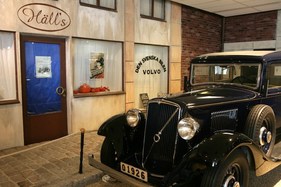
The history of Volvo is also brought to life by vehicles presented in a contemporary setting. The scenery of a parking lot surrounded by stores takes you back to the 1930s, the decade when the Volvo PV655, today the most valuable vehicle in the Volvo Museum, was celebrated as the epitome of luxury and beauty, while the Volvo PV36 Carioca from 1935 brought the streamlined shape to perfection. From the private collection of Selma Lagerlöf, the first woman to win the Nobel Prize for Literature, comes a noble Volvo PV38 from 1938.
The Volvo PV60 from 1946, which belongs to King Carl XVI Gustaf and in which the car fan regularly takes part in a classic car rally on the island of Öland together with Queen Sylvia, also conveys royal splendor. A popular selfie spot for museum visitors can also be found in front of the Volvo P1800 in which film star Roger Moore hunted down criminals as TV series hero Simon Templar. The Volvo 1800 ES Shooting Brake, which became famous as "Snow White's coffin", is also one of the favorite photo motifs.
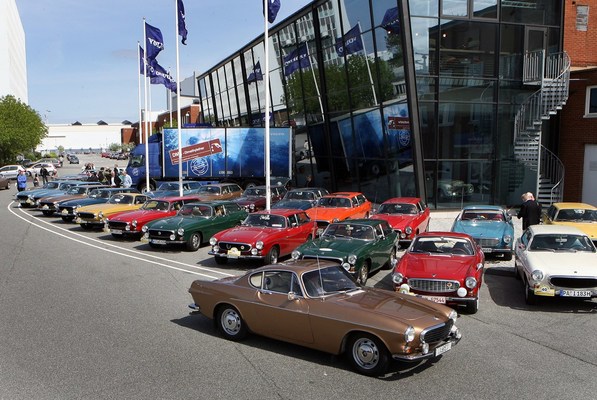
In contrast, early estate cars such as the Volvo Duett introduced in 1953 or a caravan on the hook of a Volvo PV444 convey a vacation and summer feeling. Of course, iconic family cars such as the Volvo 240 and Volvo 740 estate and the Volvo XC90 luxury-class SUV are also on display. As a dynamic exhibition, the Volvo Museum regularly changes the exhibits, with a total of 180 vehicles waiting in a depot for their turn.