Around 162 years ago, Adam Opel founded his eponymous company in Rüsselsheim am Main, Hesse, in 1862. He began with the production of sewing machines and in the following years became the largest sewing machine manufacturer in Germany. The world of mobility started at Opel with the production of bicycles, which began in 1886 and continued until the mid-1930s. Here too, Opel quickly became one of the leading and largest bicycle manufacturers in Germany.
The first Opel automobile 125 years ago
In 1899, the time had come: The "Opel Patent Motorwagen System Lutzmann" left the Rüsselsheim factory halls with around 3.5 hp as the first Opel motor vehicle and was to lay the foundation for vehicle production at Opel that continues to this day.
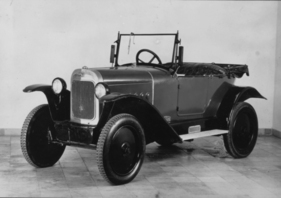
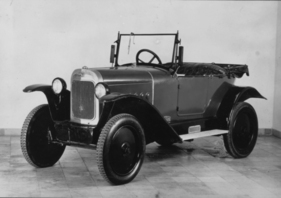
A success story that now lasts 125 years and can look back on great things: 1924 start of the first serial car production on the assembly line in Germany with the Opel "Laubfrosch", 1928 start of the rocket age at Opel: Adam Opel's grandson Fritz initiates driving tests in which solid-fuel rockets are ignited at the rear of the vehicle, catapulting the vehicle into previously unattainable speed ranges, e.g. in May 1928, when the Opel "Laubrosch" was launched.In May 1928, for example, Fritz von Opel accelerated the "RAK2" rocket car to 238 km/h on the AVUS track in Berlin.
The 1930s were also characterized by progress at Opel: 1936 saw the debut of the Olympia model (in reference to the 1936 Olympic Games in Berlin), the first German production vehicle with a self-supporting all-steel body; in addition, the Olympia was already "motorway-compatible". In 1935, Opel began production of the "Blitz" truck at what was then Europe's most modern automobile plant under the management of Opel director Heinrich Nordhoff.
Success and growth after the Second World War
Even though the main plant in Rüsselsheim had been almost completely destroyed as a result of the war, the brand with the Blitz continued to grow rapidly after the war: in November 1956, for example, Opel broke the 2 million mark in production. The anniversary model is a Kapitän, whose chrome parts are decorated with 24-carat gold leaf. Incidentally, Opel was the most successful German manufacturer of luxury-class vehicles at the time, a status that was to last well into the 1960s.
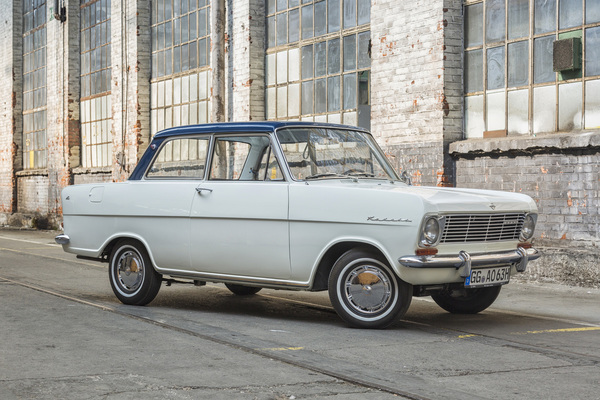
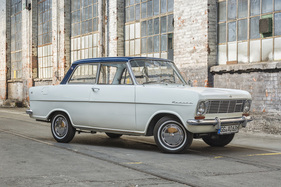
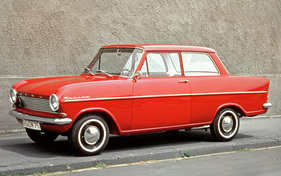
In 1962, another Opel hit made its debut with the first post-war model in the compact class: The Kadett from the newly built Bochum plant marked the beginning of the Opel model range and remains an important pillar in the Opel product portfolio to this day (from 1991 under the model name "Astra"). True people's sports cars with breathtaking design appear in 1968 and 1970 in the form of the GT and Manta models, which quickly win the hearts of car fans.
Opel successful in motorsport
This is also the time when Opel increasingly devotes itself to motorsport, not only to demonstrate the performance of its products, but also to create a sporty image. The plan works, for example with the victory in the 1974 European Rally Championship, won by none other than Walter Röhrl and Jochen Berger in an Ascona A. Legendary then was the victory of the Drivers' World Rally Championship title in 1982, when Walter Röhrl again competed with Christian Geistdörfer in the Opel Ascona B and brought the title to Rüsselsheim against an overpowering four-wheel drive competition.
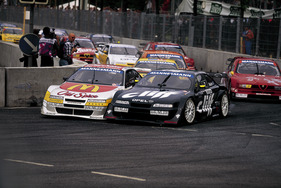
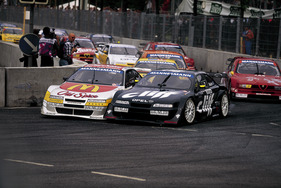
Things are also going well for Opel on the circuit: for example in 1996, when Manuel Reuter wins the championship title in the international ITC for Opel in a Calibra V6, or in 2003, when Opel also scores points in the Eifel and wins the overall victory in the 24-hour race at the Nürburgring with an Astra DTM V8.
Milestones in Nuremberg
From December 6 to 8, 2024, Retro Classics Bavaria will take visitors on a journey through the 125-year history of Opel automobile construction. Classics from the Rüsselsheim Classic Collection and from the Alt-Opel-IG will be on display.
Further information can be found on the website of the Retro Classics Bavaria classic car show.