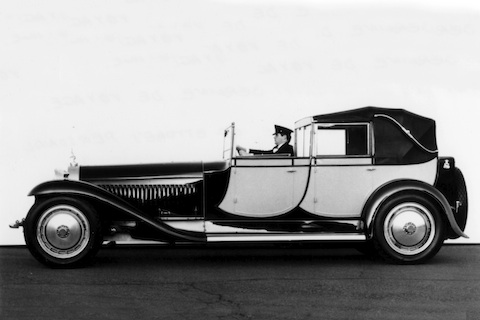
Coachbuilding company Erdmann & Rossi - purveyor to the court


You have only
4 out of 47
images seen in high resolution


Summary
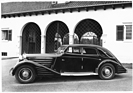
Anyone who was self-respecting in the 1920s and 1930s and had the necessary financial strength did not buy a car off the peg, but had a special body made by one of the numerous coachbuilders. One of the most famous German coachbuilders was the Berlin company Erdmann & Rossi. Princes, prominent actors, sportsmen and aviators were among its customers. But also the inevitable Nazi celebrities - and after 1945, officers of the Red Army. This article looks back at the history of the Berlin coachbuilder Erdmann & Rossi and shows many of the cars built there.
This article contains the following chapters
- From the horse-drawn carriage to the automobile
- For the richest and most important
- Caesura
- From car sales to marriage
- Mainly German chassis and new competitors
- Survival
- Streamline
- Prominent customers
- Military gray instead of glossy paint
Estimated reading time: 7min
Preview (beginning of the article)
An eventful year 1898: the Reichstag adopts the first naval law - the German Naval Association is founded. The USA seizes the majority of all colonies in the war against Spain. Kiautschou becomes a German colony in China. The Social Democratic Party is founded in Russia. The Second International excludes the anarchists, and Marie and Pierre Curie discover radium. In the same year, the first Berlin-Potsdam car race takes place, and a certain Willi Erdmann opens a coachbuilding business on the Spree, which is soon to become one of the most respected in the entire German Reich. Demand is high and business flourishes: The aristocracy and the nouveau riche crème de la crème of the bourgeoisie had plenty of money and ordered coaches - initially for oat operations. But the horse was gradually replaced by the motor. In addition to its speed, it is its consistent power that gives it the edge over the four-legged creature. The motor can run at top speed for hours on end and overcomes all gradients with ease. The horse must be defeated by such an opponent.
Continue reading this article for free?
Images of this article