"75 years of Porsche sports cars": For many, this is a good reason to make a pilgrimage to the magnificent Porsche factory museum in Stuttgart-Zuffenhausen. However, if you want to admire the early history of the famous manufacturer not through sports cars in the flesh, but through contemporary devotional objects, you would be better off a good 200 kilometers further south - on the northern outskirts of Zurich. That would be because the address is not officially open to the public.
This is extremely regrettable. After all, behind the camouflage of the unadorned, easily overlooked row of garages located here resides the holy grail of historical testimonies to the global Porsche brand. Or at least a good part of it. Marco Marinello, the owner of this spectacular collection of devotional objects, deserves at least as much attention: after all, the jovial-looking Swiss man is nothing less than the forefather of Porsche's own classic car department. The fact that he runs a highly specialized trade in spare parts for historic Porsches with his company Elevenparts AG is almost a minor matter.
Disorder from own slaughter
We have an appointment to visit. The unadorned row of garages in Bärenbohlstrasse looks almost deserted. Behind the wide fields, highway 1 rushes past between Dietikon and Zurich-Kloten airport. Suddenly, a gate creaks on its unoiled hinges behind me. A very tall man of mature age leans out. "I'm right here," he calls, waving me over. It's the man whose name feeds similarly misguided expectations and ideas as the entrance to his company headquarters. It's Marco Marinello. In person.

Inside the gate, the exact opposite of the clichéd orderly Swiss world prevails. The post office is about to close, seven parcels still have to go out. Marco Marinello maintains the calm of decades of routine. "Can you give me a hand?" I lend a hand. And I'm amazed. Porsche parts are lying around everywhere, with cardboard boxes, upholstery film and rolls of adhesive tape in between. The smell of burnt-out tobacco hangs in the air; it wasn't long ago that the landlord was a chain smoker. What leaves these rooms on the shipping route can hardly be described as "from a non-smoking household".
However, the most discerning Porsche collectors around the world have no choice: much of what is available here can only be found here. An original crankshaft for Porsche's legendary twelve-cylinder 917. The unused replacement body of the beautiful 910. Or - in true Porsche fashion - the only original door seals for early 911s. Marco Marinello, a kind of sand grain counter among authenticity fetishists, has them, like many other components, reproduced himself. The focus is on supplying 356s in need of renovation - and he only supplies his new parts to a few independent parts dealers.

Used parts for Porsche sports and racing cars from the '50s and '60s make up the rest of his range, which he also supplies to private customers. "A lot of it still comes from our own slaughter," reveals Marco. Which means that he has been stocking these items since at least the early 1980s. Because when even the most ruined 356s matured into salvageable classics, there were no more parts carriers. And that was almost half a century ago. By then, he had already boned and carved numerous original Porsches, including two rare Carrera cars that are now insanely valuable. How many in total? "30 or 40, maybe 50, never counted," says Marco dryly. How did it all begin? How did the giant Swiss, built in 1953, become the nucleus of factory parts supply for old Porsches? He pushes a few boxes off two armchairs and we take a seat. Then he pours coffee and takes a deep breath.
For a handful of croissants
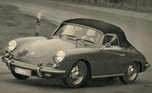
The story begins shortly after 1900, when Marco's Italian grandparents, on their way from the Dolomite province of Belluno to the dreamland of America, get stuck in Zurich. There they set up a wholesale vegetable business. In 1964, when Marco was just eleven, his father bought a second-hand Porsche 356. Six years later, at 17, he had one of his own. "A '57 A-Coupé, 60 hp, nasty rust - and a VDM wooden steering wheel from the Carrera GT, which would fetch 10,000 francs today."

What does Marco pay for his first 356 as an apprentice accountant without a driver's license? Mowing his brother-in-law's lawn for two summers. In 1972, at the age of 19, he bought his second 356, a B Super 90 for 1,500 francs. A 356 SC Cabriolet followed just weeks later for 500 SFr. Shortly afterwards, the teenager on the cusp of his twenties started his second career as a Porsche butcher.
The business takes off when Switzerland bans the parking of old cars on unpaved ground in 1975. As a result, the prices of used 356s fell: ready-to-drive cars were now available from 50 francs. A 356 B/T6 Roadster marks the lower price limit: Marco's friend Armin Baumann invites the seller to the café to negotiate the purchase. And in the end, he only pays for a cup of coffee and a nut croissant for the rarity that was built 249 times.

At 22, Marco takes a break from art: To improve his English, he worked for a year in the wastelands of Ontario, Canada, at a hunting and fishing camp. In winter, he traveled to Latin America. At the beginning of 1976, on a tour of Mexico City in a VW bus, he met Carol. In February 1977, the Canadian nurse became Mrs. Marinello. In the meantime, his brothers have taken over the wholesale vegetable business. Back in Zurich, Marco also joins the business. After work, he runs his butchery business in the garage. As an English professional, he now also sources many new parts from the USA. From Chuck Stoddard, a large authorized Porsche dealer in Willoughby, Ohio.
Stoddard took over the company NLA in 1972. The abbreviation stands for "No longer available", i.e. discontinued spare parts. NLA founder Brad Ripley had started out in 1969 in Boston as the first parts supplier for aging 356s, and with the takeover Stoddard became the hub for everything to do with the original Porsche. It produced its first parts catalogs - and above all the first rebuilds.
From NLA to PSP
At the big 356 meeting in Sweden in 1977, Stoddard met his customer Marinello in person. As an English-Italian-German-French interpreter, the young Swiss, who had co-founded the 356 Euroclub in 1975, was his first contact in the Old World. The inevitable happened: Marco Marinello opened Stoddard's European branch in 1978. "From two in the morning until three in the afternoon at the vegetables, then packing Porsche parts until two in the morning and back to the vegetables again: you can't do that for long," says Marco looking back. In the case of the young father (Stefano was born in 1979, Gina in 1982), the almost sleepless double burden lasted a good two years.

Until the cards were reshuffled: In 1981, the German-American Peter W. Schutz took over as CEO of Porsche. He immediately turned the sports car manufacturer upside down. Especially on the sales side. The business with new parts for old cars impressed him. Especially as the brand was just discovering the advertising power of its own history. But Stoddard complains bitterly: "There is no support from the factory, not even legitimization - why doesn't Porsche just buy his business? Schutz thinks for a moment. And then he takes action.
The new company is called PSP. That stands for "Porsche Special Products". General Director: Chuck Stoddard. Managing Director of PSP of Europe: Marco Marinello. With a heavy heart, he leaves the vegetable wholesale business, which now employs almost 100 people. He is also scaling back the used parts business, which he had run with two friends in recent years. "Chuck and I were movers and shakers. PSP ran at full speed straight away," says Marco. "But we were naive. Corporate politics? Never heard of it." And then he describes how the two dynamos of the oldie parts organization in Ohio and Zurich were ground between the millstones of the Porsche and Piëch clans.

On the one hand: Dr. Ing. h.c. F. Porsche AG in Stuttgart - with Ferry Porsche as Chairman of the Supervisory Board. On the other: Porsche Holding Salzburg under the aegis of the Piëchs - with Ferry's sister Luise Piëch at the helm. PSP is technically and operationally linked to Stuttgart, but belongs to PoA (Porsche Cars of America). And PoA belongs to Porsche Salzburg. On the surface, the holding company is a large trading company. But behind the façade, a gigantic corporate network is emerging - with three to four times the turnover of the famous but comparatively small sports car manufacturer.
A piquant constellation that provokes problems. Especially because Porsche CEO Schutz wants to cut the margins and privileges of importers and dealers in favor of the manufacturer. "A declaration of war from Stuttgart to Salzburg that had to be answered," Marco recalls. "From then on, the representatives of the Piëch faction never missed an opportunity to damage their enemy image of protection." Alongside Stoddard and Marinello, Wolfgang Porsche and Michel Piëch sit on the PSP Board; two milder representatives of the opposing sides. But also those with quiet voices within their factions. Decisions are postponed, investment requirements are calculated down and tough commercial compromises are sought. The result: PSP is driving with the handbrake on.
Original parts and reproductions
In 1982, an important step was taken: "All 356 parts in the Porsche central parts warehouse in Ludwigsburg - most of them with a three-centimeter layer of dust - were sorted out, stuffed into six 40-foot containers and shipped to America," reports Marco. There, the new-old-stock parts were cleaned, labeled, packaged, inventoried and priced - "a Sisyphean task: some of them were wrong, many were not numbered at all, and some could not even be identified by old Porsche professionals."

But there are also treasures to be found. "For example, 450 brand-new 356 B/C hood handles that were out of stock for years." Finally, Porsche can once again officially offer many original parts for its early models - in addition to the growing portfolio of reproductions. A huge success for PSP.
However, the Porsche versus Piëch family feud reached a new climax with the sales plan, for which Schutz even planned to supply independent dealers directly from the factory, bypassing the importers. Until Stoddard, worn down between the war fronts, threw in the towel in 1983. Marinello was thus rid of his most important teammate. "Chuck was honest, hard-working, entrepreneurially straightforward, technically brilliant - and incredibly fast at the wheel. Right up to the 908 and 917. A huge loss." Two weeks later, the Swiss man himself resigned. "Wolfi Porsche begged me to stay. I just said: fuck you, I'm no good as a politician."
However, he leaves behind a tilled field: the logistics and structures for the future supply of parts for the VW-Porsche 914 are in place, and those of the early 911 have been outlined. Porsche's Classic Centers, which are to be built decades later, have been designed down to the business plan. And a scrapping ban has been imposed on old stock. "The latter was crucial. When the authorized dealers caught a whiff of morning air with the 924/944/928 generation of water-cooled cars, they just wanted to get rid of the old snot and threw everything on the scrap heap," says Marco. And what happened next for him? "First of all, I cleared my head for four or five months. For example, fly fishing in faraway Idaho."

If his brothers had their way, he would have returned to vegetables. Instead, Marco founded his own company in 1984. Under the catchy name Elevenparts, the idea was to create a wholesale business for reproduced new products. "A plan that was soon thwarted by the creepy attention to detail of some parts," says Marco. "Like the lousy repro interior mirrors for late 356s and early 911s. Of course, I soon activated my contacts to parts manufacturers, including great foundries in Italy." Using the mirror from his own production, he specifies his quality standards: "This is what the thing has to look like and nothing else."
Souvenirs from the early days
Today, his range comprises 350 items. Half of these, including the 356 ignition lock, are exclusive to him. His passion, however, lies in the endearing folklore of souvenirs from the sometimes highly improvised early days of his brand. "This advertising pillar is a highlight of this culture," he enthuses. He presents me with the cardboard roll in which Porsche presented loyal customers with fine brandy around 70 years ago. It is decorated with miniature racing posters. "Evi Butz, the secretary to advertising manager Huschke von Hanstein, pasted them on herself. In front of the TV in the evening. Adorable, isn't it?" Absolutely, absolutely adorable - as long as you don't have to pay for the DIY. At auctions, a rare advertising pillar like this can fetch 2,000 euros.
Marco gradually unearths his incredible treasures, accompanied by great pride and almost childlike enthusiasm. The picture album of original photos that were retouched for Porsche's repair guides and advertising motifs. The genuine paint color sample card with seat cover and carpet sections worth half a small car. Porsche's first operating manual from 1948 from Gmünd, Carinthia - hand-drawn, hectographed and immeasurably valuable. "They don't even have souvenirs like this in Stuttgart," Marco murmurs, trying in vain to hide a spark of inner joy.

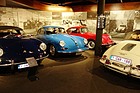
Later, we drive to his external warehouse, where complete Porsche vehicles for the road, race track, field and ski slope are waiting alongside an endless number of large parts. A museum? It would be, if some of it wasn't for sale. But he keeps the real treasures - "Matters of the heart are non-negotiable." What strikes me: every corner is decorated with old race numbers, event badges, rally signs and club event badges. Marco and Carol brought them in themselves. All of them. Preferably with the fjord green 356 B Roadster from 1962, which he bought in 1989. "Almost every country in Europe, North Africa, the Middle East: that's quite a few kilometers," he says, downplaying the large amount of border traffic on his own account.
Just dreaming?
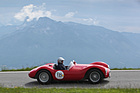
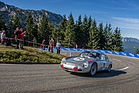
The evening ends with fireside stories. Marco tells us that he used to trade in whole Porsches, but gave it up, "because nowadays it's only the increase in value that counts, not the horsepower." How his old company PSP became Porsche Classic GmbH in 1990. That Carol and he are still enthusiastically involved in the 356 club scenes in Europe and the USA. That they have their most loyal friends there. And of his racing in the Austro Formula V, 356 (Le Mans Classic), 911 RSR, 917, 911 ST and 550 Spyder. Although the latter is a bit of a pinch at 1.92 meters tall.

As a parting gift, I am allowed to take a few stickers and a poster with me. And the light green Porsche ashtray...? "Stay where it is!" hisses Marco Marinello. Sorry. Of course. Then the gate creaks on its unoiled hinges behind me and falls into the lock. Silence. Behind the wide fields, highway 1 rushes past, the white and red lights of the cars streak through the night. The dark façade behind me looks like an ordinary row of unadorned garages. Nothing hints at the historic treasures hidden behind it. It almost seems as if I had only dreamed it all.