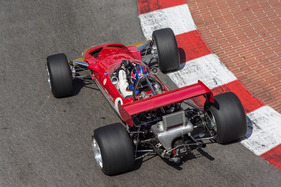
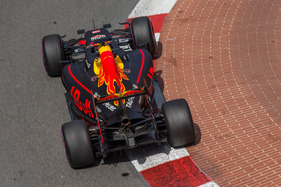
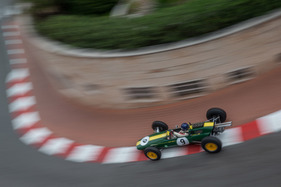
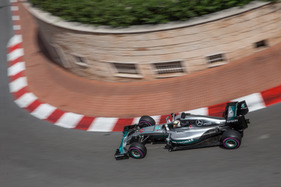
The Monaco GP is the oldest F1 race still held on the same circuit.
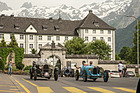
Those who were able to say goodbye to the Côte d'Azur for two weeks had the rare opportunity to see and feel 87 years of motorsport, first with the Monaco Grand Prix Historique and then with the Grand Prix of modern Formula 1.
For those who did not have the time, we would like to invite you on this short journey through time with a few pictures and thoughts.
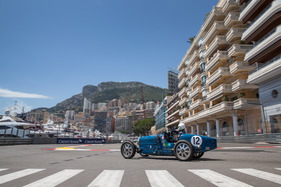
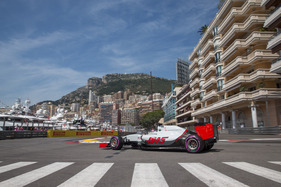
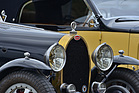
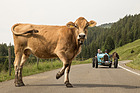
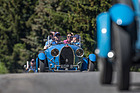
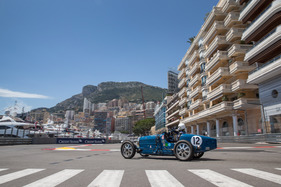
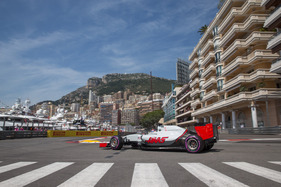
On April 14, 1929, the first race in the Principality was won by the Englishman W. Williams in a Bugatti T35 B over 100 laps with a total distance of 318 km. Williams needed 3 hours 56 minutes and 11 seconds, at that time still driving on an unpaved track. The lap record at the time was 2 minutes and 15 seconds, which corresponded to an average speed of 84.8 km/h. As a contrast and a swing to the current time, the Haas-Ferrari is a newcomer to the current season.
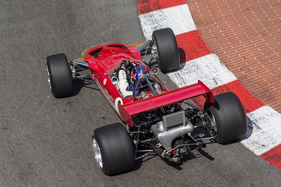

On May 18, 1969, Graham Hill won with the Lotus 49. Today, this car is owned by Adrian Newey, the technical director of Red Bull. Two weeks after the "historic Monaco", Daniel Ricciardo puts the Newey-built RB12 on pole position in a time of 1:13.622, setting an absolute new lap record. This time corresponds to an average of 163.174 km/h, which 87 years later is almost twice as fast as the average of W. Williams (pseudonym for William Grover-Willians) in the Bugatti. Graham Hill drove the 80 laps in 1:56`59``4/10 with the fastest race lap of 1:25``1/10.
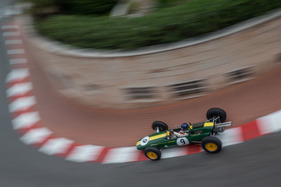
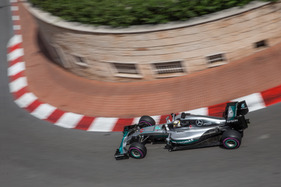
In 1962, the Scot Jim Clark took his first pole position on June 2, 1962 in the Lotus Climax 1500 cc in the time of 1`35`5`10, which corresponded to an average speed of 118.554 km/h.
However, the race was won by Bruce McLaren in the Cooper Climax with an average speed of 113.396 km/h in an overall time of 2:46`29`7/10. What the Lotus Climax once was, the Mercedes F1 W07 Hybrid is today: the measure of all things.
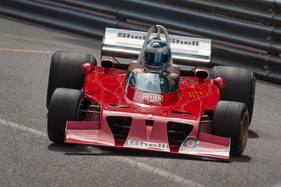
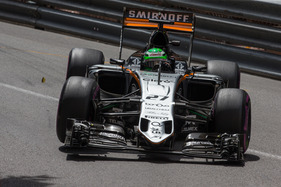
From time to time, there are great similarities between vehicles from different eras, for example between the Ferrari 312 B3 "Spazzaneve" from 1973 and the Force India from 2016. The two holes in the nose, which are integrated for completely different purposes but arranged in a similar way, are easy to compare visually.
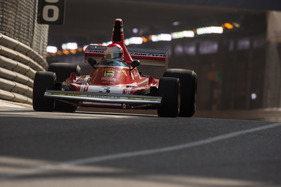
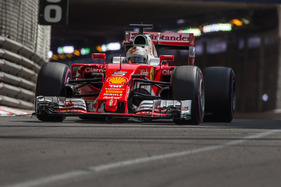
The two racers from Maranello could not be more different. The dimensions alone of the 312 B3 from 1974 and the current Ferrari F1 2016 differ enormously. This difference in size is clearly visible in the two pictures.
Today's cars are not just a few centimeters taller, no, the wheelbase between the two axles alone has grown by around a meter, so the wheels of the F1 2016 are 3494 mm apart, while the distance on the 312 B3 is just 2500 mm. In addition, the overhangs have remained at least the same size

From 1961 up to and including 1965, 1.5-liter engines were used. Ferrari was the only one to use a V12 with dual ignition. Porsche doubled the four-cylinder engine to eight in 1962 because the Climax and BRM engines from England also had so many cylinders. Since 2014, small-volume 1600 cc 6-cylinder turbocharged engines limited to 15,000 rpm have been in use again. In the 1960s, the racing cars, which weighed around 450 kg, had around 190 hp (2.36 kg/hp) at 10,000 rpm, whereas today's drivers have to cope with a power-to-weight ratio of around 900 hp to 700 kg (0.77 kg/hp).
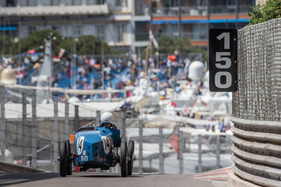
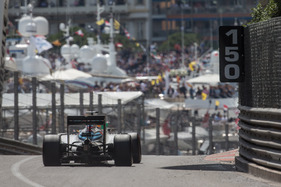
The tire width of the Bugatti T35 B increased x-fold up to the Williams FW 38. Back then, the tires had a contact area of perhaps just under 10x10 cm. Today, the soles have a width of 32.5 cm. The braking point for the Bugatti was probably around 150 meters before the chicane; Massa is still at full throttle at the sign today, even though he is traveling at twice the speed.
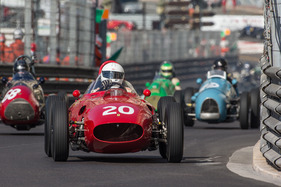

The Ferrari 246 Dino from 1960 was the last front-engined Ferrari. At the end of the 1950s, Cooper initiated the big switch from front- to mid-engined cars. Jack Brabham won the drivers' and constructors' titles with the Cooper T51 in 1959. Since then, motorsport has remained faithful to this drive principle for monopostos. Lewis Hamilton, but also all his colleagues, are only familiar with mid-engined cars and Hamilton also took his 44th Grand Prix victory this weekend. In contrast to Daniel Ricciardo, "Loisl" at least enjoyed the opportunity to drive one or two of the old Mercedes front-engined cars from time to time.
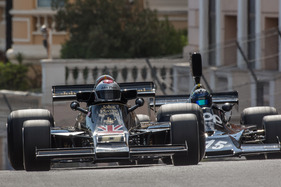
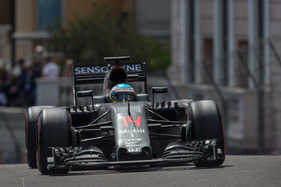
"Black is beautiful", as Mario Andretti's Lotus 77 and the Shadow DN3 behind it clearly show. McLaren followed this color choice in 2015 with the renewed engine partnership with Honda.
With Mario Andretti's victory in the memorable and world championship-deciding rain race (Lauda/Hunt) at Fuji in 1976, the Lotus remains slightly more successful than the McLaren MP4-31, but Fernando Alonso's fifth place in the Principality brought him a little closer to the podium after last year's dry spell.
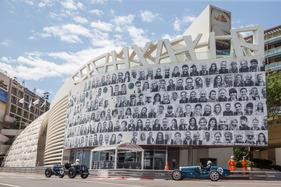
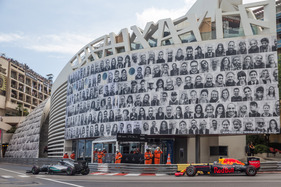
The public's interest in general motorsport is beginning to crumble a little, but in Monaco everything is and always has been a little different. Even before the war, there was a great deal of interest in the roaring cars and this has hardly changed to this day. For example, the same people have been sitting in the same seats in Monaco and Indianapolis for years. Rumor has it that these seats will probably be passed on.
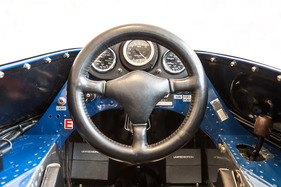
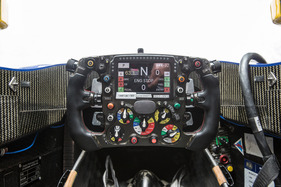
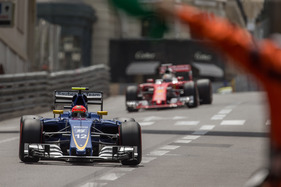
The F1 drivers' command center has been transformed from a workstation to a Playstation. Whereas Jackie Stewart in the Tyrrell 001 had a steering wheel, a gearshift and three pedals to win or lose, Marcus Ericsson in the Sauber C35-Ferrari has just two pedals and a rocker switch at his disposal, but a plethora of electronics, knobs and buttons on the steering wheel for every conceivable setting. In the end, however, all this technology cannot prevent the crash with the team-mate.
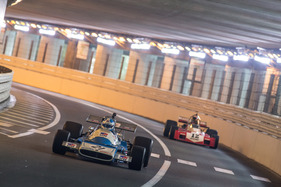
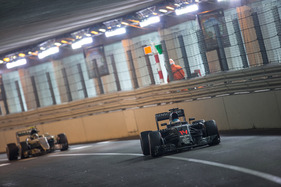
The tunnel has been an integral part of the Monegasque street circuit since time immemorial, with the difference that it became longer with the construction of the Fairmont Hotel and has also received much better lighting over time.
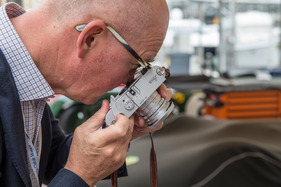
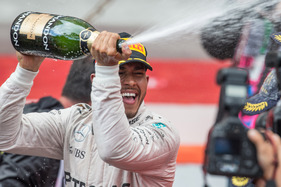
While photography was exclusively analog until the late nineties, within a few years it switched 100% to the new digital technology.
The older gentleman, still equipped with an analog Leica, goes to great lengths to capture the image the way he wants it. Today, on the other hand, some people just hold their cameras up in the air and shoot, following the motto: something will be there.

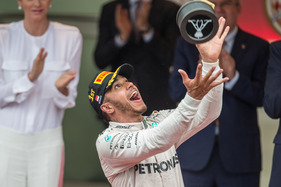
But what hasn't changed in all these years and probably never will are people's emotions. Regardless of whether the big winners, in this case Alex Caffi in the historic category or Lewis Hamilton in the current category, the joy of the trophy is great and will hopefully always remain so.