Hill climbs have been held in Switzerland since the early days of the automobile. The most famous event worldwide was the Klausen race. But there were also well-known events in Central Switzerland at the time, such as the Eigenthal and Michaelskreuz races. There were also a few others, such as the mountain stage from Grafenort to Engelberg, which took place in 1923, 1925, 1926 and later again in 1962 and finally for the last time in 1965. The fact that this event was possible for the last time in 1965 is probably due to the increase in traffic on the increasingly busy mountain route, which is the only access route to Engelberg.
As the route at the time shows, the participants started a few hundred meters from the manor house in Grafenort and drove from there up the nine-kilometre road, which was still unpaved before the war, to the finish line in "Boden", just before Engelberg, in around 5'33" minutes.
Bugatti tradition
The history of the race is also linked to the name Bugatti. The fastest times in 1925 and 1926 were set by racing drivers in types 35 and 37. H. Kracht, the winning driver in both years, as well as Dr. J. Karrer (T37) and J. Merz (T35) were also members of the Bugatti Club Suisse, which was founded in the early 1930s.

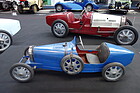
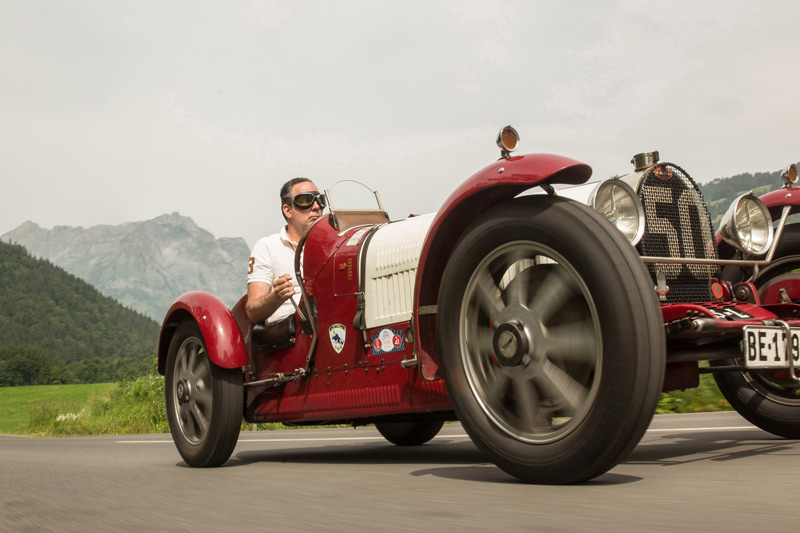
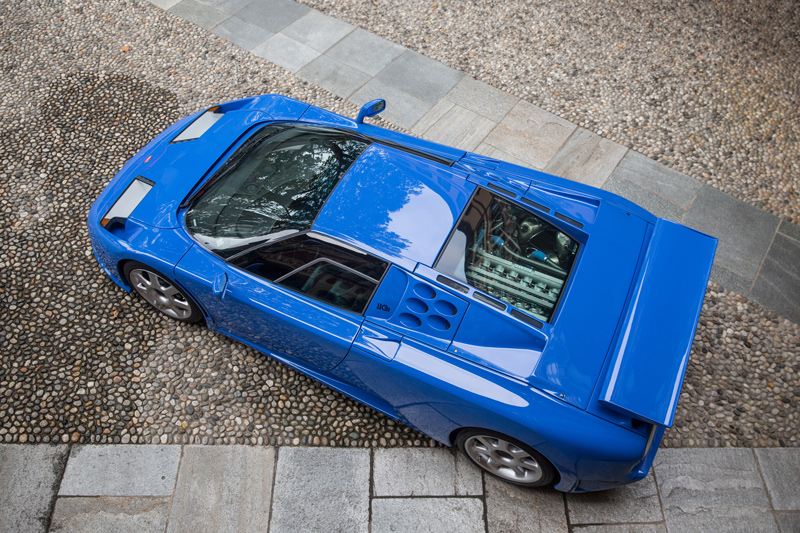
As chance would have it, the fourth International Bugatti Meeting 2023 took place exactly one hundred years after the first Grafenort-Engelberg hill climb. Of course, the Bugatti meeting was not a racing event, but around 70 Bugattis took part, including many with a racing history.

The Bugatti Club Suisse was delighted to present the historic vehicles to the people of Central Switzerland last week as part of the week-long meeting in Engelberg.
Club at the third attempt
The Bugatti Club Suisse was founded on February 24, 1935 under the presidency of Dr. H.J. Kalberer. Ettore Bugatti took over the honorary presidency at the same time as the club was founded, and his son Jean was accepted as an honorary member in 1936. The aim of the club was the exchange of technical experience, the joint attendance of automobile sporting and tourist events and the organization of social gatherings.
After a relatively short period of prosperity, which was also characterized by numerous racing events with Bugatti participants, the club's activities were forced to be severely curtailed during the war years.
After a small upswing in the fifties, club life slowly but surely died out again at the beginning of the sixties.
In 1972, Maurice Labhardt and other Swiss Bugatti and Ferrari enthusiasts founded the Bugatti Ferrari Owners Club Switzerland in the style of the English parent club. After a very active period, this club was disbanded in the 1980s. As with the foreign clubs, the Ferrari and Bugatti owners went their own ways again. The majority of Swiss Bugatti owners were members of the English parent club, the Bugatti Owners Club in Prescott, and were therefore able to take part in international Bugatti meetings.

In 1992, Hans Weber took the initiative to found a new Bugatti Club in Switzerland, this time under the original name "Bugatti Club Suisse". After initially hesitant growth, the first president Karl Mösch and his successors (Nano Wirz, Martin Pfrunder, Roland Jordi and Thomas Raess) succeeded in expanding the club. The BCS currently has around 80 members. There are over 100 historic Bugatti vehicles in Switzerland!
International meeting
Since the International Bugatti Meeting was held in Interlaken in 2001, it has been a BCS tradition to organize an international meeting for Bugatti enthusiasts from all over the world in their own country every seven to eight years. Meetings have already been held in St. Moritz (2008) and Montreux (2016).

This year, the 4,500-strong village of Engelberg at the foot of the Titlis provided the base for the international meeting from June 24 to 28, 2023. It must be said that the organizing committee around Max Labhardt found open doors in the monastery village and the rolling cultural heritage was welcomed in every way. The locals were offered an insight into past technology with a parade followed by a line-up of the vehicles. After all, the increase in mobility since the beginning of the 20th century played a major role in the development of the mountain village.

The event was also intended to contribute to the public's understanding of the preservation of historic vehicles, which was supported by the many extremely positive reactions from both locals and tourists.
Plenty of exercise
Of course, Engelberg was not the only place to sit on its laurels; the cultural heritage was also given a suitable run. Passes such as Furka, Grimsel, Brünig and Glaubenberg were taken under the unique wheels of the four and eight-cylinder cars with and without superchargers.

Only very few breakdowns had to be recorded, despite some heavy traffic and some waiting times in high temperatures, e.g. at the various construction sites, which the old technology is not familiar with, but which made them sweat profusely from time to time.

Conclusion: A successful event and also a pleasure for the observers, as the Bugatti is not only one of the fastest but also one of the most elegant cars of its time. If you would like to take a humorous second look at the meeting, we recommend the specially created picture story .