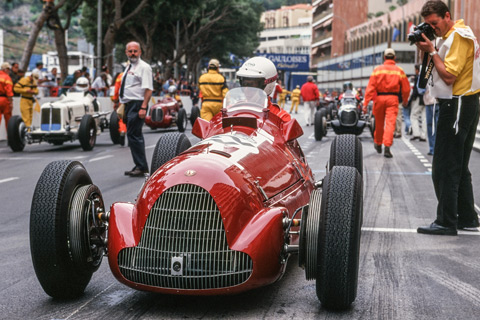
Probably the biggest historic racing event in Portugal is the Algarve Classic Festival, which was held for the fourth time in 2013. 160 vehicles were at the start, spread across seven racing series. After the rainy qualifying session on Friday, the individual races took place on Saturday and Sunday of October 19 and 20, 2013 in perfect weather conditions.
The Algarve Classic Festival may seem rather small compared to its big brothers from the north (Goodwood, Oldtimer Grand Prix, Eifelrennen, Spa Classic, ...), but it is certainly one of the most important in southern Europe and boasts a very attractive and varied route and unbeatable southern charm.
Anyone entering the paddock in October with an outside temperature of almost 30 degrees and experiencing the racing atmosphere in combination with the southern flair automatically breaks out in euphoria.

Algarve International Circuit?
If you ask motorsport enthusiasts about racetracks on the Iberian Peninsula, after a short break you will usually hear about the "Circuit de Catalunya", which has been called the "Circuit de Barcelona-Catalunya" since 2013. This race track was opened in 1991 with the Formula 1 Spanish Grand Prix and has since built up an impressive racing history.
Less well known, at least in Central and Northern European countries, is the "Algarve International Circuit", often cited as the "Portimao Circuit", which opened in the southernmost region of Portugal (Algarve) in 2008 with the final of the Superbike World Championship. The circuit has since been used by the World Touring Car Championship (2010, 2012), also by the FIA GT1 World Championship and during the Formula 1 winter tests. In 2009, the Le Mans Series also made a stop in the Algarve with the 1000km night race.

The crest in front of turn 6 is certainly visually spectacular (see graphic above). As a spectator in the grandstand at turn 6, you can enjoy a great view of the racing cars approaching over the hill. The crest after turn 9 and the subsequent dip, which is almost as steep as Eau Rouge, is also great. From there it goes up and down again to dip 13 and then up to the highest point of the circuit (turn 15). From there, the descent towards the finish line follows.
160 race cars at the start despite the economic crisis
It may come as a surprise to some that in a country that has been making negative headlines in the press for a long time, it was still possible to find the means and energy to stage such a major historic racing event, as most of the participants come from Spain and Portugal itself. The participation of the "Historic Endurance" racing series, which is the largest and most important collection point for historic racing on the Spanish-Portuguese peninsula, was therefore probably important for the organization of this event. Good contacts abroad certainly also helped to give the southern Algarve a touch of internationality, with drivers from England, Germany, Holland and Switzerland taking part.
From the Bentley from 1925 to Datsun and Bizzarrini to the TWR Jaguar touring car from 1984
As already mentioned in the introduction, there were around 160 vehicles at the start with almost 300 racing drivers, ready for the ups and downs of the Algarve. Although there was a wide variety of vehicles, from historic Formula 1 and GT sports cars from the 50s to touring cars from the 70s, most of the racing fields looked a little thin on the large race track.

Nevertheless, the organizers deserve the highest praise, because it is unique to be able to enjoy this variety at the most south-western point of Europe.
- Historic Endurance (with 46 vehicles at the start!)
- Formula Junior (30 vehicles)
- GT & Sport Car Cup (24 vehicles)
- Racing cars from the 50s (16 vehicles)
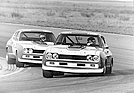
- Historic Touring Car Challenge (10 vehicles)
- Historic Formula 1 (8 cars)
- Pre-war racing cars (6 vehicles)

Exotics
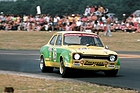
Anyone who attends historic motorsport events frequently, and possibly even in the same geographical area, will see the same vehicles again and again. This makes racing cars that you rarely or never see during a season all the more striking. For example, six Datsun 1200s raced in the Algarve, which may not have been the fastest, but were among the flashiest contenders in terms of color!

Frank Stippler in the Bizzarrini against local advantage
In the first race of the "Historic Endurance" Frank Stippler, Audi works driver for 10 years, took the lead from eighth on the grid in the beautiful Bizzarrini GT5300 after just a few laps.

His main rivals were the Portuguese Mário Silva in a yellow Porsche 911 3.0 RS and the father-son duo Jose/Francisco Albuquerque in a dark blue Ford GT40.

Silva suffered a puncture and was therefore out of contention. Nevertheless, Silva maintained the fastest lap of 2:09.470 until the end.
The Albuquerques in the GT40 started from 17th place and were already in second place after the obligatory driver change. Consistently fast lap times ultimately put the GT40 in first place with a lead of 20 seconds, followed by the Spaniard Jesus Fuster in a Porsche 911 3.0 RS and the Englishmen Dice/Conoley in a Marcos 1800. Frank Stippler and Georg Nolte dropped back and had to settle for fourth place.
There were hardly any incidents in the second "Historic Endurance" race on Sunday and Silva in the yellow Porsche 911 battled with the Albuquerque duo for first place. Just seven seconds ultimately separated the two podium contenders, with their best lap times around 2:07. The winner was once again the Ford GT40.

Le Mans driver John Sheldon was also at the start. In 1984, he drove an Aston Martin Nimrod together with Richard Attwood and survived the terrible accident at 322 km/h on the Hunaudières, albeit with severe burns. At the Algarve Classic Festival, he surprisingly took third place in the charismatic Lotus Elan .

The Iberian Spa
The elevation profile of the 4.692-kilometre route is somewhat reminiscent of Spa, as the rider has to master five steep crests and three hairpin bends during one lap. The dip after the start/finish straight is unique, with the cars heading towards the first hairpin shortly afterwards in a fast right-hand bend .

One driver commented on site after the qualifying run on Saturday morning: "The track is very fast and technically great to drive. The layout gives a "good flow" and is great fun, and the modern asphalt gives better grip than anywhere else, which is always welcome!"
Of course, there are no forests in the Algarve like in Spa, nor is there any morning fog, but the track is surrounded by pine trees, warm air wafts through the paddock in the morning and the spicy southern scent from the adjacent bushes make this track unique. The track is surrounded by the red-toned earth passages typical of the region.

Spectators can park their vehicles in a huge parking lot directly in front of the race track and are in the paddock within minutes. The main grandstand runs along almost the entire length of the start/finish straight and offers a fascinating view of the racing action thanks to the undulating track layout.

The circuit is still new and the events taking place there have yet to become well known, but for tourists from Europe who want to escape the cold autumn temperatures once again, the Algarve offers an ideal opportunity to pursue their passion for historic motorsport during the vacations with the Classic Festival - spectacular evening atmosphere guaranteed!