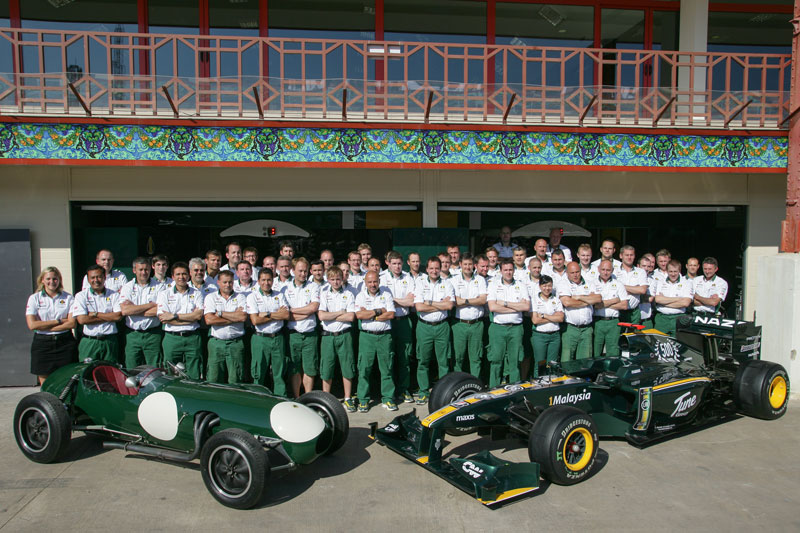
Technology in race cars (8): Lotus 25 - the innovative monocoque monoposto


You have only
1 out of 32
images seen in high resolution


Summary
With the Lotus 25, Colin Chapman launched the first monocoque single-seater with a central engine in 1962, a design approach that subsequently became the standard. Lotus was not only able to use the new design successfully in the Formula 1 circuit, but also achieved success with it at the Indianapolis 500 miles. This article from the series "Technology in racing cars from 1958 to 1978" describes the construction of the Lotus 25, tells its story and shows it in historical and current images.
This article contains the following chapters
- Extensive evolution instead of revolution
- Torsionally rigid
- Multiple authors
- Expensive and time-consuming to repair
- Successes also at Indianapolis
- Lotus 33 as a further development
Estimated reading time: 8min
Preview (beginning of the article)
The years 1958-1978 were the two most creative decades in the history of racing technology. This series portrays the most innovative, pioneering and exotic designs of Formula 1, Indy cars, sports cars and CanAm, and at the same time traces the major lines of development that still have an impact today. The series started with Lotus, one of the most important innovation drivers of these two decades. And the series will also finish with Lotus: With the first ground-effect Formula 1 to win a world championship in 1978, the Type 79. From 1958, the English "garagist" (Enzo Ferrari) John Cooper led Formula 1 into the central engine era, which continues to this day and will continue to do so (at least as long as there are combustion engines in this championship). This was the first major revolution in racing car construction, which continues to have an impact today.
Continue reading this article for free?
Images of this article