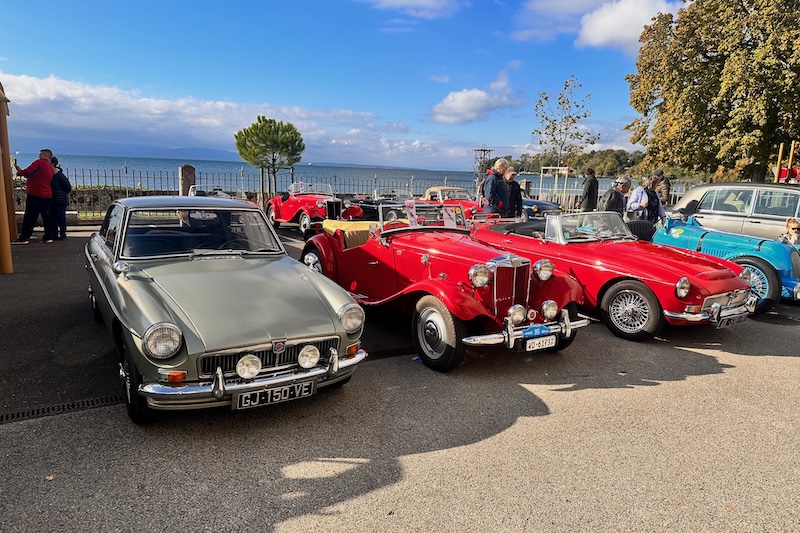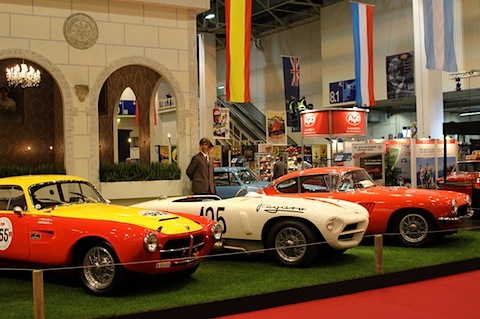


Classic car enthusiasts from all over Europe met at the 34th Techno Classica in Essen from April 3 to 7, 2024. Around 1250 exhibitors from more than 30 nations brought around 2700 vehicles to the eight exhibition halls and four outdoor areas, of which around 2000 were for sale. At 120,000 square meters, the exhibition area was roughly the size of 17 football pitches. It felt like the focus was even more on brand and model anniversaries than usual. There was plenty to celebrate: from the Audi V8 (35 years) to the Ponton-Mercedes (70 years) to the sports car manufacturer MG (100 years), which only exists by name.
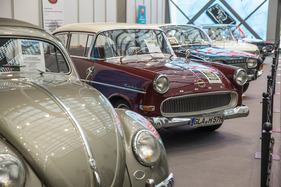
The Federal Republic of Germany will also be 75 years old in 2024. In Essen, eight cars from the ten early years told the story of a time when everything suddenly seemed so simple. For example, a VW 1200 (1956) and a Lloyd LP 400 (1954) were on display at the Deuvet stand. For the more successful, there was the Borgward Hansa 1500 (1950), the Opel Olympia (1951) and the Ford Taunus 17 M (1960), as well as the Mercedes-Benz 180 (1959), which was a class above.
Beautiful and rare
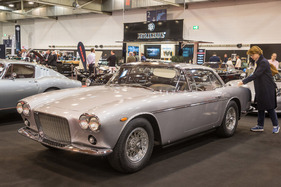
The Maserati 5000 GT with Pininfarina bodywork, which adorned the stand of dealer Axel Schuette Fine Cars in Hall 1, was voted the most beautiful car at this year's Techno Classica Essen. Between 1959 and '64, the Italian car manufacturer only built a total of 32 examples of the luxury sports car with the V8 of the 450 S, which was enlarged to five liters. The award-winning example in subtle silver metallic dates back to 1961 and was once built for former Fiat boss Giovanni Agnelli.
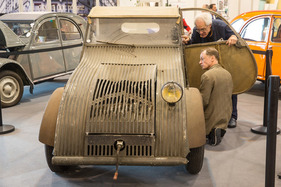
A barn find in a class of its own was found in the French department: a Citroën TPV, the small car presented in October 1939 that was to become the 2 CV ten years later. The Second World War had prevented earlier series production. Of the 250 or so pre-series models already built, only four survived at the parent company itself (in addition to a prototype at Michelin), which were only rediscovered in 1998. Another was built from new parts back in 1968.
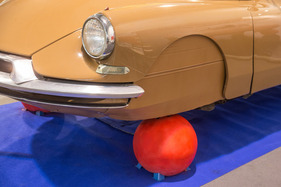
In addition to the 75th anniversary of the Döschwo, the Traction Avant is also celebrating its 90th anniversary. The Citroën CX, once a company car for Horst Schimanski in Tatort as well as Erich Honecker's state car, completed the half-century. Its famous hydropneumatics, which characterized many large Citroën models, was first built in series 70 years ago.
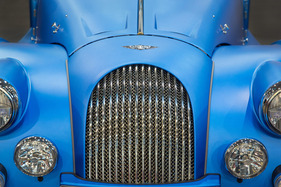
Morgen celebrated its biggest half-century anniversary. The company commemorated the 115th anniversary of its foundation by Harry Frederick Stanley Morgan in Malvern Link, England. From 1909, the small factory initially only produced tricycles. It was not until 1935 that the first design for a four-wheeled automobile followed.
This time, the annual SIHA special show paid tribute to 120 years of Rolls-Royce, which initially placed more emphasis on quality and reliability than on maximum luxury. The focus on maximum comfort only came with time, when Rolls-Royce automobiles became fashionable among the rich and powerful of this world.
Golf? Great!
Of course, perhaps the most important German car anniversary of the year could not be missed: 50 years of the VW Golf. After years of sticking with the Beetle, Volkswagen achieved the near-impossible with the Golf in 1974: a transversely mounted, water-cooled front engine instead of the air-cooled longitudinal boxer in the rear; an angular, spacious body with up to four doors and a large, wide-opening tailgate instead of the round, narrow and space-restricted Beetle.
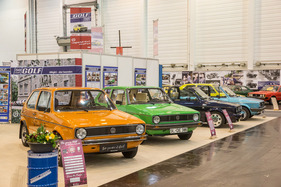
The "1st Original Golf 1 IG" brought a total of nine examples to Essen, including two early swallowtail versions, which got their nickname from a significant kink in the rear panel. The Panama-brown Golf L on display was one of a total of 10,000 examples delivered to the GDR in 1978. It was joined by the two vehicles that successfully completed the tire endurance test from Alaska to Tierra del Fuego in 1974.
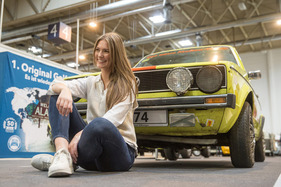
Along with the Golf came the Turbo. At the 1974 Paris Motor Show, Porsche presented the first super sports car with turbocharging, which, with four gears and a crazy turbo lag, demanded the highest level of talent from its drivers. As long as the engine speed remained low, it feigned mildness; but as soon as the supercharger had built up enough pressure, the Porsche, clearly recognizable by its mighty spoiler, switched to rocket propulsion. The feeling of being kicked in the backside by an elephant was addictive.
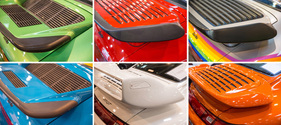
Thus was born the German super sports car par excellence, to which Porsche remained faithful for decades; first with three liters, from 1978 with 3.3 liters displacement. To mark its birthday, SIHA and the Wuppertal specialist "Early 911s" have put together a large special exhibition with around 30 Porsche Turbos from all model series.
Long live the clubs!
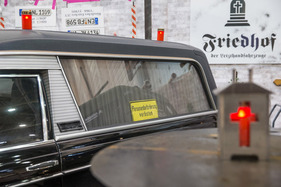
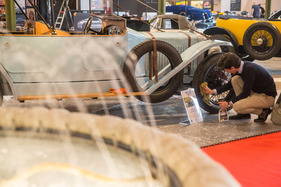
As the factories are increasingly distancing themselves from their history, the brand clubs are more in demand than ever to bring some variety to the scene. Our picture story shows how much passion, commitment and hard work went into setting up all the stands for the few days. We take our hats off to all those who spared neither time nor effort to present their own little world of classic cars. One perhaps rather special example was the macabre stand with a cemetery and car crematorium. But why shouldn't something like this be shown? After all, many people today wish for the death of the classic car.
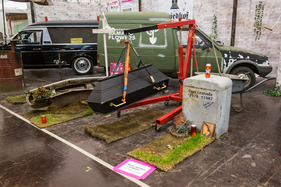
We hope, however, that it will stay with us for a few more years and decades, and that we might even be able to report on the centenaries of the VW Golf and Porsche Turbo. And it seems that we are not quite alone in this. At least the expected 200,000 or so visitors to Techno Classica 2024 are likely to have taken a similar view.