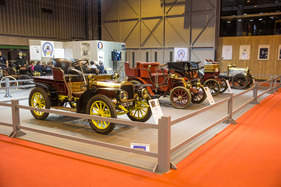
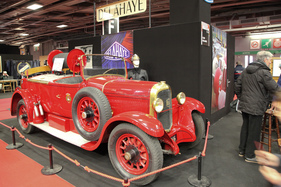
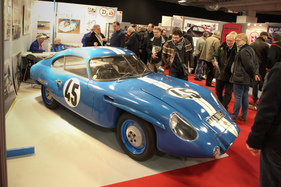
The Rétromobile Paris is a fixed date in the diaries of many classic car enthusiasts from all over the world. People meet here, there's something to see, and it's been that way for decades.
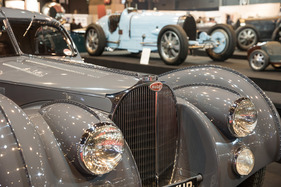
And the Rétromobile can always go one better, as the shining eyes of the visitors show.
A little bigger again
In terms of square meters, the Rétromobile is actually one of the smaller trade fairs, but at least the exhibition space was increased again for the 2017 edition. However, with 65,000 square meters and 500 vehicles on display, the trade fair remained manageable. The increase in size and the addition of the new hall were used to unclutter the exhibition somewhat. Clubs were now mainly upstairs at the back, while the spare parts dealers and artists were given a little more space downstairs in Hall 1.
Danger of traffic jams
Anyone who had hoped that the increase in size would result in fewer crowds of the 118,266 registered visitors (8% more than last year) was proved wrong on Friday at the latest. Large traffic jams soon formed both at the entrance and at the catering facilities, and at times it was almost impossible to get through between the stands.
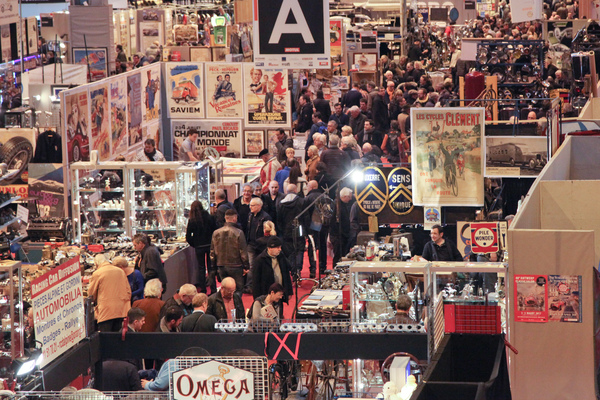
Experienced Rétromobile visitors know nothing else and are prepared to live with it. The offerings are ample compensation.
Auction marathon
Rétromobile also includes the three vehicle auctions, which are held on Wednesday, Thursday and Friday by the auction houses RM/Sotheby's, Bonhams and Artcurial. While RM and Bonhams are located in Paris, but not in the immediate vicinity of the trade fair, the Artcurial auction takes place on site and attracts crowds of spectators. In total, the three car auctions lasted around 20 hours, so anyone who wanted to be there had to be in real marathon condition.
70 years of David Brown
70 years ago, the entrepreneur David Brown, who made his money with tractors among other things, took over the sports car company Aston Martin. As a result, elegant and fast Gran Turismo vehicles were created, as well as competitive racing cars that won the 24 Hours of Le Mans, among others.
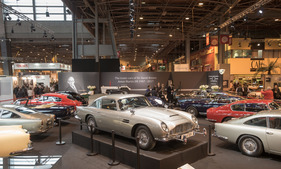
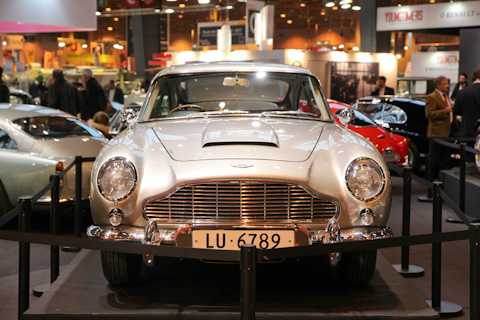
However, the most famous car from that era is probably the Aston Martin DB5, which James Bond drove in several films. And it was precisely this car with all the Q features familiar from the film (machine gun, tracking system, ejector seat, oil ejector, tire slashers, bullet protection, etc.) that was on display in Paris at the center of a large stand, which was equipped with many other fine Aston Martin automobiles.
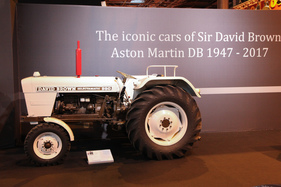
Starting with the Aston Martin DB1, most of the relevant models up to the V8 types were on display and, of course, a tractor was not missing.
Bugatti versus Bentley
They came from different worlds, Ettore Bugatti and Walter Owen Bentley, but they both wanted the same thing: to build fast cars for a select clientele. Their recipes were different, but they were both successful. Bugatti built aesthetic works of art, Bentley the fastest locomotives in the world and thus the Le Mans winners of 1924, 1927, 1928, 1929 and 1930.
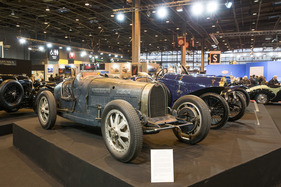
At Lukas Hüni's stand, visitors were able to compare the products of the two car manufacturers using unique examples. For example, there was Maurice Trintignant's Bugatti 35C and Captain Woolf Barnato's Bentley. Almost two dozen vehicles from the two brands showed where the journey was heading.
Not just French cars - fine sheet metal for fine prices
The lavishly presented dealer and specialist stands were also a major attraction in 2017. Whether they were called Fisken, J.D. Classics, Zweimüller or RM/Sotheby's, they all brought rare classics to Paris. A quick glance at the price tags, if there were any, showed that such fine sheet metal cannot be cheap.
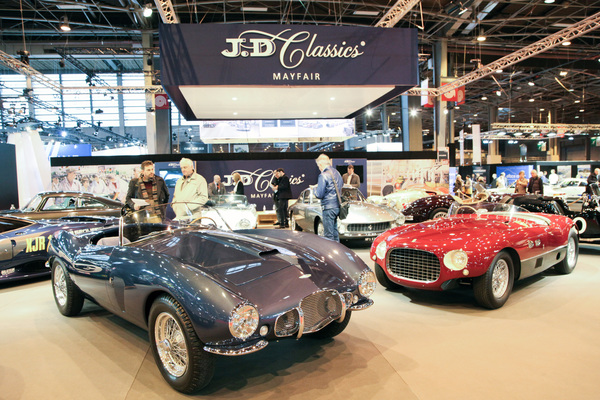
However, many vehicles were not for sale at all, but rather served to generate interest. Paris, unlike Essen or Padua, is more of a marketing event than a sales event, which is more of an advantage than a disadvantage for the public. At least it prevents you from finding an almost uniform selection of "blue chip" classics on every second stand.
French cutting-edge technology of the past
Ernest Henry, a Swiss engineer, developed a three-liter racing car for Ballot at the beginning of the 1920s that was ahead of its time. At its heart was an eight-cylinder in-line engine with two overhead camshafts and four valves per cylinder. This unit produced over 100 hp and the Ballot works drivers were quite successful with it. Second and third place in the 1921 French Grand Prix, as well as second place in Indianapolis in 1920 and victory in the 1921 Italian Grand Prix showed that the car was fast.
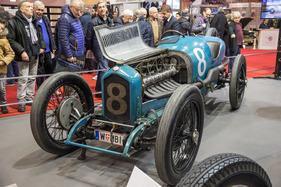
Two of the four works cars were reunited at the Rétromobile, and their technology and elegance are still impressive today.
In 1927, the Delage brand dominated the Grand Prix scene. Roger Benoist and his Delage 1500 were hard to beat. This car was equipped with an eight-cylinder in-line engine with two overhead camshafts, which was very advanced for the time and was good for 100 hp per liter of displacement and speeds of 8500 rpm.
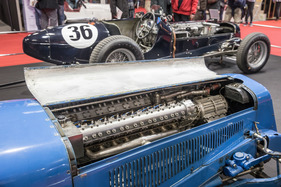
Four cars were built for the 1927 season, two more in 1936. They all survived and were shown together for the first time at the Rétromobile, which was actually a global sensation. The filigree racing cars are a feast for the eyes and one only wished that their engines had been started. It would have felt like paradise.
Alpine in white, the others in color
The appearances of the French brands were once again impressive this year.
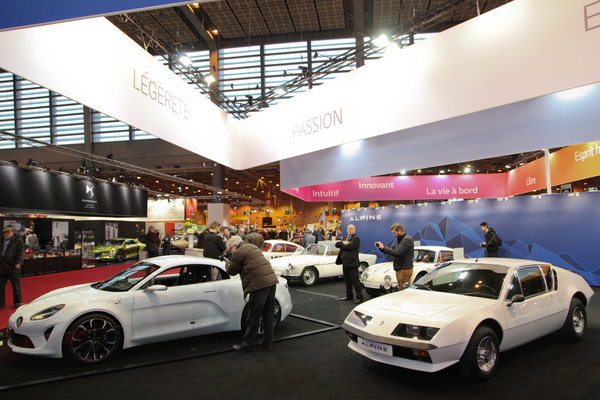
Alpine-Renault showed almost the entire range from 50 years of vehicle production, Citroën, Renault and Peugeot gathered rarities on their stands.
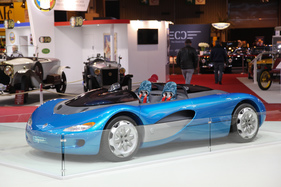
Of particular interest was the line-up of Renault prototypes, which spanned the period from the 1990s to the present day.
Group B on the stand
In 1982, Group B was introduced to replace Groups 4 and 5 as the basis of the World Rally Championship. It was enough to produce 200 vehicles, which had to be based on a production car, and the potential rally winner was ready. The major car manufacturers invested heavily and the engineers were given almost complete freedom.
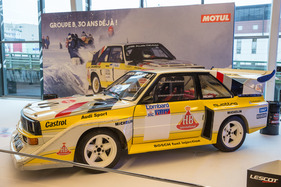
This resulted in vehicles such as the Peugeot 205 T16 with a mid-engine and all-wheel drive, as well as the Audi quattro Sport S1 E2 with over 600 hp. Lancia first built the 037 and then the Delta S4, Citroën the BX 4TC, Ford the RS 200, Nissan the 240 RS, Opel the Manta 400 and the Rover Group the Austin Metro 6R4.
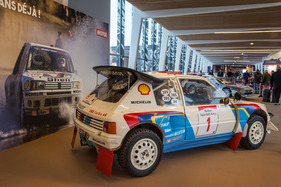
Models from Mazda, Toyota and Ferrari were also involved in the rally championship until it was decided in 1986 that the cars were too fast and too dangerous. Group B was abolished without further ado, but what remained were the racing cars of the time, an impressive selection of which were on display at the Rétromobile.
The Formula 1 experiments
None of the four- and six-wheeled experiments by Formula 1 engineers in the late sixties and early seventies were actually successful. But they were always interesting, whether they were four-wheel-drive monoposti from BRM, Cosworth, Lotus or McLaren, or six-wheel single-seaters from Tyrrell or March.
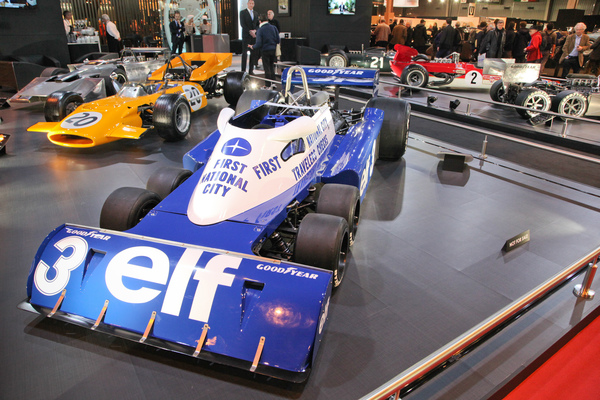
The Tyrell P34 was at least able to hold its own for two years, finishing one race victoriously. The other cars only took part in a few or no races and never achieved any notable results. Technically, however, they are all highly interesting, even 40 to 50 years after their creation. They were juxtaposed in a special exhibition and certainly generated a lot of discussion among visitors. A separate article explains the interesting racing cars.
Twice 70 years of Ferrari
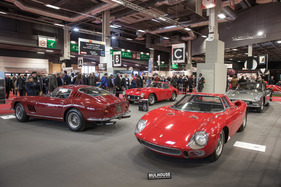
Two stands paid homage to the Ferrari brand. One was the special show "70 years of Ferrari" in the upper hall, where vehicles such as the 166 MM, 250 LM and 500 TRC were on display.
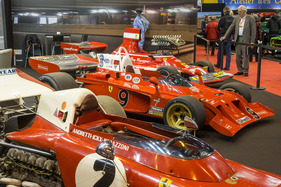
And there was also a small but fine exhibition of Ferrari Formula 1 cars in Hall 1, where you could compare the 312 B3 Spazzaneve from 1973 with the 312 B3 from 1974 or the 312 F1 from 1969, for example, cars from a time when the racing team was not always very successful, but always came up with visually interesting cars.
French exotics
Everyone knows the cars from Peugeot, Citroën and Renault. But alongside the big car brands, there were also many inventors and developers whose cars were never mass-produced. There were also plenty of them to discover at Rétromobile 2017.
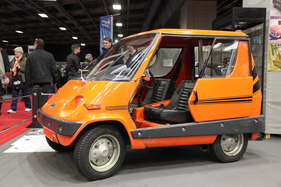
For example, there was the Minima from 1968, an indirect predecessor of the Smart. Its developer Victor Bouffort had recognized that a compact car would have many advantages in increasingly crowded traffic. So he built a two-seater that could travel at 120 km/h, but was short enough to fit into a parking space. Thanks to sliding doors, it was possible to get in and out of the car in the tightest of spaces. The car was unveiled at the Paris Motor Show in 1973 and was presented to the press on the 56th floor of the Tour de Montparnasse. Despite its interesting concept, the car was never produced in series.
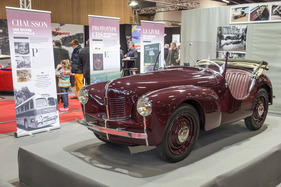
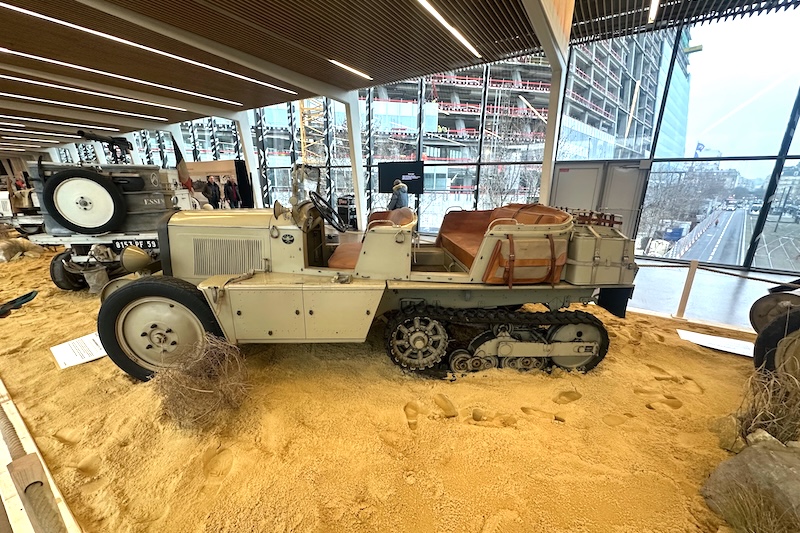
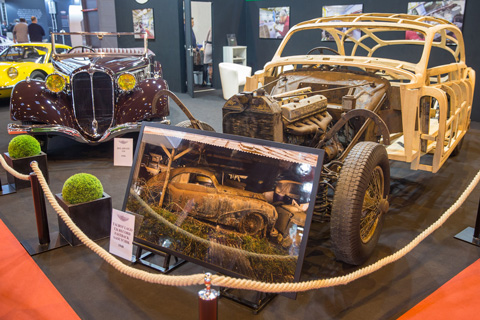
The Chasson CHS was built even earlier. This small car was developed during the French occupation and was designed for mass production. However, the lack of steel and other limitations of the time made construction impossible. Even an entrepreneur in Great Britain, who took over the prototype and the ideas, did not succeed. So the prototype remained lost until it reappeared in 2012. It has now been restored and was shown to the public for the first time in Paris.
French turbos
40 years ago, Jean-Pierre Jabouille competed in Formula 1 for the first time with a turbo engine. Despite many setbacks, Renault believed in this performance-enhancing technology. Two years later, the first Grand Prix was won, and a few years later all Formula 1 teams started with turbo engines.
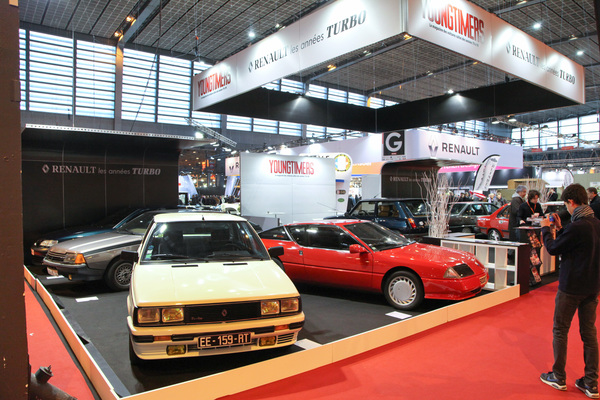
Renault itself, however, adopted turbo technology for series production cars. The Renault 5 Turbo was the first turbo vehicle to be launched in 1980, followed by the Renault 5 Alpine Turbo and turbo versions of the R9, R11, R18, R21 and R25. The Fuego was also available with a turbocharger and, of course, the Renault-Alpine flounder. A special youngtimer show was dedicated to all of them.
French two-wheelers
The French not only had a rich automobile industry, but also a diverse motorcycle industry. A selection of their products was shown in a special exhibition worth seeing in the upper hall.
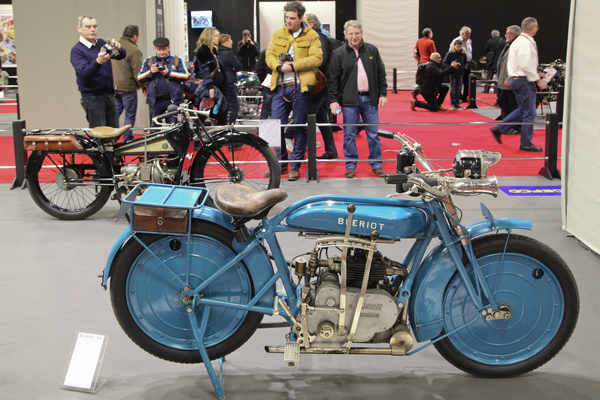
Here you could learn that Blériot not only built airplanes, but also motorcycles. The fact that they came up with the slogan "elle ne roue pas, elle vole" can be explained quite well by the provenance.
Really old cars - even when driving
Of course, the cars are mainly on display at trade fairs, but at the Rétromobile they were also driven, including some quite adventurous and antique GN vehicles from the National Motor Museum in Beaulieu. And visitors were even allowed to sit in the passenger seat.
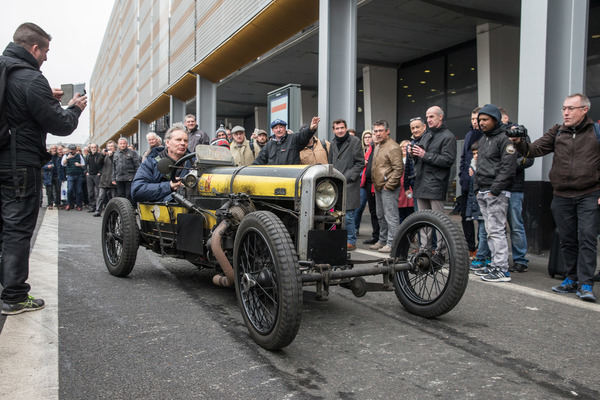
The fact that they occasionally got tangled up with the controls and caused the driver to get out of the car to restart it was great entertainment for the audience and made the passenger's ears red.
Youngtimers too
In Paris, as at other classic car fairs, there were of course also newer cars, primarily classic cars of course. For example, a Peugeot 205 GTI could be found on several stands, a Renault Spider could be seen and the products of Pur Sang or the freshly built Jaguar XKSS should actually also be counted as part of the new car scene.
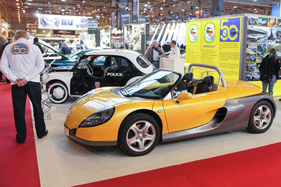
Overall, however, there was a good mix of old and (almost) new at the Rétromobile, with an emphasis on the historic vehicles.
The colorful French club scene
Once again, the stands of the French club scene would have been worth an extra day. What these small organizations pull out of the ground every year is admirable. Extensive photographic material is compiled and, of course, a rare automobile is placed on the stand.
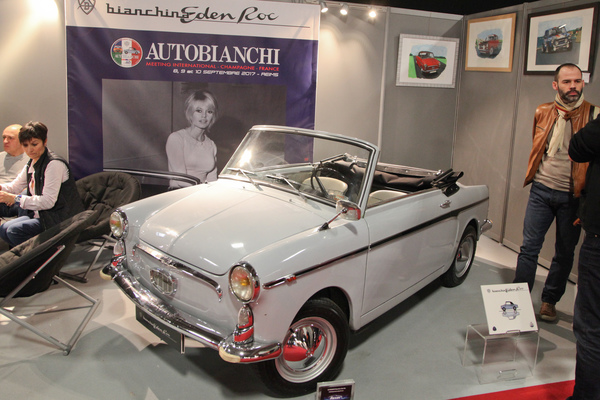
Despite more space, it was still very crowded, especially with the clubs, so that it was not easy to view the extensive collection in its entirety. In any case, the club representatives could not complain about a lack of crowds.
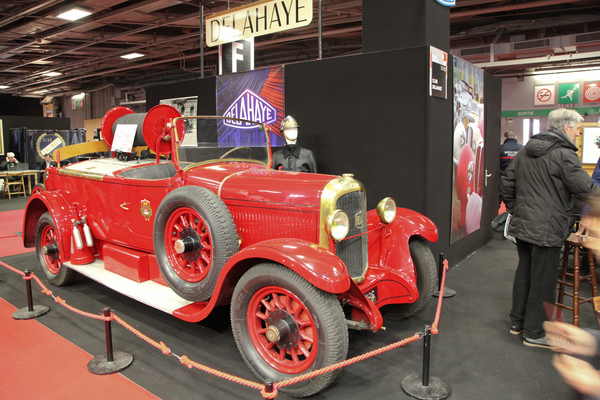
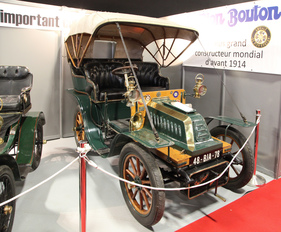
Whether De Dion Bouton, Panhard Levassor, Hotchkiss or Facel Vega, they have the French club scene to thank for not being forgotten.
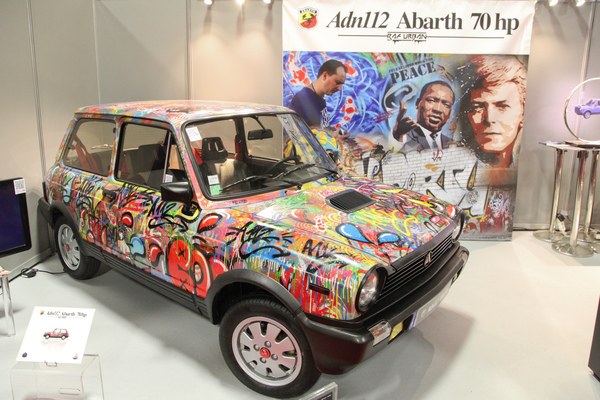
But clubs in France are also loyal to non-French brands, whether they are called Rover or BMW. The club stands were once again the salt in the Parisian soup in 2017.
Successful start to the season
The Paris trade fair can certainly claim to have got this year's classic car season off to a successful start. Anyone who is not motivated to look forward to spring after visiting the exhibition can hardly be helped.