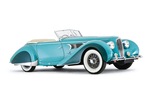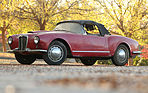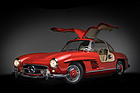
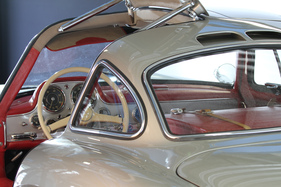
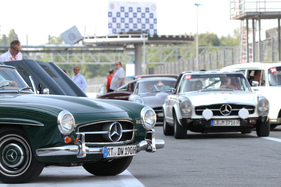
The Passione Caracciola is not really a rally, it is more of a journey in the footsteps of the past. It explores and visits stations from the life of racing driver Rudolf Caracciola, who gave the event its name. From June 21 to 25, 2017, the third edition of the rally therefore included Milan/Monza, St. Moritz, Arosa and Lugano.
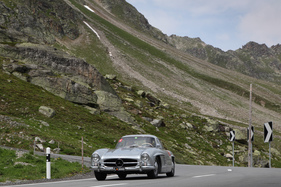
History brought to life
On the first day in Milan, historic sites in the northern Italian metropolis were visited, in style in a classic car and accompanied by the police. Whether Piazza del Duomo, Teatro alla Scala or Via Montenapoleone, all these places have a special sound and are world-famous.
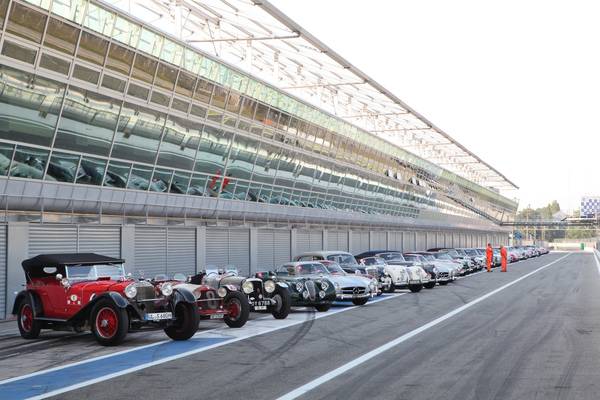
In the evening, the cars were then moved to Monza, where the first special stages awaited the participants the following day.
Mercedes-Benz and Alfa Romeo in Monza
The first car races took place in Monza back in 1922. At that time, the races were held in an "Autodromo", i.e. on a circuit with two huge banked turns facing each other.
Rudi Caraccola won the Gran Premio in Monza in 1934 together with Luigi Fagioli. After a few years in an Alfa-Romeo, he drove the Mercedes-Benz W25. After the race, the racing drivers approached Auto Union to ask if they could try out the new mid-engined racing cars, a request that was granted. Unthinkable today.
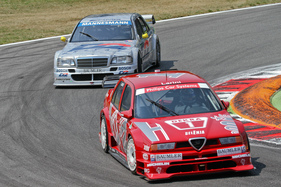
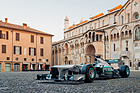
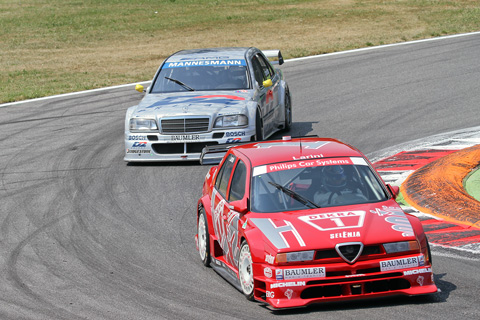
The days of Alfa Romeo versus Mercedes-Benz were remembered in Monza in a different way, however, with the meeting of the DTM/ITC cars from 1994 to 1996. The stars were the Mercedes-Benz C-Class, driven by none other than Bernd Schneider, and the Alfa Romeo 155 V6 TI DTM, driven by the then champion Nicola Larini. The DTM/ITC regulations of the 1990s were extremely liberal, which led Alfa Romeo to build a four-wheel drive racing car, while Mercedes relied on rear-wheel drive. The engines produced around 420 hp and the cars weighed around 1000 kg, although the race series organizer intervened to ensure equal opportunities. Costs did not play a role, everything that made the cars faster was developed. As a result, new technologies were constantly being added during the season.
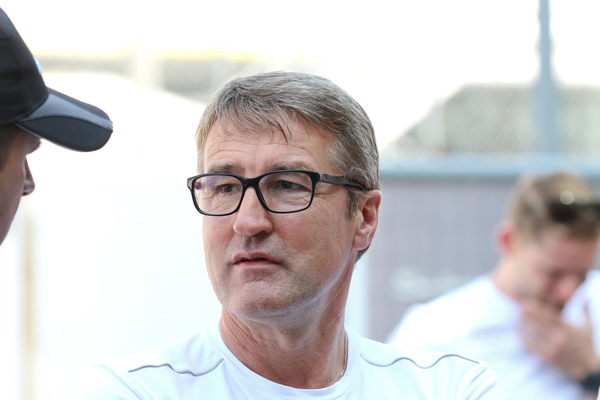
Bernd Schneider, who was closely involved in further development, had to play the guinea pig all too often, while Klaus Ludwig was able to rely on tried-and-tested parts and promptly finished ahead of Schneider. Beneath the bodywork, which was modeled on the production car (with four doors!), neither the Alfa nor the Mercedes had much to do with other models from the manufacturers. A carbon fiber monocoque held the car together, a racing ABS decelerated the car and gear changes were partly sequential and computer-controlled.
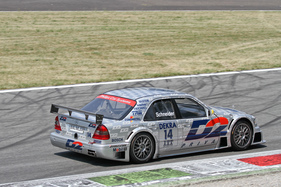
The DTM cars did their (few) laps in Monza in an acoustically quiet manner that took some getting used to, and Paolo Spalluto, who had thought it all up, was as happy as a child. No wonder, after all he is a big fan of the series with hundreds of DTM model cars and has also known Schneider and Larini for years.
With the classic on the circuit
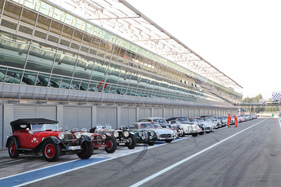
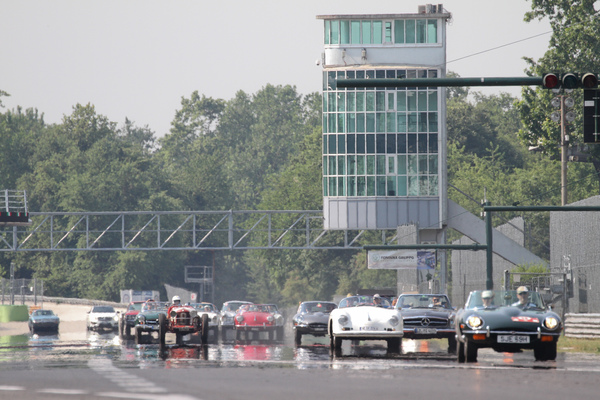
Of course, the participants were also allowed onto today's Grand Prix circuit, whether as co-driver of a professional (e.g. in a racing Ferrari with Arturo Merzario) or - more leisurely - on board their own classic car. Finally, there were also several special stages to pass in the Parco di Monza before the journey then led via the Maloja Pass to St. Moritz.
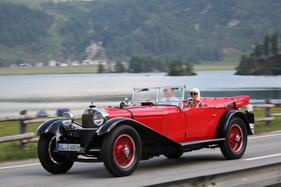
Caracciola won his category there in 1929 in a Mercedes-Benz SSK as part of the St. Moritz Automobile Weeks. This was the somewhat sportier version of the oldest car among the participants, a Mercedes-Benz S from 1928. The driver of this car is probably one of the few who can understand what Caracciola did back then to drive an SSK to victory.
Many stars
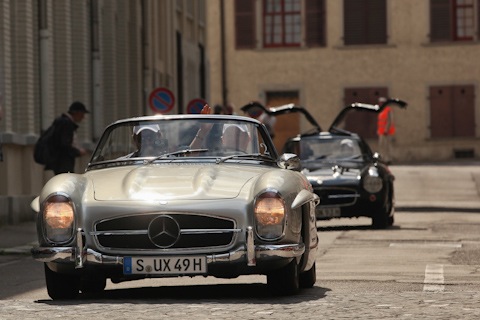
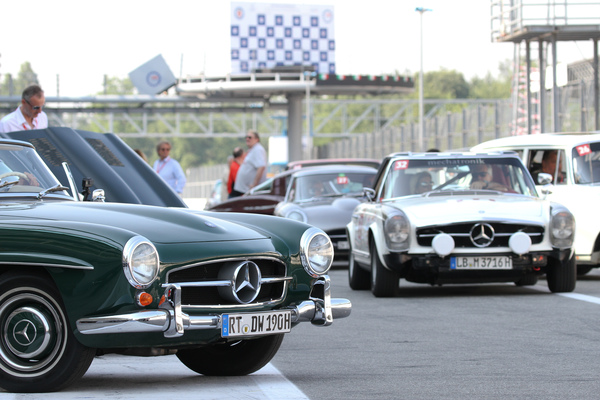
When looking at the starting grid, which traditionally comprises 58 cars because Caracciola was 58 years old, the many stars immediately caught the eye. In fact, Mercedes vehicles made up by far the largest contingent, followed by Porsche and Jaguar.
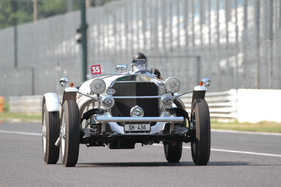
All other brands were represented by one or two cars at most, but there were some interesting exotics in the field. For example, the Ferrari 365 GTC/4 as a convertible, which was never officially built by the factory. Or the Maserati 26 M from 1928, which is currently powered by a Buick engine and is reminiscent of the races of the 1920s. Or the Excalibur SSK from 1966, which looks like a Mercedes but actually has American technology under the hood.
Or the 1966 Dodge Polara, which cruised up the mountains with its powerful eight-cylinder engine.
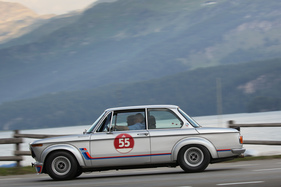
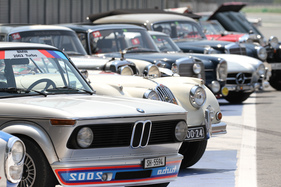
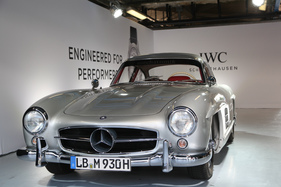
A BMW 2002 Turbo, a Citroën SM and an Alfa Romeo Giulia also mingled with the field of participants, which was otherwise teeming with 300 SLs, Pagodas and star coupés.
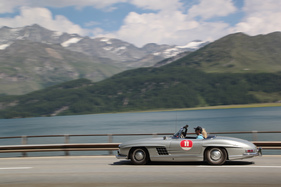
Arosa and its curves
Caracciola spent his vacations and recreational periods in Arosa, but also lost his beloved wife Charlotte in an avalanche there in 1934. For the participants, however, the bends of Arosa were hard and sweaty work, especially when neither power steering nor power-assisted brakes were on board. There are well over 150 bends from Chur to Arosa, and many were glad when they finally reached the top on Friday. The crews were of course rewarded with a sumptuous meal, as on the other days.
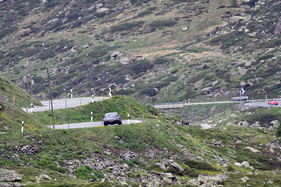
On the following day, they then headed back down the winding mountain road to finally arrive in Lugano for the finale after a ride over the Lukmanier Pass.
Caracciola famously spent his last days in Lugano, which is why the rally ended there in previous years.
No coffee run
The Passione Caracciola not only wants to commemorate the tenacious racing driver with its name, but also present the participants with worthwhile stages. In addition, the total distance to be covered in June 2017 in sometimes tropical temperatures was not insignificant. The winners of the rally could feel correspondingly happy.
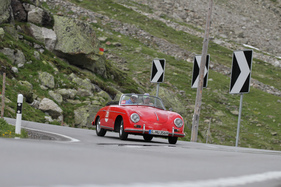
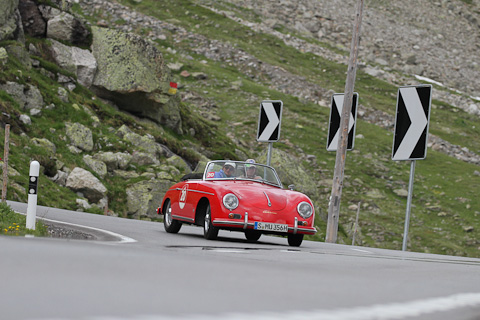
Marc Uwe and Anne Cathrin Fischer won the overall classification in their 1959 Porsche 356 A Cabriolet, followed by an Aston Martin and another Porsche, meaning that the stars had not found their way to the top.
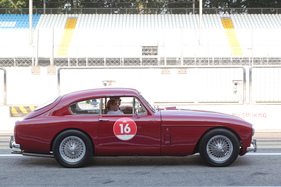
The Caracciola Trophy was won by Urs and Susanne Müller in their 1958 Aston Martin DB2/4 Mk III. Thanks to this victory, they will be able to return to the scene of their success the following year.
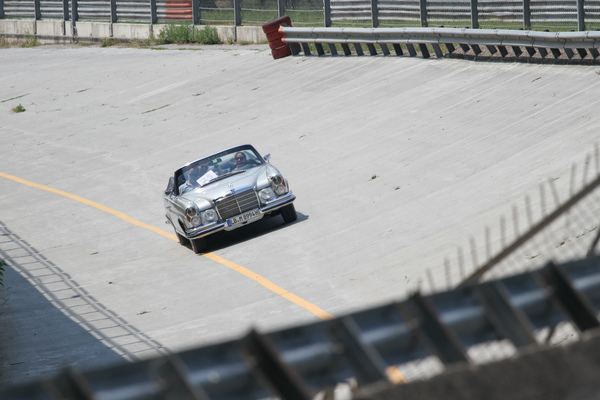
For most of the participants, of course, taking part, chatting with colleagues and enjoying the culinary delights were more important than winning. And the sun eagerly joined in. In any case, it has rarely rained less at a Passione Caracciola ...