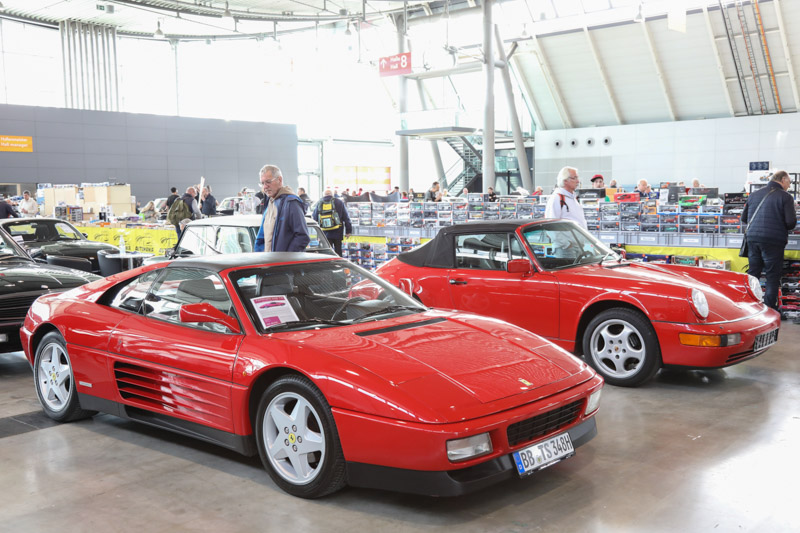
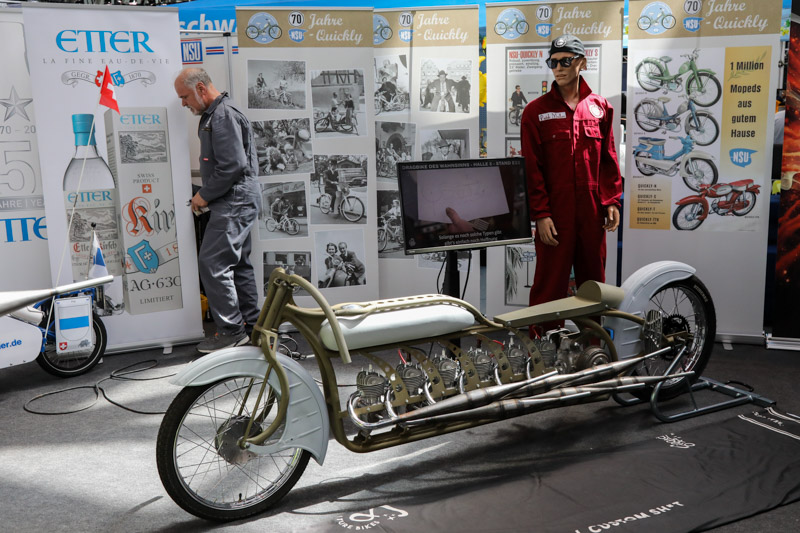
Does a trade fair necessarily have to show 2000 or more cars and cover hundreds of thousands of square meters? Renate and Peter Hürlimann have been aiming for a clear and personal trade fair for years. They do without exhibitors who do not fit into the concept and simply want to preserve the joy of old sheet metal. They are also not original fetishists, after all, cars have been converted before. So even Beetle dragsters fit in well with the concept and the number of visitors shows that the plan is working.

And the visitors came in droves, according to Renate Hürlimann there were around 4000. The warm fall weather certainly didn't hurt.
Two halls, around 100 exhibitors
Unlike in the past, all exhibitors are now housed in two adjoining halls with a total area of around 6000 square meters. There is one entrance and exit, so nobody can get lost. No stand is overlooked and it is easy to find your way around the clearly laid out halls.

The fact that you stay longer than two hours is less due to the size of the fair than to the fact that you meet many good-humored people who are only too happy to explain the technology of the exhibits or answer any questions you may have about your own (or other) classic cars.

Between the stands, you constantly bump into people you know and because everything seems so wonderfully relaxed, there is always time for a chat.
Rarities and other things
While strolling through the exhibition, you eventually come across the Wisconsin Special, the car in which Sig Haudahl reached 180 miles per hour (the equivalent of almost 300 km/h) on Daytona beach in 1922. This was 24 miles faster than the previous world record.

However, because Haugdahl was not a member of the American Automobile Association, the record was not recognized.

The car once managed without a gearbox, with power going directly from the engine to the rear axle. The car was towed so that it could drive off at all. Today, the record-breaking car has a gearbox for driveability, but has otherwise been kept as original as possible.

In 1979, Horag presented a Golf GTI engine with turbocharger at the Geneva Motor Show.

The 1.6-liter engine produced around 140 hp and Horag was able to sell around 50 vehicles equipped in this way. One of them was for sale in St. Gallen.

A few meters further on, the chassis of a Bugatti Type 51 from the 1930s was found. The special thing about this car, which was delivered to Switzerland, was that a previous owner had adapted it to the times with Alfa Romeo parts (including the engine).

Some of these Alfa parts are still fitted today, but the engine is now once again the in-line eight-cylinder with two overhead camshafts. For the time being, the chassis will not be built into a car, but will instead adorn the owner's living room in the near future.

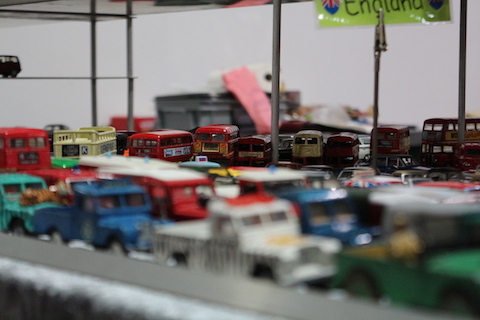
Of course, there was also plenty to buy in St. Gallen, whether complete cars, spare parts or model cars. There was plenty on offer and anyone who looked hard enough was sure to find a gem that they would not otherwise have come across.
Quiet market
Conversations with the dealers and specialists exhibiting on site reminded us that 2024 was a rather quiet year for classic cars. Sales were slower and customers had to be persuaded more forcefully.

Owners of classic cars also left their cars in the garage more often due to the often bad weather, which led to less demand for maintenance services. However, the exhibitors present were very optimistic about the future and were happy to meet old and new customers for a chat.
Recipe for success visitor parking lot
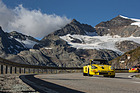
The visitor parking lot between the halls is a highlight every year in St. Gallen. Here, too, in sunny fall weather and temperatures between 15 and 20 degrees, there were many cars to discover that are otherwise rarely seen.

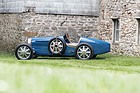
A Bugatti 35 was admired just as much as the Schai Spezial DKW, the Jowett Javellin or the pre-war Fiat Balilla. And while strolling through the rows of vehicles, there were once again opportunities to meet friends and acquaintances and have a chat.

Yes, it was familiar and friendly in St. Gallen, well done Renate and Peter Hürlimann.