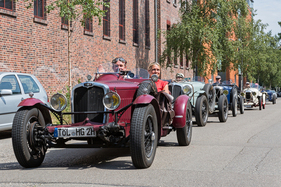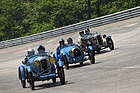
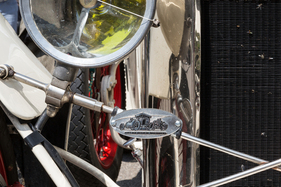
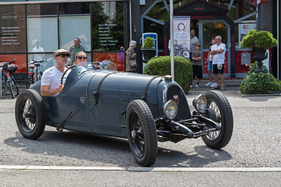
The participants were welcomed and instructed by Rainer Klink, the museum director, as well as the co-organizer of the event, who himself had arrived in his blue Riley special from 1934.
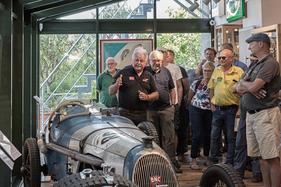
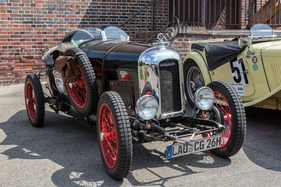
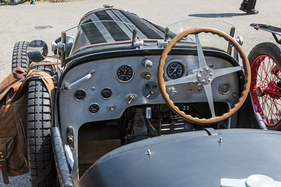
The cycle cars that have arrived have their origins in a French racing series from the 1920s. The engines with 1000 to 1550 cc displacement produce around 30 to 45 hp. Technically simple vehicles with just an engine, gearbox, differential and two axles, without superfluous extras such as power windows, radio or air conditioning, have their own special appeal. Last but not least, the impressively low weight of approx. 400 kg contributes to the fun of the vehicles.
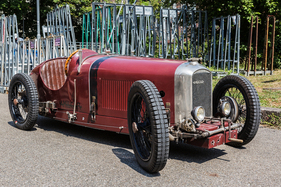
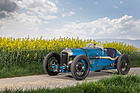
"I almost enjoy wrenching more than driving," said one of the participants, who had traveled from Alsace. Meanwhile, Rainer Klink explained the history of the museum's own 1929 BNC. Its 4-cylinder Ruby-K engine with a displacement of 1.1 liters and Cozette compressor delivers a remarkable 70 hp. This is enough to accelerate the 450 kg lightweight racing car to just over 160 km/h. The history of the car, which competed in the 1936 Bol d'Or in Monthléry, would be worth an article of its own.
After the guided tour through the collection of Prezioses at the Boxenstop Museum, there was delicious Swabian Maultaschen and the opportunity to exchange views.
You have to be imaginative. One of the participants also owns an MG, but was not satisfied with the road holding of his car. He remembered his Beetle days and the conversion from 560 diagonal tires to 155 radial steel-belted tires. Similarly, the oldie now had tires that were actually intended for the BMW i3. The TÜV has approved them and the car's braking and driving characteristics have benefited.
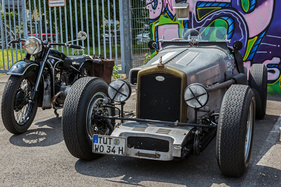
How do you get a pre-war vehicle? By stumbling across an advertisement in the "Markt für klassische Automobile" on the way back from an unsuccessful search for a classic car in England. The connoisseur realizes that this must have been several years ago ... If the offered veteran is still waiting for a new owner "on your doorstep", it can happen very quickly.
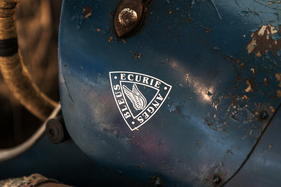
How did the name "Ecurie Anges Bleus" come about? It's a word mix in which Ingolf Engel and his workshop, which brings all veterans back to life, are not entirely uninvolved. Add to that a little blue steel, the French zeitgeist of Marlene Dietrich, a glass or two of red wine ... The name must have come about in one way or another.
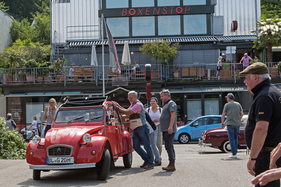
The close-knit community also meets regularly at the "Blauer Engel" restaurant, whose landlady was allowed to ride along with her duck, as was a tough Morgan driver who was traveling alone.
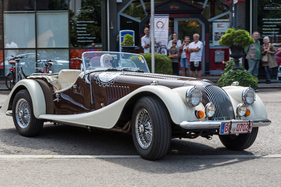
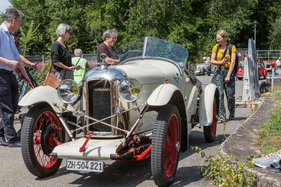
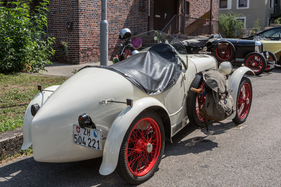
A white Amilcar built in 1927 has delighted its Swiss owner for a good 10 years. He enjoyed the 200 km drive to the Swabian Alb and is already looking forward to the return journey on Sunday, which he wants to take more leisurely. In order to keep up with the group, he had to step on the gas a bit today. But no problem with the seats taken from an English vehicle, which are really easy to adjust when mounted on rails.
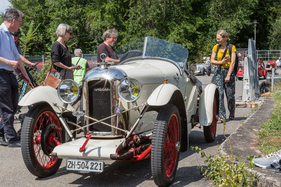
Some participants are now consulting their rain radar app to make sure they get home dry. After all, this year's summer ride has been a lot of fun for all participants so far. And it should stay that way. In January 2026, the annual winter ride in the open-top pre-war veterans is likely to be much more challenging for the drivers. Not for the faint-hearted.
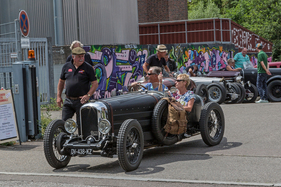
On the other hand, the "Ecurie Anges Bleus" come from Straßberg, located between Balingen and Sigmaringen on the rugged Swabian Alb near "Stetten am kalten Markt". The place name is no coincidence, so sub-zero temperatures should come as no surprise to anyone here.