C'est Paris, the city of love, French gallantry, art and culture, great thinking and respect for life's pleasurable moments. You don't realize all this at first when you enter the grounds of the Parc d'Exposition at Porte Versailles. You are greeted by the last remnants of the original park from 1923, built in a rather wild architecture with hints of Art Deco and a colonial architectural style. The former ticket booths still stand to the right and left, while the public of the 50th Rétromobile streamed through the entrance between them. As an important education fair was also taking place in Hall 6 at the same time, the organizers had to guide people onto the right path right from the start.

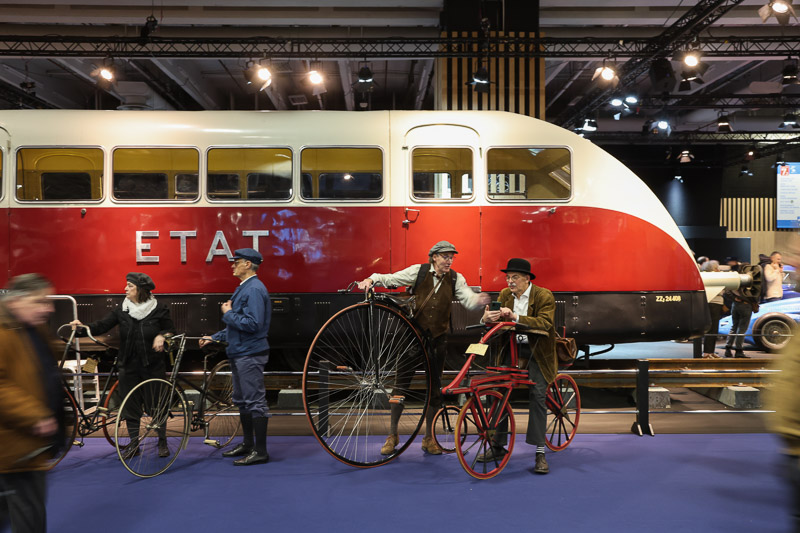
For the Rétromobiles, this meant entering the "Tapis Roulant" and riding/walking what felt like a kilometer on the treadmill to the other end of the site. The gates opened at 10 a.m. each day, with hundreds if not thousands of visitors standing on the ground beforehand. If you pricked up your ears in the crowd (and spoke French), you could learn something about the visitors' expectations: Sensations, super sports cars, luxury cars, but also the sensitivities of the clubs and fellow enthusiasts were the topics. The transportation of the Bugatti Autorail from the national railroad museum Cité des Trains in Mulhouse to Paris had already been well staged and widely celebrated with videos on social media in the run-up to the event. Accordingly, it was at the top of many people's lists. The fact that a rail vehicle of all things is attracting so much attention from car enthusiasts is - piquant?

Three floors and a two-part additional hall
The entrance led directly into Hall 7, which has three floors, with the floor on the first floor for the institutional exhibitors such as the Cité du Train and the Musée Nationale de l'Automobile and the club stands. Some of these clubs are very loyal companions of the Rétromobile, which celebrated its 50th anniversary this year. The French Jaguar Drivers Club FJDS, for example, which was founded in 1969, has been there from the very beginning and was able to join in the celebrations, as Vice President Michel Beaurain and President Hugues Lisan proudly emphasized.

The President's Jaguar Mk 9 served as an eye-catcher in the immediate vicinity of the undisputed highlight of the Rétromobile 2026, the Autorail, the motor car with no less than four 14-liter eight-cylinder engines that would once have been intended for the prestigious Type 41 "Royale" project. Each with around 200 hp and thus designed for durability rather than maximum performance, the rail vehicle was able to reach speeds in excess of 170 km/h during the first test runs thanks to its lightweight construction with a total of 800 hp. In 1934, it finally reached 192 km/h on the route from Le Mans to Connerré. One can imagine that it must have been a special experience for the first passengers to be able to travel in a vehicle from the Grand Prix winner and luxury car manufacturer from Molsheim. In addition, the driver's cab is located in the middle of the vehicle, with the driver looking over the roof of the railcar. This means that the passengers sitting in the front have an unobstructed view of the track. In 1958, the last of a series of 88 Autorails were retired. With a fuel consumption of 40 liters per engine per 100 kilometers, the energy consumption was enormous compared to the rather modest amount of space available. In addition, diesel vehicles offered more tractive power and, thanks to hydraulic or electric power transmission, greater reliability and less wear and tear. Of the Présidentiel, Double, Triple, Court, Allongées and Surallonggées, only the XB 1008 Présidentiel of the SNCF (ex Etat) has survived. It is normally on display in Mulhouse.

Les Teuf Teufs in action
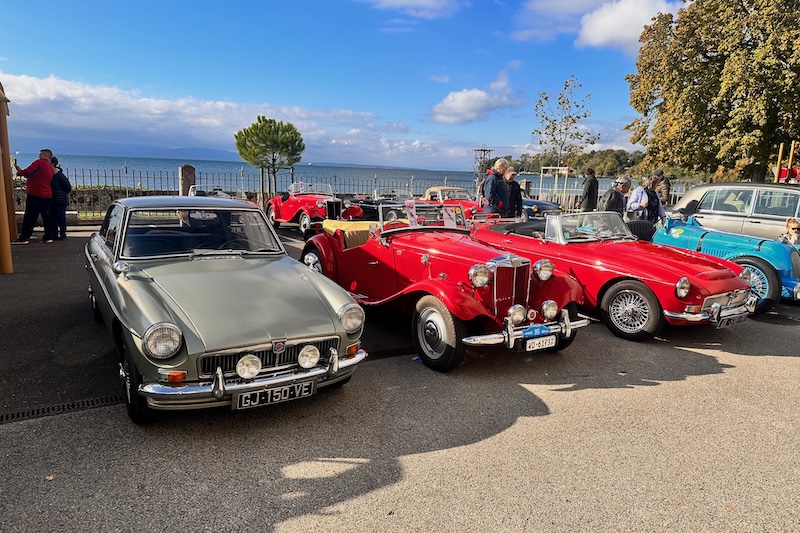
The French equivalent of the German Schnauferlclub, the Club des Teufs, founded in 1935, was not easy to find at the back of the hall. However, their music was not only played in the hall, but especially in the square behind it, where an Alcyon from 1905, a DeDion-Bouton from around the same year, a wonderfully patinated, unrestored hotel bus from the now almost forgotten brand Vinot et Deguinand from 1913 and many others did their rounds.
Molsheim at its best
Bugatti - the brand is and remains an important player in the French classic car universe. The museum in Mulhouse brought two of the last seven Type 101 Grand Tourer Bugattis to Paris.

In addition, the Type 32 "Tank" or the last racing car 251 from 1958, as well as the beacon of hope after the Second World War, the "People's Bugatti" of the Type 73A from 1947. Although none of these cars are new discoveries and have been on display at the Musée National for a long time, the number of visitors to the joint stand of the two state museums - for both rail and road - was enormous.

But of course Bugatti didn't stop there. And the stand with used Bugatti parts is particularly memorable. As astonishing as this may sound, they do exist, precious scrap of the very best provenance. And even if contemporary witnesses attest to the fact that front axles once simply lay around on the factory premises rusting away, those days are long gone. The old warehouse, once well-stocked, has long since been cleared and yet much of what is in the cars today has been reproduced. But if you are looking for the original, you will (perhaps) find it at the Rétromobile.

If you don't have the need or the budget, you can at least enjoy the aesthetics of some of the parts. Not far from there, on the third floor, was the more than modest stand of Argentinian replica artists Pur Sang. Looking at their replica of the Bugatti Type 32 "Tank", you have to wonder whether in Paranà, the town on the banks of the river of the same name where the company is based, the workers have to take certain parts home after work and use them to give them the right patina.

The replica tank shines, for example, with rusty screws, traces of grip on the paintwork or really well-worn seat cushions. You have to admit, the Argentinians are world champions in the discipline of facsimile.

And we are curious to see when we will be able to experience a "tank" flying over a racetrack for the first time again, in the truest sense of the word, because the wing shape of the aerodynamic body did not help the daring car to succeed, on the contrary, beyond 160 km/h the direct predecessor of the T35 tended to take off...

The Bugatti Club's display was nice, for once a collection of rather early automobiles of the brand and, very pleasingly, extremely accessible and without cords, barriers and the like.

But we got a bit ahead of ourselves, because he had chosen the third floor. So let's go back to floor 1. It's noticeable that there are apparently no prizes to be won for the best club stand at the Rétromobile, so there are no barn finds with bales of straw and plastic chickens on the cars.
Instead, the presentations are businesslike, usually accompanied by a few meaningful cars and, most importantly, wine, sausage, cheese and baguettes. Those who strolled through the club stands at lunchtime were best off doing so already satiated, the corresponding aromas were too tempting.

Special rally exhibition
Rétromobile has dedicated a really nice corner to the golden age of rallying in 2026. In "L'age d'Or du Rallye", rally gems from company museums and private owners were on display, all originals such as the Lancia Stratos, 037 or Delta S4, the Peugeot 205 Turbo 16, but also one of those Minis that was disqualified from the 1966 Monte on flimsy pretexts.

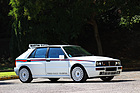
It quickly became clear where the organizers saw the golden age of rallying: between the time when the sport evolved from a cultivated sport for convicted gentlemen drivers to an event for left-brake drivers, drift artists and warhorses, and the Group B era and the time immediately afterwards: With Toyota Celicas, the Delta HF Integrale and others. You can agree with that.

Rétro instead of Salon d'Auto?
The Salon d'Automobile in Paris doesn't really have any air in it anymore; at the last edition in 2024 - held at the same venue as the Rétromobile - around 40 brands were present, many of them Chinese. There was hardly any real interest. The situation is quite different on the floor of the major brands at the Rétromobile. From Alfa Romeo to Volkswagen, numerous manufacturers spared no effort to prove to the public at France's largest classic car show how they are connected to their past in order to shape their future.

Volkswagen, represented by the French importer, celebrated the 50th anniversary of the Golf GTI with an example of each generation and a premiere, the still camouflaged successor to the ID.3, the all-electric ID Polo, again as a GTI. The unspeakable abbreviation GTX will once again disappear into oblivion, which hardly anyone will regret.

It was pleasing that those responsible for the VW presentation did not simply fall back on the stock of the Wolfsburg plant, but looked for suitable cars among the customers of their network of representatives.

In Paris, there were not barely used, finely polished show cars, but authentic collector's items with a few signs of wear and tear. A QR code made it possible to watch the stories, told by the owners themselves, in the form of videos.

So if you were initially wondering why the Golf I GTI was a 2nd series model from 1981 and not quite perfect. François has been driving his car for 25 years and got to the heart of the matter in his video message: the GTI has always been the Golf for him - period!

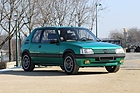
Peugeot is likely to see things a little differently, as the team from Sochaux brought the entire model range of its small GTIs to Paris, starting - of course - with the "Sacré Numéro", the 205 GTI. However, the reason for this was by no means to show the Wolfsburg team that "GTI" can and could also be done excellently in France, but to present the new 208 GTI to the local public.

This seems to have worked very well, the stand was always very busy. However, this may have been due to the memories of their own youth, when a 205 GTI was the highest of emotions, among the generally older, male visitors on days 1 and 2 of the Rétromobile.

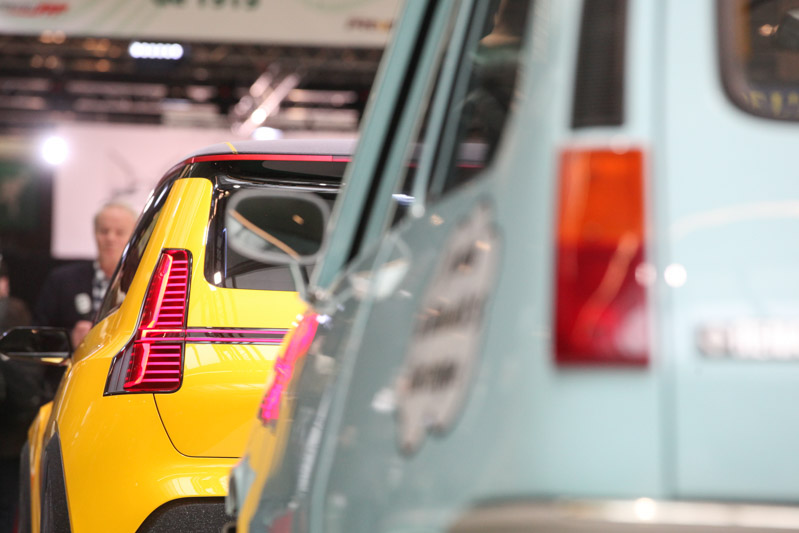
Renault also dedicated its stand to a "Citadine", as the French call it, a compact car. This is 2026, presented for the first time in Brussels, of course the new Clio, the traditional combustion engine in combination with the all-electric Renault 5 and 4. Here, too, each model generation was allowed to stand in front of the newcomer on the turntable. Renault also brought along its entire arsenal of merchandise. And the classic program "Renault - The Originals", which was introduced last year, was also further expanded with parts and support. This took the form of additional companies from the dealer network making themselves available to service and repair older Renault models.

Renault also links to websites of independent dealers and parts specialists. Instead of insisting on licenses and confusing brand rights issues like other manufacturers, Renault leads you directly to the sources, even if they come from elsewhere. Apparently they have realized that every car with the Rombus on the radiator speaks for their own brand history - regardless of whether it was serviced or restored by a concessionaire or an independent garage owner.

Honda also took advantage of the Rétromobile to exhibit a new car with a nod to the past: The resurrected Prélude. After all, they seem to be aware that using a historic name is a certain obligation to take care of their own past. And in comparison with other manufacturers, Honda has reused the old name for a car that is actually in the tradition of its predecessors. A Cologne-based manufacturer with an American background could take this as an example.

And Mazda also brought the family silver to the Rétromobile, the theme here was - hardly surprising - the rotary engine! If the brand from Hiroshima was once regarded as exotic, it is clear how unreservedly positively the Japanese can be integrated into the plethora of classics today.

The Mazda Cosmo Sport, for example, enjoys a level of attention that can be seen among the sports cars of the 1960s. If one even compares the low distribution of the car with its great popularity, then the pioneer of the two-disc Wankel engine is even in the top ranks.

At Citroën, the focus was on the former stars of the motor shows, with concept cars setting the tone. In addition to the TPV, the 2CV predecessor from the Bureau d'Etudes, there was also the Karin, the Cactus and the C10 from 1956. This scurrility from the drawing board of chief developer André Lefébvre was intended to transport four people and luggage at around 100 km/h as a lightweight vehicle.

In order to achieve this with the drive unit of the 2CV AZ with a displacement of 425 cm3 and 12 hp, the car had to have an optimal, aerodynamic shape. Shortly afterwards, the C10 was the last prototype of the "C" project, but the Quai du Javel decided in favor of the car that was to become the AMI 6 in 1961. The only surviving prototype went to the factory collection, the Conservatiore Citroën, from where it had already been brought to the Rétromobile in 2014 and shown to the public.

Porsche was relatively modest in 2026, and the cars on display were - dare we say it - rather second-rate. However, the 924 GTR racing car from 1982 had the most sex appeal. At Mercedes, the focus was on the Mille Miglia, and it goes without saying that this required a 300 SLR. The 220 S, which is also suitable for the Mille, provided a nice juxtaposition.

Meanwhile, the generic DS Automobiles brand, which sees itself as the guardian of the legacy of the legendary DS and SM, has been making a mess instead of a spill. This year's theme was the cars of French presidents, from De Gaulle to Macron.

The star here was certainly the DS Présidentielle, the giant car by coachbuilder Chapron for the General - which he hated because the windshield could not be lowered - and the extended, open SM for Georges Pompidou, which also served his successors Giscard d'Estaing and Mitterand for representative purposes.

At the center of the exhibition, however, was the current election of the incumbent Emmanuel Macron, a DS Automobiles DS No8 Électrique - a "bagnole écolo", as some visitors to the Rétromobile called it. As neutral as we are, we remain silent on the subject.
Motorsport, another reason to celebrate
Skoda also honored the Rétromobile, here with full factory support and some highlights from the collection such as the high-revving, red racer of the 1950s, the Škoda 1101 OHC from 1957. The eleven-hundredth car delivers over 90 hp. If this car had been developed and built in the West, Skoda would perhaps be a distinctive sports car brand today. Either way, the Czechs from Mladà Boleslav are celebrating 125 years of motorsport this year - starting with a victory in a motorcycle race in 1901 with a Laurin & Klement. Reason enough to put the spotlight on this at the Rétromobile.

BMW's appearance was also very much in keeping with the character of the Rétromobile. Without many side messages, new car accompaniments and other distracting elements, the Bavarians brought their Art Cars to Paris.

Each of them is by no means unknown; hardly any other collection of colorful cars has had such a high media presence since the series was launched 50 years ago. But being able to see the cars one-to-one for once definitely had its appeal.

This is particularly true of Andy Warhol's M1, by far the most expensive car in the entire rétromobile - not on the classic car market, however, but on the art market, where this BMW M1 is valued at well over 100 million euros.
Good, expensive, noble
It is no secret that cars and watches go well together, nor that some watch brands have a special relationship with classic automobiles. Chopard, for example, presented a new watch created in collaboration with Zagato. The theme was: lightweight construction.

And virtually in the front garden of the impressive stand, cars from the coachbuilder's past and present were on display. Richard Mille was also not to be outdone and showed only Ferrari racing cars, including the 250LM, which was brought back to the public last year at the RM Sotheby's Paris auction as lot 262 from the Indianapolis museum's collection.

The company didn't need to stretch its tentacles too far: the car with chassis number 5893 from 1964 was bought by Philippe Guenat, Richard Mille's business partner, for 34,880,000 euros. Pleasingly untouched, the 1965 Le Mans winning car (Masten Gregory/Jochen Rindt) was certainly one of the highlights of the Rétromobile.

Girardo & Co. also made a big splash with classic Ferraris, and the sheer number of luxury vehicles could have given the impression that cars like these could be found on every street corner in real life. You don't even want to think about the insurance sums, but there was really something on offer here for the entrance fee - if you were even allowed to talk about such profanities as money at this stand.

Whether Simon Kidston's claim that he had procured large quantities of original sand for the display of his Aston Martin DBS Vantage from the Bond film "On Her Majesty's Secret Service" was true, we did not want to and could not check. However, his stand was impressive, as it is every year. The Geneva-based dealer, who has already introduced himself with the words: "Hi, my Name is Simon Kidston, I can sell you a Ferrari 250 GTO", is also celebrating his 20th anniversary in business.

The joint stand of Niki Hasler and Lukas Hüni, the Basel and Zurich dealers of exclusive classic cars, was pleasantly more modest, but certainly no less well stocked and clearly larger in terms of space. Here we had the opportunity for a brief chat with Peter Schetty, the former racing driver, European champion and Ferrari test driver and race director.

Which, in addition to the abundance of top-class cars, also made us aware of another peculiarity of the Rétromobile: It is one of the important meeting places for the main protagonists of the classic car world. So it is no coincidence that you might bump into Richard Hammond (ex Top Gear) here or Jacky Ickx there. The Rétromobile is therefore one of the "places-to-be" in Europe.

Meanwhile, there's no need for anyone to fall into an inferiority complex. Of course, some questions about the price can be avoided in the knowledge that some people are playing in a different league here. But for all those who work for wages and have actually come to Paris with the intention of coming to Hausse with less money but an addition to their collection - car, parts, automobilia, model or art - there was hope in the form of Hall 4.
Au bon Marché in the cheap hall?
At least on Wednesday, the difference between the glamorous Hall 7 and the budget-oriented Hall 4 was all too obvious. The organizers promised cars under 30,000 euros, and so the offerings here were much more popular. The personal highlight of the two Zischengas editors present was an almost perfect Renault 14 for just over 8,000 euros.

The car, shown in a single example, was also more exclusive than - say: a Ferrari 250LM! - of which there were twice as many in Paris.
However, bargains are hard to come by at the Rétromobile; the chances were much higher at the no fewer than four auctions taking place around the fair. More on this later.

A far cry from the rags and riches of local parts markets, the majority of the classics on offer were confidently to boldly priced. And anyone who had put their money on the ever-suspicious 2CV, 4CV, Dauphine, 4L, DS, Traction, 203, 403, Frégate or even Dyna, Dyna Z or 17PL, Aronde or Ariane was in some respects disappointed. The French standard classics of the late 1940s, 1950s and 1960s are on the decline. There is interest in a Renault 25 Baccara, a Peugeot 205 and the like. However, an unrestored Vignale Samantha also caught the eye - definitely one of the exotic cars in Hall 4.

The show within the show - Ultimate Supercar Garage
Anyone who made it through this hall ended up in a gray area whose misinterpretation could easily have ended in confusion. On the one hand, an exit at the front led to the neighboring exhibition, the "Ultimate Supercar Garage", and on the other hand, the exit was also located here.

And this one was final. With an entrance fee of over 20 euros, it is somewhat questionable that no stamp or the like is offered, so that you could have left the grounds to catch your breath or for a quieter lunch. Even more irritating, however, was the fact that a hall that was completely occupied by new car suppliers, the Supercars hall, was not integrated into the Rétromobile entrance.

Another 21 euros were due if someone wanted to buy a Supercar ticket in addition to the Réro ticket they had already purchased. Be that as it may, the cars on display, even some that required a trip to the cell phone and a Google search to get an overview of exactly what they were, were definitely worth the money. And what is certain is that the catering facilities here were much less crowded than over in Hall 7. And at least the doormen from here let you move around the Rétromobile halls unmolested, especially when your ears were shaking and your knees were trembling from all the horsepower and top speed.

Big shake-up at the auctions
Four auctions around the Rétromobile took place in 2026 - with completely reshuffled cards. Artcurial was booted out and Gooding Christie's became the official auction house of the Rétromobile for the first time. This seems to have paid off, with a sales quota of 80 percent, David Gooding could certainly be satisfied.
Artcurial, on the other hand, had to move to the Hotel Peninsula and sold 60 percent of the cars on offer here. However, the unrestored, black Mercedes-Benz 300 SL was one of the highlights of this year in Paris.
RM Sotheby's again made a guest appearance at the Louvre and, like Gooding, was also able to boast a sales rate of 80 percent.
And finally, Bonhams offered 67 vehicles at the Polo de Paris, in particular cars from the dormant Strinati collection, and was even able to sell 82 percent of the lots.
Half a century of classic automobiles
The anniversary edition of the Rétromobile clearly showed how the French classic car scene has adapted to that of Europe. Paris has long since moved away from a French focus when it comes to cars and brands and has adopted an international approach. This is especially true for the high-priced cars.

Nevertheless, it has retained a charm that is hard to describe. Perhaps this also includes a certain chaos that is nonchalantly accepted, such as the strange handling of the entrances or the feeling that you have been led into the halls through a side entrance in view of the ongoing construction work on the site. The maze of barriers in front of and between the halls didn't help either.

Once inside the halls, however, this sense of calm also prevailed in 2026, despite the hustle and bustle of the many visitors. Nowhere did you get the impression that something was slipping through your fingers, that you were missing out on something. There was plenty of everything, and if your view was blocked, there was certainly another highlight right next to it.

And if you were interested in models, automobiles or art, the dealers always had time for you. On the other hand, if you came across someone who was engrossed in a conversation, you simply walked a few steps further and waited. In the knowledge that they would be given the same amount of time and attention as soon as it was their turn.

Speaking of attention: there are certainly a lot of influencers and Youtubers in Paris these days. But compared to the number of enthusiasts, true aficionados and seriously interested parties, they are still a marginal figure. And so it happens that even in dense crowds, someone stops for a moment and keeps their place free when you want to take a picture of a car or object. But maybe that's just the good old school, which is still particularly cultivated at the Rétromobile.