"East is glowing, China is young, red sun greets Mao Zedong" once rhymed supporters of the Cultural Revolution. And today, cars from the land of the rising sun are flooding the world. Before the turn of the millennium, however, this was unthinkable; back then they were still building well-behaved Volkswagen limousines. Only a few of them made it to the West.
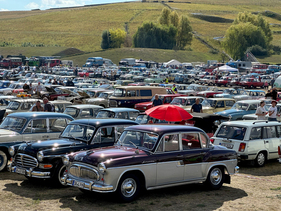
That's why the historic Ostmobiles, which have traditionally crowded the Elbauenpark in Magdeburg on the last weekend in August for 26 years now, do not include any Chinese cars, but only cars from the GDR, Poland, Romania, Yugoslavia, Czechoslovakia and the former Soviet Union. Only these Eastern Bloc countries built passenger cars, while Hungary at least produced buses, motorcycles and trucks. Bulgaria, Cuba and Mongolia, also vassal states of Moscow, were - apart from a few licensed products - automotive nobodies.
Colorful hustle and bustle
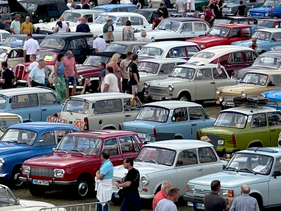
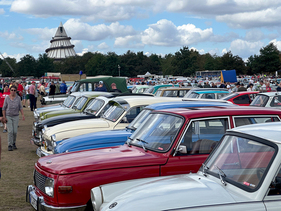
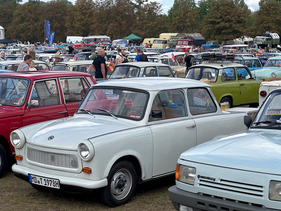
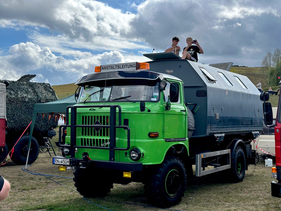
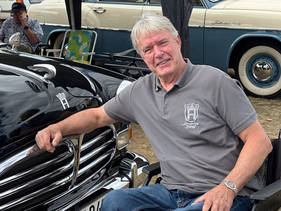
Around 700 of these vehicles arrived on August 30, 2025, mainly cars, but also around 200 trucks and around 400 two-wheelers. All surrounded by the fun of a folk festival, with sausages, beer and a parts market. And, of course, a well-attended audience, including some in contemporary outfits, which some may criticize as borderline Ostalgic. Even patriotically decorated cars from the former USSR joined the rows of classic vehicles on the huge open space, fortunately without meeting with any noticeable opposition. Incidentally, there were a surprising number of participants from the Netherlands who had brought their rolling treasures with them.
What was on offer here was the proverbial museum on wheels. All Eastern brands and almost all model series were represented, including facelifts and modifications. Even small-series cars such as the Melkus RS 1000 (101 built), the legendary Sachsenring P 240 derivatives and large GAZ saloons such as the Chaika rolled up. And of course conversions, which were commonplace in a shortage society. Standard vehicles were often cut up and modernized, sometimes even brought up to par with the Western creations at great expense. Where else would you see a Trabi with a 16V four-stroke engine from the GTI? In addition, there were numerous cars with roof tents, disrespectfully referred to at the time as "Sachsenruh".
Vehicles steeped in history
These were joined by army vehicles from the USSR and Czechoslovakia, buses and trucks. Anyone with a recognizable interest - like the author - got to hear internal details that have not yet been found in any specialist book. As in previous years, a wide variety of fire engines were also on display. And for the first time, there was a small motorboat exhibition - with a kind of Rivaboot offcuts from some of the 20 or so boatyards in the GDR.
Of course, the whole thing was moderated, although the presentation of selected exhibits would actually have required an evening-long extra event. The reporter's notepad was barely big enough for all the facts!
What the future may bring
One can ponder what an OMMMA will look like sometime in the middle of this century. Will the date of the political change still be the criterion for admission - or will the aforementioned Chinese dominate and set their own accents? Either way, the next OMMMA festival is set to take place at the end of August 2026. A fixed date for all fans of a generation of vehicles that may already be infinitely far away, but is still very close to the feeling of the visitors.