VW Apal Buggy - Urban Buggy-ing


You have only
7 out of 86
images seen in high resolution





Summary
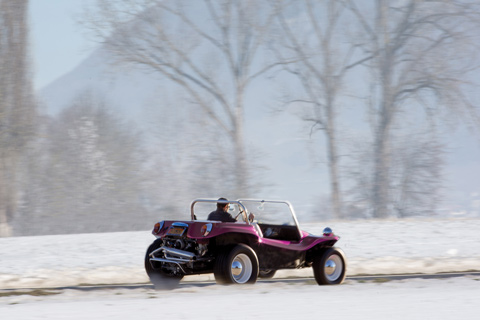
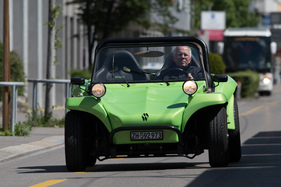
When the buggy wave spread to Europe towards the end of the 1960s, local companies seized the opportunity and developed their own kit variants. Among the most successful buggy manufacturers in Europe was the Belgian company Apal, which came up with different variants, including the classic Buggy C and L, available for shortened and standard VW Beetle chassis. But how does a 1970s buggy fare today in the modern urban jungle? Better than you might think, as the extensively illustrated driving report shows.
This article contains the following chapters
- No sandy beach available?
- Clearly laid out
- Tame by hand
- Off into the city
- Pretty green
- More original than original
- Thumbs up
- Weatherproof?
- The world needs more buggies!
- Further information
Estimated reading time: 7min
Preview (beginning of the article)
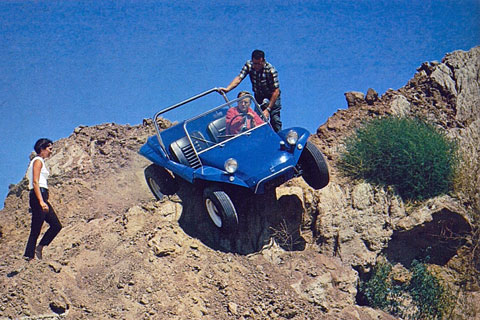
When the sun is shining and temperatures rise above 20 degrees, some people long for a vehicle that is open at the top and, above all, a lot of fun. Hardly any car fulfills these two criteria more economically than a buggy. Buggies originated in the USA, of course, and Bruce Meyers is regarded as their creator. In the mid-sixties, he caused a sensation with his Meyers Manx on a shortened Beetle chassis and not only created a trend, but also hordes of imitators. These included the Apal company in Belgium, which jumped on the buggy boom at the end of the sixties. These simple vehicles, which basically consisted of nothing more than a Beetle chassis, which in principle could be driven without a body, and a plastic shell, were designed for fast progress on sand. This is why the buggies were popular in California right from the start.
Continue reading this article for free?
Images of this article