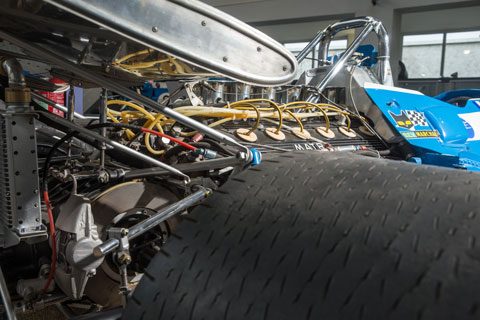
Habituation effect - Matra Sports M 530 in the (historical) test


You have only
1 out of 22
images seen in high resolution


Summary
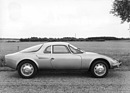
After a year of series production, the manufacturing quality of the Matra Sports M 530 had stabilized to such an extent that it was possible to draw reliable conclusions from one car to the next. What's more, over the course of this time, people had also become accustomed to the initially controversial body shape. This historical test report clarifies whether the sporty-looking mid-engined speedster lives up to its visual promise.
This article contains the following chapters
- The technology
- At the wheel
- On the road
- The performance
- Summary
- Technical data
Estimated reading time: 9min
Preview (beginning of the article)
After a period of uncertainty that lasted about a year, the Matra has now reached that standard of production from which one should wish this brand luck for a comeback. There is no need to repeat the details of this period. Much has been written about it since its debut in March 1968. Not least because Matra came up with a surprise: it was supposed to be a car for twens, for the sporty 20-something generation, but the result did not live up to this claim. In terms of its design, this car was tailored to a completely different customer group. Nevertheless, this concept was so interesting that this original solution caused quite a stir. However, it soon became quiet around this car. Production at the Brissoneau and Lotz body plant in Creil was irregular and disproportionately slow, and the conditions were so precarious with such tolerances that no two cars were the same. Under these circumstances, there seemed little point in ordering a test car. Experience had shown that positive or negative impressions would have been left to pure chance, as one chassis could not be compared with the other.
Continue reading this article for free?
Images of this article