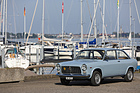
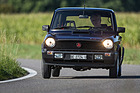
The Fiat for the discerning - Autobianchi A 111 in the (historic) test


You have only
1 out of 11
images seen in high resolution


Summary
By the term "muscle car", author Engelbert Männer was not referring to a mid-range sedan with an over-powered American-style engine, but to the effort required to drive it. For as modern as the Autobianchi A 111 was in some respects - transverse engine, front-wheel drive - it was just as old-fashioned with its stiff steering and leaf springs all round. This historical test report explains why it was nevertheless more distinguished than the Fiat 124.
This article contains the following chapters
- More space thanks to front-wheel drive
- Three blades instead of four bolts
- Neutral, but power-sapping
- Equipment and market situation
- mot overall assessment
- Plus points
- Minus points
- Technical data
Estimated reading time: 9min
Preview (beginning of the article)
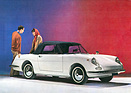
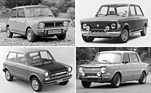
The first Autobianchi product in 1958 was the Bianchina based on the Fiat 500, which was occasionally marketed in Germany as a coupé and (occasionally) convertible. The 500 Panorama, a mini-station wagon with a 499 cc/18 hp engine for DM 4051.50, was still in the range and was hardly in demand. The Autobianchi Primula (from 1964) was a notable success. It was offered - initially with a 1221 cc/55 hp engine - as an estate saloon in the German Fiat range, but was immediately sidelined in terms of model policy when the Fiat 124 arrived in 1966. Since fall 1967, the company Hagen, Krefeld, has been responsible for Autobianchi imports to Germany. In the late fall of 1967, the 1197 cc/60 hp engine from the Fiat 124 was also adopted for the Primula; new designation Primula 65 C (test in mot 19/68). Two versions: two-door estate sedan for DM 6349.20, four-door estate sedan for DM 671.50. The Primula coupé with a 1438 cc/69 hp engine was not well received; it was taken out of production in 1969 without a sound. However, the Primula 65 C model was also not destined to have a long life.
Continue reading this article for free?
Images of this article