Monograde oils were the standard until the 1970s. They were designed for either the cold or warm season and, at least in theory, had to be changed in spring and fall.

Extreme versions were used with SAE 10 in particularly cold regions. In the south of Europe and in racing, thicker SAE 60 was common, which could cope better with high operating temperatures. In between, there were all gradations in steps of ten.
From monograde to multigrade oil
As research and development progressed, synthetic multigrade oils quickly became the standard. In contrast to monograde oils, they have the advantage that the flow behavior hardly changes at different temperatures.
Still monograde oils for older cars
Older engines, which are designed for mineral-based monograde oils, have felt seals. If they were operated with the highly detergent, synthetic multigrade oils, these would leak, which could lead to oil loss and associated damage.
The information on which oil to use in classic cars is not always noted in the service manual.
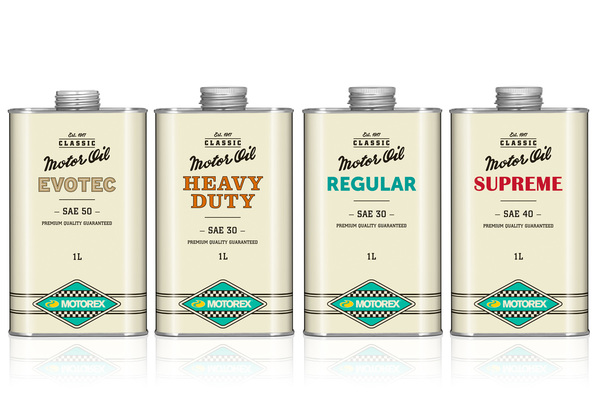
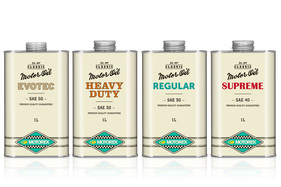
Motorex offers the following monograde oils:
- MOTOREX REGULAR SAE 30
for engines with spoon and mist lubrication, without pressure oil supply, with oil pump. Typical for vehicles between 1900 and 1930. - MOTOREX SUPREME SAE 40
for engines with forced circulation lubrication without fine filter. Typical for vehicles between 1930 and 1960. - MOTOREX HEAVY DUTY SAE 30
for engines with forced circulation lubrication and fine filter. Typical for vehicles between 1960 and 1970. - MOTOREX EVOTEC SAE 50
for engines with forced circulation lubrication and fine filter. Typically for vehicles between 1970 and 1990.
In case of doubt, specialists or the Motorex Classic Line Technical Guide can provide information.