

On September 16, 2015, BBE Automotiv GmbH, Cologne, together with its partners ZDK, VDA and AvD, presented the 2015 update of the study "Economic Factors Young and Classic Cars" at the IAA. The study presented the development of the classic car market in Germany since the first study presentation in December 2013. This year's study therefore not only contains the latest market data, but also tips for successful market development.
Update 2015
In 2013, owners of classic and vintage cars were asked about their vehicles, their repair and maintenance behavior, their mobile leisure behavior and their financial expenditure in extensive online surveys. BBE has now reprocessed these results and updated them with current vehicle inventories and discovered some astonishing facts.

The population is growing
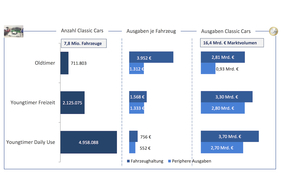
The vehicle population is getting older and older, which is mainly due to the rapidly growing proportion of youngtimers in Germany. There are currently around 7.8 million young and classic cars in total. While there are just over 700,000 classic cars (30 years and older), the total number of youngtimers (15 to 29 years) is ten times higher at around 7 million. Compared to 2013, this is a whole 19% more and it is assumed that the total number will exceed the 10 million mark by 2020.

Classic cars and the environment
Around 600,000 classic cars are still regularly driven today, at least on German country roads. On average, each of these vehicles covers around 2,500 km per year. All vehicles together drive around 1.5 billion kilometers. In relation to all kilometers driven by German cars, this is only 0.24 %, but it still means increased environmental pollution.
But there is also improvement in sight, because from 2022, every vehicle that becomes a classic car on its 30th birthday will have an exhaust gas purification system.
Love for the car or just a means to an end
There are basically 3 groups of classic and vintage cars. The genuine classic cars according to the law, the leisure classic cars with classic car potential, and the daily use classic cars. In the first two groups, the love of the car is the main focus, which is why their owners are prepared to spend a lot of money on the car on the one hand, but also to invest a lot of time and patience and to do it themselves on the other. The proportion of these vehicles is around 2.8 million. The remaining 5 million vehicles serve more as a means to an end, mostly without any great emotional significance, which is why only the bare minimum is done to the car.

Growing market
Not only the population of classic and vintage cars, but also the market volume has increased by 12% since 2013 and now amounts to over 16 billion euros. A full 40% of the market volume results from youngtimers, which are still used on a daily basis. In addition, the market structure is also changing and it can be assumed that the market will be restructured. In the future, "all-rounders" in particular will find it difficult to compete with the networked specialists. In addition, larger, jointly operated platforms will give the market a new, centralized structure.

Surviving in the new structure requires one thing above all: courage. Courage to put emotions aside and focus on the rational potential of the market. Courage to take a risk and respond to the customer and focus on their wishes. It is also important to act consistently according to your concept and remain true to your chosen strategy. Then you can also expect great success in this sector in the near future in a constantly growing market.
Further information on the study can be found on the BBE website.