




When lovers of driving culture on wheels meet at Retro Classics in Stuttgart from February 27 to March 2, 2025, Hall 3 will be all about the "American Way of Drive"!
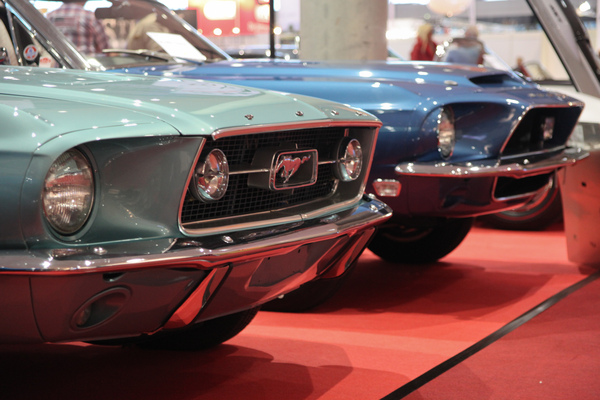
Wherever driving culture is celebrated, the "American Way of Drive" from the land of unlimited possibilities should of course not be missing, as the automotive culture of the USA has had a significant influence on vehicle development worldwide for decades: Let's think of Ford's assembly line production from 1914 with the "Model T", which made the motorization of the masses possible, the multi-brand policy that emerged as early as the 1920s, e.g. at General Motors (GM).This was also due to the importance of vehicle design, which prompted GM, for example, to establish a design center as early as the 1930s.
Since the US car industry, unlike its European counterparts, did not suffer from war damage, it was able to continue developing undisturbed, especially in the early 1940s, which gave it an immense advantage over Europe.

An unconditional belief in progress and the aerospace industry, which was spurred on by this, had a direct influence on many vehicles, whether in terms of design (tail fins, tail lights such as jet engines that ignited, etc.) and naming (e.g. Oldsmobile F-85 Jetfire, Ford Thunderbird, Ford Galaxie, etc.) or in the comfort technology which, for example, ensured that high beam headlights were automatically dimmed when an oncoming vehicle approached (GM "Autronic Eye") as early as 1952 in Cadillac and Oldsmobile.
US car manufacturers also recognized the importance of motorsport for image and sales very early on; "Win on Sunday, sell on Monday!" became a common slogan and was reflected in powerful models such as the Pontiac GTO (which celebrates its 60th birthday in 2025), Dodge Charger and Ford Fairlane GT.

Speaking of Ford: from 1966 to 1969, it was Henry Ford II's team that won the 24-hour race at Le Mans four times in a row with the GT 40 before Porsche took over with the 917. This ingenious mixture of innovation, design and performance at the time naturally had a major influence on vehicle development in Europe, whether it was the tail fin or the typical US V8 engine, which was often the crowning glory of German (luxury) models, but was the automotive norm in the USA in the 1950s and 1960s.
Boss of big blocks - the Geiger is coming!
Karl Geiger, Managing Director of Geiger Cars in Munich, is almost world-famous as a specialist for classic and current US vehicles, and not just since the DMAX TV series "Der Geiger - Boss of big blocks". He has been living and breathing US vehicles since the 1980s at the latest and is now the first port of call when it comes to selling, servicing and customizing US vehicles, whether Corvette, Dodge, Ford or Cadillac - he knows and loves them all. It goes without saying that such a great friend and connoisseur of driving culture should not be missing at Retro Classics, and so "der Geiger" is bringing a colorful bouquet of his cars to Stuttgart.

Of course, a visit to the 24th Retro Classics in Stuttgart is not only worthwhile for US car fans, but especially for them because of the extraordinary classics from the golden era of the US automobile industry, presented by US car clubs, dealers and collectors in Hall 3.
Further information can be found on the website of the classic car show.


