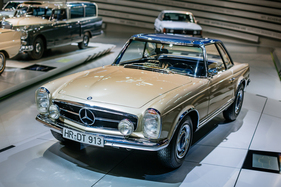

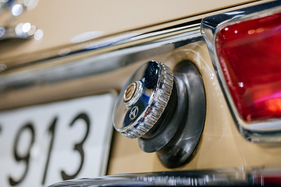
"Pagoda" - what an idiosyncratic nickname for a car. It was coined a long time ago for the Mercedes-Benz SL of the 113 model series. This SL was first called the "Pagoda" in Italy, recalls former chief designer Bruno Sacco.
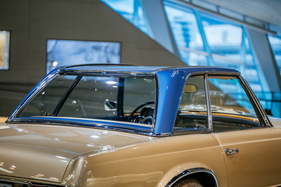
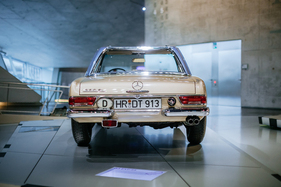
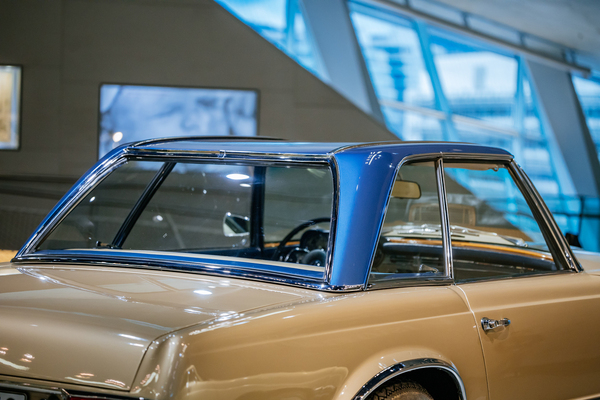
The name "Pagoda" is based on the shape of the sports car designed by Paul Bracq, whose characteristic, slightly inwardly curved hardtop is reminiscent of Asian temples. The pagoda roof is a stroke of luck for the image and design of the sports car. The overall design is characterized by great simplicity and lightness, creating an expressive elegance. Decades later, Bracq still described the design of the W 113 as "perfect".
Safety body
The impetus for the concave roof line came from the engineer Béla Barényi, who specialized in force curves in the car body. He pointed out that a roof that curves downwards is more stable than sheet metal that curves upwards, but this is only of limited use for everyday use of the 113 series, as the hardtop of a sports car is rarely used with a roof rack for transporting loads.
Another of Barényi's inventions, namely his body concept with crumple zones at the front and rear and a rigid passenger compartment in between, was of great importance in terms of safety. In 1959, the Mercedes-Benz 111 model series was the world's first vehicle with this safety body. Naturally, the SL, which appeared in 1963, also had it - a milestone in the world of sports cars. This underlines why this SL is located in the Mercedes-Benz Museum in the myth room of the pioneers of safety and the environment from 1960 to 1982.

Universal talent
The 1963 Geneva Motor Show was the premiere venue for the 230 SL, the first version of the 113 model series. The roadster with a 2.3-liter six-cylinder engine and 110 kW (150 hp) took on an ambitious legacy. It replaced two predecessors, the 190 SL (W 121) and 300 SL Roadster (W 198), both of which had been extremely popular and successful from the outset.
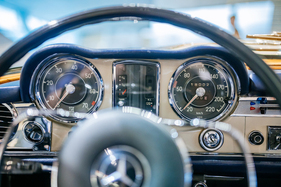
With the new model, Mercedes-Benz struck a middle course. The 230 SL is neither an uncompromisingly tough roadster nor a mild-mannered boulevard sports car. It is a comfortable yet sporty two-seater with a high level of driving safety.
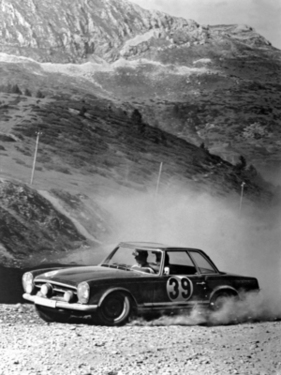
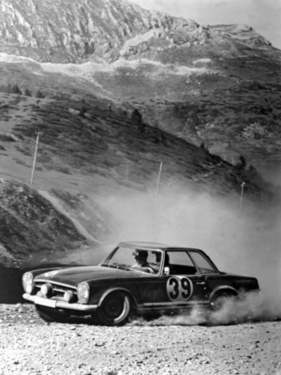
Motorsport is also in the genes of this SL generation. The victory of Eugen Böhringer and Klaus Kaiser in a Mercedes-Benz 230 SL at the 1963 Spa-Sofia-Liège long-distance rally - around 5500 kilometers at top speed - is legendary. Böhringer called the sports car a "dancer" because it was more maneuverable than the sedan with its longer wheelbase.
Successor
The 113 model series was developed further, so that the 250 SL was presented in 1967, also with 110 kW (150 hp), but with a displacement of 2.5 liters and therefore with greater torque. This was replaced less than a year later by the 280 SL with a 2.8-liter engine and 125 kW (170 hp), which was even more powerful.
Production of the 280 SL came to an end in March 1971, which was followed by the completely redesigned 107 model series. A total of 48,912 of the three SL models in the 113 series were produced in eight years of production. Today, they are among the most popular classics of the brand with the star, as they combine sportiness with a high level of everyday practicality, comfort and timeless elegance.
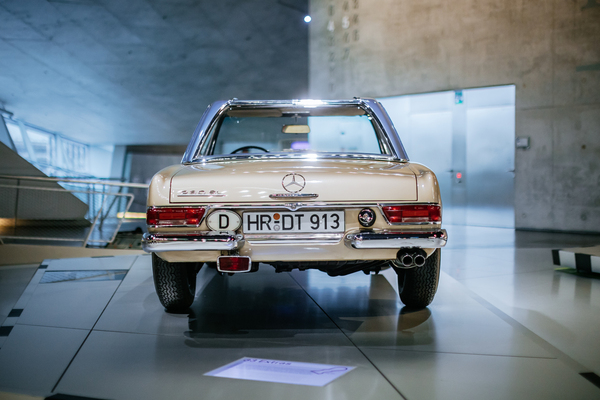
You can find out more about the myth rooms and the 230 SL specifically on the Mercedes-Benz Museum website.