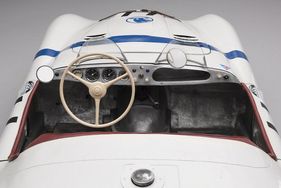

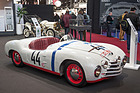


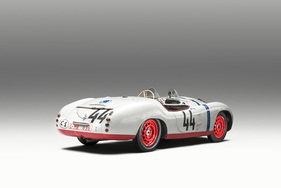
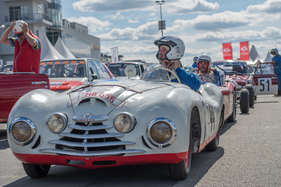
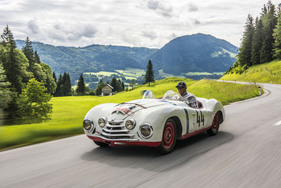
To mark the 120th anniversary of its involvement in motorsport, Škoda is this year presenting 18 special racing cars with which the car manufacturer celebrated great success on national and international race tracks.
In the 1950s, motorsport did not appear to have much of a future in Czechoslovakia and mobility was provided primarily by motorcycles. However, the first international races were already being held at this time. In 1949, the famous 24-hour race in Le Mans was held again for the first time since the Second World War and the newly founded Formula 1 started a year later.
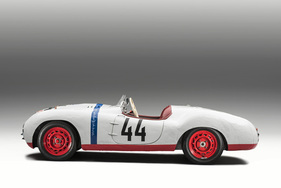
Škoda Sport based on the Škoda 1101 'Tudor'
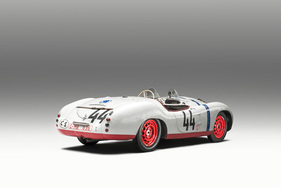
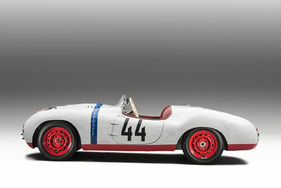
In Czechoslovakia, too, there was a desire to take on international competition with a domestic vehicle in order to test the durability of series parts and thus promote Škoda vehicles abroad. The decision was made to build the Škoda Sport, a sporty derivative based on the Škoda 1101 'Tudor' presented in 1946. The racing car had a weight-optimized chassis from the Škoda 1101.
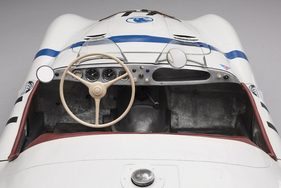
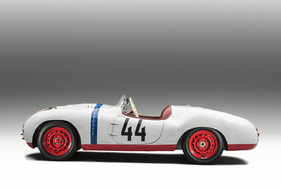
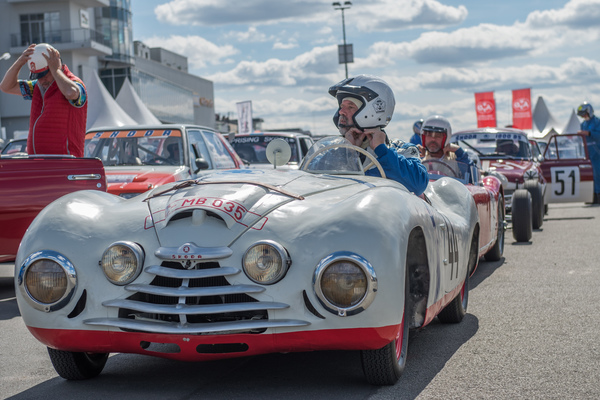
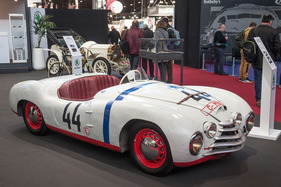
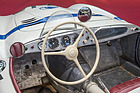
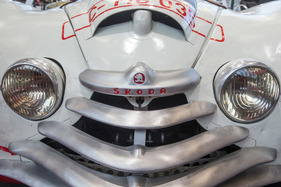
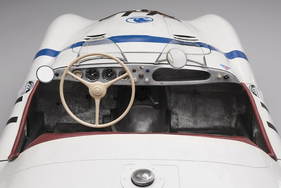
Due to the low vehicle height, the power units were arranged differently and the central tube was shortened by 400 millimetres, while the fork of the skeleton frame was lengthened at the front. The designers also adapted the position of the steering and pedals. The car was given a low, open body, which was made by hand from sheet aluminum. The fuel tank was relocated behind the two seats and the fuel supply was provided by an electric pump. The radiator grille had five ribs and the headlights were set into the front section. The Škoda Sport was mainly built using standard parts from the 'Tudor', including the 12-volt on-board electrical system from PAL and the Barum tires. Two blue-painted vehicles with a 1.1-liter engine were built. One of these racing cars was intended to compete in the class up to 1500 cc and produced 56 hp with an extra Roots supercharger, while the car intended for the class up to 1100 cc had 42 hp without a supercharger.
From Brno to Le Mans
Both vehicles competed for the first time on September 25, 1949 at the Brno City Prize, the last Grand Prix in Czechoslovakia for monopostos. Jaroslav Netušil drove to victory in the class up to 1100 cc in a car without a supercharger, while Václav Bobek took second place in the class up to 1500 cc in a Škoda Sport with a supercharger.
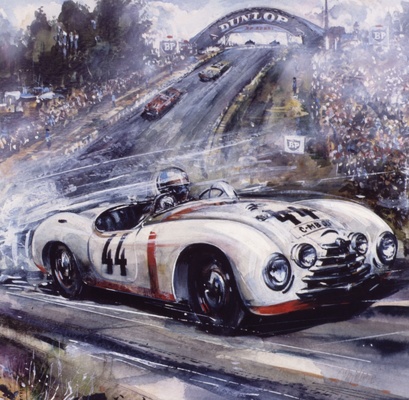
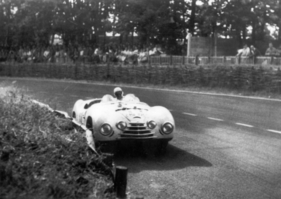
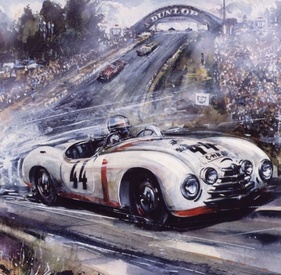
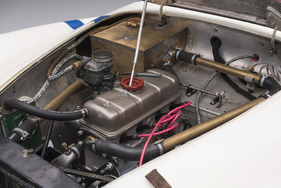
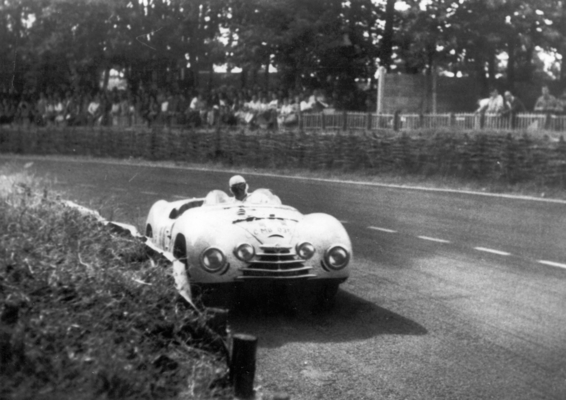
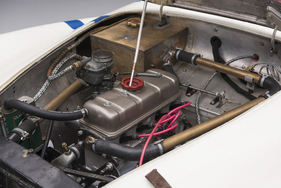
For the start in Le Mans, the decision was made to run the car without a supercharger and to further optimize the Škoda Sport. In accordance with French regulations and the experience gained to date, the wheelbase was extended by 180 millimeters and two additional headlights were mounted on the sides of the radiator grille. Furthermore, the vehicle, now painted in the national colors, also received a windshield in front of the passenger seat and drove on Michelin tires for its use at the Sarthe. Fully fueled and with tools and spare parts on board, which could only be used for necessary repairs during the race, the car weighed just 700 kilograms. Under the hood was the tried-and-tested, water-cooled four-cylinder engine with a displacement of 1089 cc, which produced 50 hp (37 kW) at 5200 rpm thanks to a compression ratio of 8.6:1, a Solex 40 UAIP carburettor and other technical modifications. With the usual racing fuel of the time - a mixture of petrol, ethanol and acetone - the Škoda Sport reached a top speed of 140 km/h with a fuel consumption of just 12 liters per 100 km. With a full tank, it was possible to drive for four hours at a stretch - a clear advantage for Václav Bobek and Jaroslav Netušil, who were thus able to cover longer distances without refueling than their competitors.
The Škoda Sport in the 24 Hours of Le Mans 1950
The race began on June 24, 1950 at four o'clock in the afternoon with the classic Le Mans start - the cars lined up on one side of the track, the drivers on the other. At the starting signal, they sprinted to their race cars and jumped behind the wheel. The organizers admitted 60 participants out of 112 interested parties. Václav Bobek and Jaroslav Netušil successfully held their own against the competition for a long time and were soon in a promising position. However, after thirteen hours of racing, the car lost power on the 121st lap and the team had to retire. The cause was a small technical defect with a broken piston pin fuse. However, only parts carried in the car could be used for the repair and a replacement fuse was not on board.
Until their retirement, Václav Bobek and Jaroslav Netušil fought their way up to second place in the up to 1100 cc class with an average speed of 126 km/h. Their fifth place in the special power coefficient classification, which was common at the time, was also impressive. Given this outstanding performance, it was at best a small consolation that none of the rivals in the up to 1100 cc class crossed the finish line either.
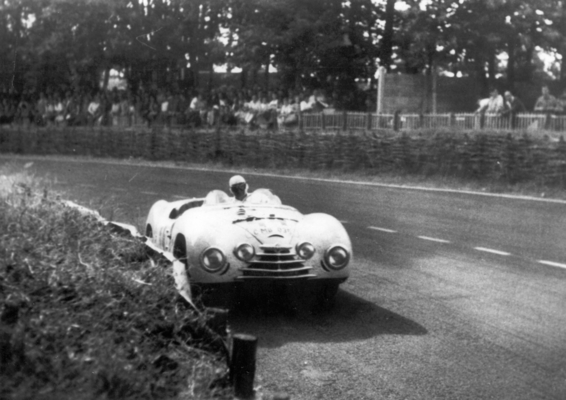
At the following edition of the race in Le Mans, no more Škoda cars competed for political reasons. Škoda Sport did not return to Le Mans, but in the following twelve years it took part very successfully in a further 80 races in Central and Eastern Europe, in which teams from other Eastern Bloc countries competed.
Over time, the Škoda Sport was equipped with ever more powerful engines - most recently in the carburetor version with 120 hp and an engine with two superchargers that produced 190 hp. After some aerodynamic modifications, the Le Mans car set the Czechoslovakian speed record in the class up to 1100 cc in 1953 with 160.1 km/h. After being taken out of service by the Škoda racing team, the special vehicles went to private drivers, who used them in races until 1963.
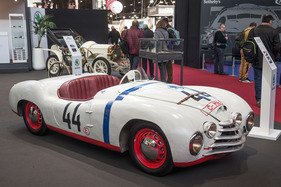
In 2020, the extensively restored Škoda Sport was due to take part in the Le Mans Classic commemorative race to mark the 70th anniversary of its start at Le Mans, but the organizers had to cancel it due to the COVID-19 pandemic.