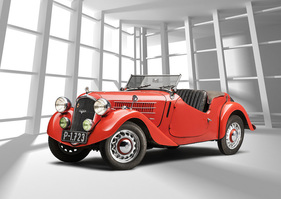
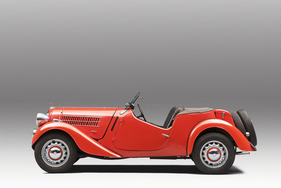
85 years ago, Zdeněk Pohl and Jaroslav Hausman set off from Mladá Boleslav in the Škoda Popular Sport for the famous Monte Carlo Rally. In the Principality of Monaco, they drove the roadster to one of the greatest successes in Škoda Auto's motorsport history.
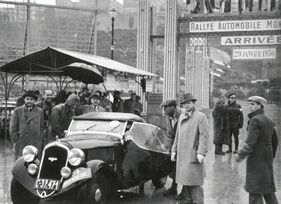
The equally famous and challenging Monte Carlo Rally was first held in 1911 to attract tourists to the Principality of Monaco during the cold winter months. Zdeněk Pohl and Jaroslav Hausman took part in the fifteenth edition, which took place from January 25 to February 2, 1936, in the Škoda Popular Sport and impressively held their own against the competition.
As the length and difficulty of the route from one of the official starting points also determined success at the Monte Carlo Rally, Pohl and Hausman set off from Athens and traveled to Monaco via the Riviera. Other possible starting points included Bucharest, Palermo, Stavanger and Tallinn. From Prague, the pair covered a distance of 850 kilometers to the ferry to Trieste in the Škoda Popular Sport within 17 hours. After arriving in the Greek metropolis of Athens, Zdeněk Pohl and Jaroslav Hausman had four days to recover and prepare their vehicle technically for the rally. However, they did not have access to a mechanic or a professionally equipped service vehicle for this purpose.
Hallucinations of elephants and horses - Škoda duo finishes second in its class
The 3852-kilometer drive via Thessaloniki, Belgrade, Budapest, Vienna, Strasbourg and Avignon to Monaco took a total of four days. Pohl later recalled: "I saw strange things on the way. Once a horse came backwards towards us at full speed, another time I had to avoid an elephant. Of course, the road was actually clear, we were simply hallucinating after the fourth night without sleep. The hum of the engine made us sleepy, and it was also very foggy."
Out of a total of 105 registered teams, only 72 vehicles finished the 1936 Monte Carlo Rally. The Škoda Popular Sport reached the finish line without penalty points, also passed technical scrutineering and performed well in the skills test. This was enough for Pohl and Hausman to take second place in the class up to 1500 cc.
The pair's success with the Škoda Popular Sport was the result of careful preparation. For example, they tested leather overalls and off-road tires from the Czech brand Bat'a, which still exists today under the name Barum, in the snowy Krkonoše Mountains. As Pohl and Hausman could not agree in advance whether a wooden or metal shovel would be better suited to freeing the car from the snow if the worst came to the worst, they ended up packing both variants.
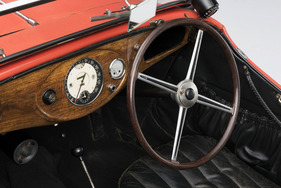
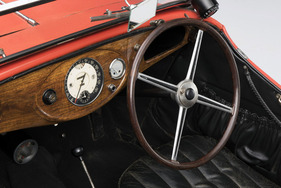
Their Škoda Popular Sport had the modified chassis of the lighter Popular series, but the engine came from the more powerful RAPID. The four-cylinder engine with a displacement of 1386 cc mobilized an output of 34 hp, the top speed was around 110 km/h. New hydraulic brakes from the Ate brand ensured better deceleration. Two fuel tanks with a total volume of 170 liters enabled a range of 1500 kilometers, with fuel consumption of 11.3 liters per 100 kilometers. The total weight of the rally vehicle was 790 kilograms, of which only 250 kilograms were accounted for by the open body. The fully loaded Škoda Popular Sport weighed around 960 kilograms, plus 170 kilograms for the driver and co-driver. In the cold season, Pohl and Hausman particularly benefited from the hot-air heating, a holder for an insulated flask and the partially heated windshield. The folding front passenger seat also proved to be practical, allowing the co-pilot to rest while driving.
Limited production model Škoda Popular Monte Carlo recalls motorsport successes
The car manufacturer from Mladá Boleslav took its great success at the Monte Carlo Rally as an opportunity to expand its model range with an exclusive series of sporty vehicles. The first Škoda Popular Monte Carlo roadster was delivered in July 1936, followed by the first coupé in August 1936. The official presentation took place on October 1, 1936 at the Paris Motor Show. By 1939, Škoda had built around 70 roadsters and coupés in the series, with customers including the then fourteen-year-old Yugoslavian King Petar II Karađorđević.
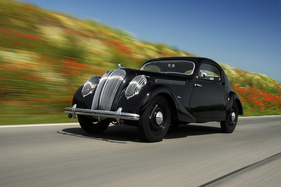
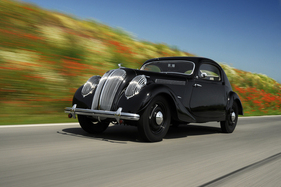
One of these vehicles has been part of the Škoda Museum's collection since 1968. The black Popular Monte Carlo coupé from 1937 is one of a total of twenty surviving examples of its type. It was extensively restored in the early 2000s and has been attracting attention at classic car events in Germany and abroad ever since.
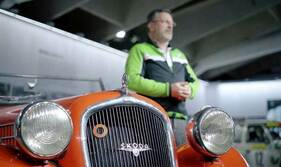
The design of the models in particular, with the characteristic grille in front of the radiator grille and headlights, is influenced by the style of the interwar period. With its elegantly curved lines, the Škoda Popular Monte Carlo remains a design icon in the company's history to this day. The 'Monte Carlo'1 equipment line for the Fabia, Scala and Kamiq model series is a reminder of Škoda's great motorsport successes at the rally in the Principality of Monaco.