

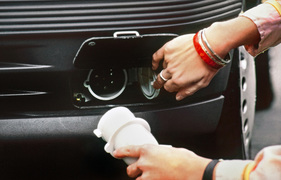

A purely electric range of 337 kilometers (in the WLTP1 cycle). Zero to 100 km/h in just 8.1 seconds. A 50 kWh battery that recharges to 80 percent capacity in just 30 minutes.

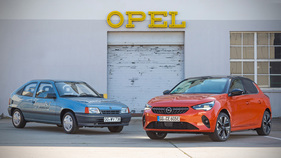
This is the Opel Corsa-e of today - fully suitable for everyday use, the electric car for everyone. And electric mobility has a long tradition at Opel.
Already thirty years ago
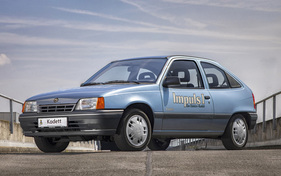
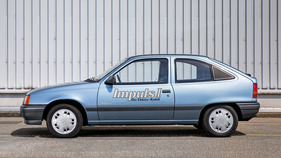
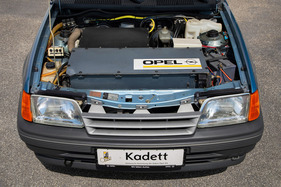
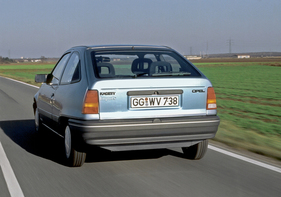
A direct ancestor of the Corsa-e is the Opel Kadett Impuls I. The brand with the lightning bolt developed the research vehicle 30 years ago specifically for use in the city. The idea was to find out how suitable an electric car with the technology of the time was for city traffic. In any case, the electric car was to offer the same amount of space and a similar payload as the conventional Kadett.

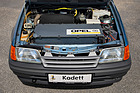
Opel developed the Kadett Impuls I in cooperation with the energy company RWE and the battery manufacturer SAFT - now a partner of the company in the planned joint battery production at the Kaiserslautern plant. In detail: A 100-volt DC motor drives the front wheels. Nickel-cadmium batteries supply the energy. To optimize weight distribution, the batteries are located in the engine compartment and underneath the trunk. They weigh a total of 310 kilograms, require a volume of 170 liters and store 14.3 kWh of electricity.
The maximum output of 16 kW/22 hp is specially tuned for city driving. The Kadett Impuls I accelerates from zero to 50 km/h in just ten seconds. The top speed of the one thousand kilogram car is 100 km/h. Even inclines of up to 25 percent are no problem for the electric car. In addition, the e-Kadett from Rüsselsheim is already able to recover some of the kinetic energy generated during braking and store it as electricity.
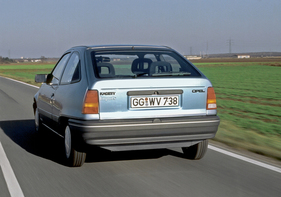
After driving around 80 kilometers, the batteries need to be recharged for around five hours. There are no compromises in terms of comfort and practicality. The payload of 350 kilograms (490 kilograms for the standard Kadett) and the trunk volume of 330 liters (390 liters) are roughly on a par with the standard car.
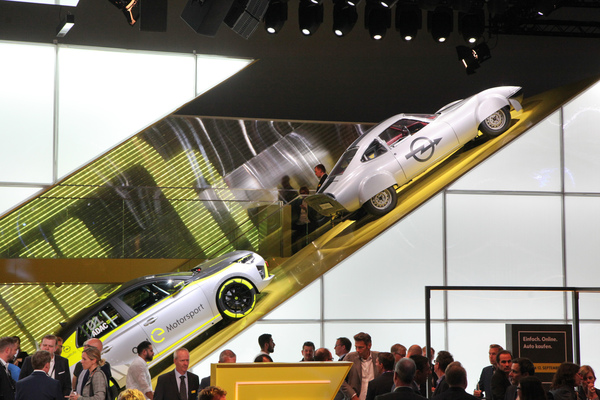
Lightning-fast: The electric pioneers Opel Kadett B Stir-Lec 1 and Opel Elektro GT
For Opel, the Kadett Impuls I was a further contribution to the discussion about emission-free driving, especially in urban areas, which had already begun 30 years ago. But Opel was already building an electric vehicle with a range extender on board at the end of the 1960s with the Kadett B Stir-Lec I. And even the legendary Opal GT soon went on the record hunt as an electric GT.
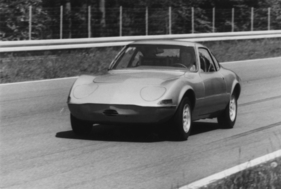
Fourteen lead-acid batteries supply the 1968 Stir-Lec study with energy. A Stirling combustion engine installed in the rear generates the electricity and permanently charges the batteries - a forerunner of the range extender principle that would go into series production around 40 years later with the Opel Ampera.
The Opel Elektro GT breaks six world records for electric vehicles as early as 1971.
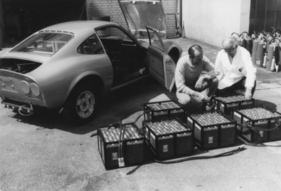
The driving force behind this ambitious project is the grandson of company founder Adam Opel, Georg von Opel. Two coupled electric motors with an output of 88 kW (120 hp) accelerate the electric GT up to a speed of 188 km/h. The nickel-cadmium battery offers a range of a modest 44 kilometers at a constant speed of 100 km/h - still the biggest handicap of electric mobility at the time.