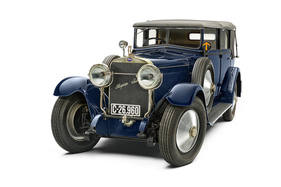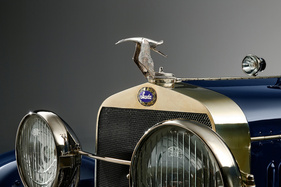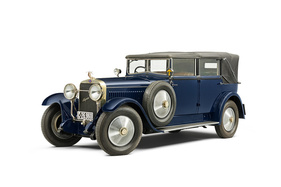

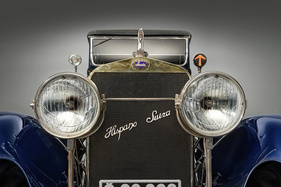

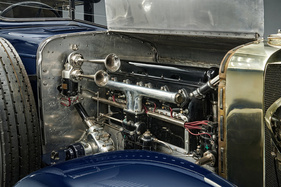
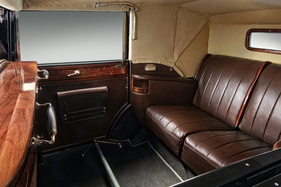
Built in limited numbers, the Škoda Hispano-Suiza 25/100 PS was one of the most advanced cars of its time. Škoda's uncompromising quality standards in terms of craftsmanship and the materials used also contributed significantly to the high prestige of the license-built model. A 6.6-liter six-cylinder engine with 100 hp at 1600 rpm accelerated the approximately two-ton luxury vehicle to more than 120 km/h. An elaborately restored example of one of the extremely rare Škoda Hispano-Suiza is celebrating its trade fair debut at this year's Techno Classica, which is taking place in Essen until April 16.
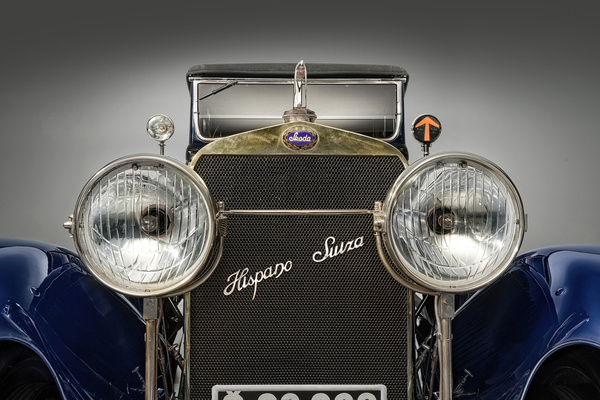
With the Laurin & Klement FF, powered by an in-line eight-cylinder engine, the Mladà Boleslav-based company had already established itself in the luxury car segment in 1907. At the beginning of the 1920s, the L&K 450 was the brand's flagship model with a five-liter six-cylinder engine and a particularly quiet valve train. After a major fire on the factory premises hit the company hard, the idea of looking for a strong cooperation partner was considered in 1924. This role was assumed in 1925 by the Pilsen-based engineering and armaments group Škoda. Its local automotive division had mainly built special military vehicles from 1919 onwards, before commercial vehicles manufactured under license were added in 1924: petrol-electric trucks from Tilling-Stevens and Sentinel.
A Spaniard from the Czech Republic
As early as November 10, 1924, Karel Loevenstein, Managing Director of Škoda Pilsen, decided to license production of the luxurious H6B from Hispano-Suiza. Škoda Pilsen had already built aircraft engines on behalf of this company. The Hispano-Suiza H6B was characterized by its enormously rigid box frame and the long wheelbase of 3690 millimetres. The six-cylinder engine with aluminum block and cast-iron cylinder liners had an overhead camshaft. One particular detail indicates that the design of the luxury vehicle was apparently based on the motto "money is no object": The seven-bearing, 45-kilogram crankshaft was milled from a 350-kilogram block of iron!
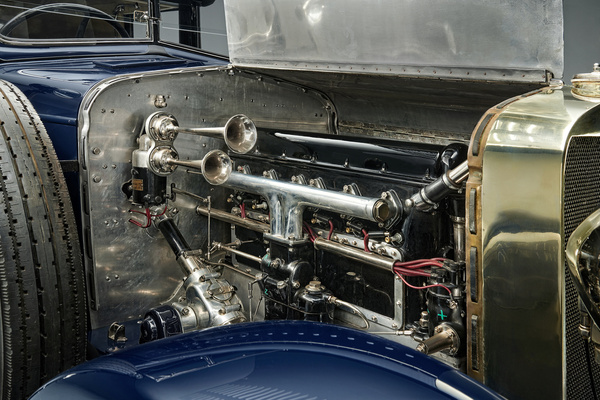
The smooth-running engine developed 100 hp at 1600 rpm. Versions with a higher compression ratio for better fuel quality even achieved 135 hp at 3000 rpm. The average fuel consumption of 20 to 25 liters per 100 kilometers was reasonable for the time. The mechanical brakes worked reliably - also because a progressive brake booster utilized the car's kinetic energy. In September 1926, the management of Hispano-Suiza made an internal comparison between their vehicle and the licensed Škoda model. The result: the Czech product proved to be superior in numerous aspects, including its more precise gearshift and steering.
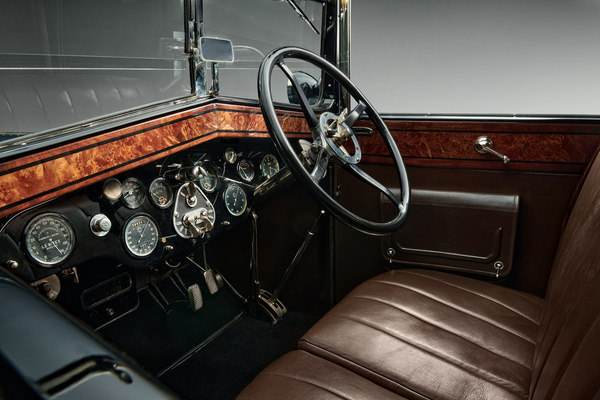
As the plant in Pilsen did not have a body production facility, more than half of the 100 vehicles produced were completed at the production plant in Mladá Boleslav. The remaining cars were produced by independent coachbuilders such as Aeor, Brožík, J. O. Jech, Petera, Pokorný & Beiwl or Uhlík. In addition to exports throughout Europe, a third of production went to Turkey and Argentina. The delivery certificate for the very first Škoda Hispano-Suiza bears the date May 10, 1926 and belongs to a limousine that faithfully served the co-founder and first president of Czechoslovakia, Tomáš Garrigue Masaryk, for around ten years.
The odyssey of a survivor
Only a handful of Škoda Hispano-Suiza have survived to this day. The Škoda Museum's example bears the serial number 469, the engine 1181. The chassis left the factory halls in Pilsen on May 4, 1928. The renowned coachbuilder J. O. Jech, whose company was based in Karolína Světlá Street near the National Theater in Prague, handed over the finished car to the up-and-coming Association of Czechoslovak Sugar Refineries on September 22, 1928. Its president Robert Mandelík (1875 - 1946), industrialist, financier and mayor of Ratboř near Kolín, used the Škoda Hispano-Suiza until the mid-1930s. As was customary at the time, the robust chassis with its powerful engine was then converted into a fire engine. Chassis number 469 served in this function during the Second World War in a fire station in the municipality of Katowice, which belonged to the city of Strakonice.
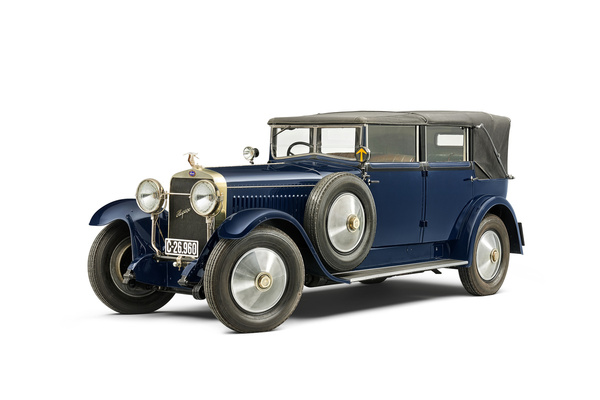
In the 1970s, a Slovakian collector acquired the car. The next owner was from Prague and began an extensive ten-year restoration in 1995. The famous artist Václav Zapadlík used the original chassis and the original front bodywork to create a design language in the style of J. O. Jech. The Škoda Hispano-Suiza subsequently changed hands twice more before becoming part of the Škoda Museum's collection in 2010.
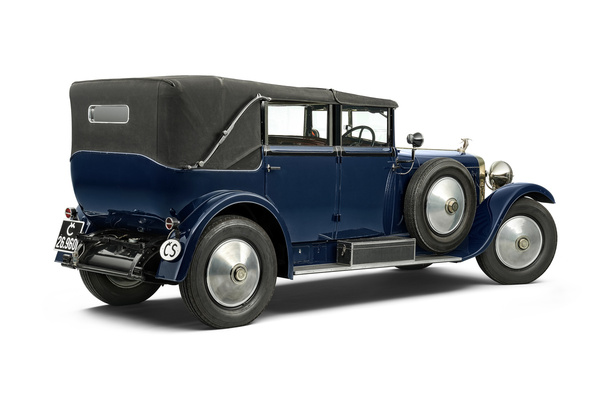
In 2019, another restoration began there, this time an extremely challenging one. After extensive study of archive material, the aim was to return the car to its original delivery condition. As part of the work, the specialists at the museum workshop discovered and repaired some major damage to the engine and other components and corrected various repairs that had been carried out improperly in the past. The enormous attention to detail is reflected not least in the flawless replicas of the original license plates with the identification Č-26.960.
The Škoda Hispano-Suiza 25/100 PS will be presented to the public for the first time in its new perfect condition at the Techno Classica in Essen until April 16, 2023.