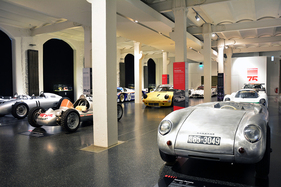
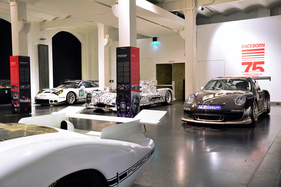
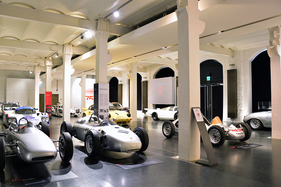
75 years of Porsche motorsports are the focus of the new special exhibition “RACEBORN” at the PROTOTYP Automuseum in Hamburg. In collaboration with the Porsche Museum in Stuttgart, the museum is presenting a selection of extraordinary race cars through September 1, 2026, tracing the evolution of Porsche motorsports from its beginnings to the modern hybrid era.
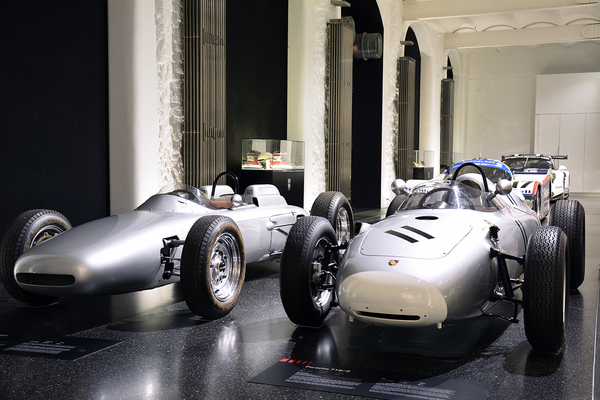
Glöckler and Fetzenflieger
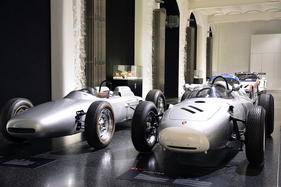
The exhibition brings together rare original vehicles from the Hamburg collection and significant milestones in racing history from Stuttgart-Zuffenhausen. On display are, among others, a 1952 Glöckler-Porsche—the precursor to the legendary Porsche 550 Spyder— the Mathé Porsche MA-01 “Fetzenflieger”—the first formula car featuring Porsche technology—and the Porsche 804 Formula 1, with which Porsche secured its only Grand Prix victory to date in the Formula 1 World Championship in 1962. Also on display is the 1968 Porsche 908 LH Coupé, one of the pioneering endurance race cars of its time, which impressively documents the technological development leading up to Porsche’s later successes in major endurance races.
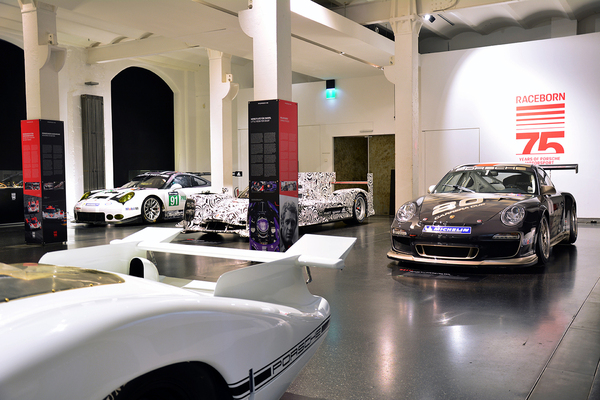
919 Hybrid “Rollout” and 911 GT3 Cup
The Porsche 911 RSR, introduced in 2013, epitomizes the brand’s modern GT racing tradition and builds on numerous international successes in endurance and customer racing. Finally, the Porsche 919 Hybrid “Rollout”—the test car for the future Le Mans-winning model—bridges the gap to the modern era of racing. In addition, other iconic vehicles from motorsport history are on display, including the Porsche 718/2 F1, the Porsche 911 Carrera 3.0 RSR IROC, the first Porsche 962, and a Porsche 911 GT3 Cup (Type 997).
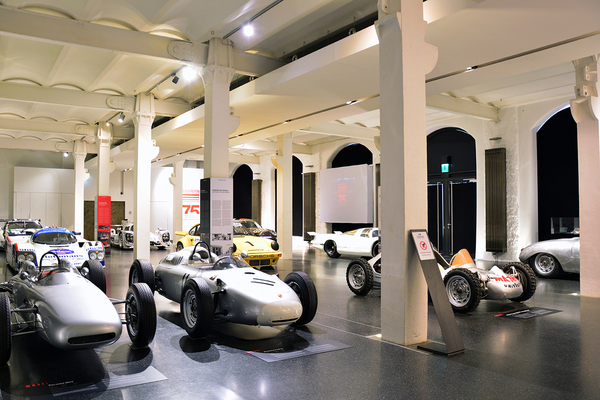
Innovation and Competition
The special exhibition tells stories from 75 years of Porsche motorsports—covering special events, legendary races, extraordinary drivers, and groundbreaking technical developments. It demonstrates how closely innovation and competition have always been intertwined at Porsche. At Porsche, motorsports has traditionally served as a development laboratory under extreme conditions. Many technical solutions that had to prove themselves on racetracks around the world later found their way into production vehicles.