


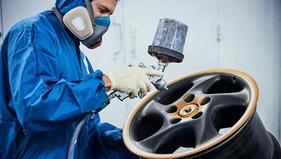


Visually, the classic car painted in golden yellow metallic is based on the design of the 911 Turbo S Exclusive Series of the 991 model. The black wheels bear design lines in golden yellow, while the seats and interior are finished in black with golden yellow applications. The body features the characteristic side air intakes of the 993 Turbo S, which were also available as an option for the 911 Turbo in 1998. The 331 kW (450 PS) sports car classic will celebrate its world premiere on September 27, 2018 at the Porsche Rennsport Reunion in Laguna Seca (USA). On October 27, 2018, the one-off, which can only be driven on private tracks, will be auctioned off at an RM Sotheby's auction at the Porsche Experience Center in Atlanta. The proceeds will benefit the charitable Ferry Porsche Foundation, which was established this year to mark the "70 Years of Porsche Sports Cars" anniversary.

According to Detlev von Platen, Member of the Executive Board for Sales and Marketing at Porsche AG, Project Gold unites the comprehensive expertise of Porsche AG. The project clearly demonstrates the strategic orientation of Porsche AG. Even though the Porsche Taycan opens a new chapter in the company's sports car history, the history is by no means losing its significance. The golden yellow 993 proves that Porsche is putting its heart and soul into maintaining the brand's tradition.

"Project Gold" is Porsche Classic's spectacular contribution to "70 years of Porsche sports cars": against the backdrop of this anniversary and the imminent market launch of the first purely electrically powered Porsche sports car, the Taycan, the idea was born to build a completely new vehicle based on an existing original 993 bodyshell. The experts were able to draw on more than 6,500 original parts that Porsche Classic offers for Type 993 vehicles alone. The entire range of the Classic division comprises around 52,000 items, which are available on call from all Porsche Classic partners and Porsche Centers worldwide for the repair and restoration of classic Porsches.
It took around one and a half years to build the one-off.

First, the body shell underwent the corrosion protection and painting process of today's production vehicles.

The collector's item was then created in the Porsche restoration workshop, assembled and tuned by the specialists from Porsche Classic. They implanted a completely new 3.6-liter biturbo engine with the highest power output at the time of 331 kW (450 hp). The manual gearbox and all-wheel drive also came from the shelf for original parts. The hand-stamped chassis number follows that of the 911, which was the last production model of the 993 Turbo to roll off the production line in 1998.

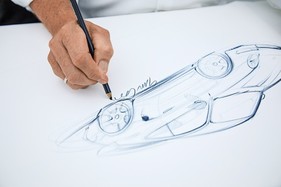
Exterior and interior elements were coordinated with the in-house experts at Porsche Exclusive Manufaktur, under whose direction the 911 Turbo S Exclusive Series of the Type 991, limited to 500 units, was realized. The designers at Style Porsche created color gradients and the positioning of badges and other applications in the interior.

To this day, the 993 is a sought-after collector's item; it is considered to be particularly mature and reliable. And agile: it was the first 911 to be equipped with a newly designed aluminum chassis. For the first time, the turbo version was equipped with a biturbo engine, which in 1995 was considered the world's lowest-emission production car engine.
The front end is flatter than its predecessors, made possible by the change from round to polyellipsoid headlights. Another innovation of the all-wheel-drive Turbo version were the hollow-spoke aluminum rims used for the first time in automotive engineering. Only 345 units of the 911 Turbo S, with its power unit boosted to 450 hp, were built at the time.

