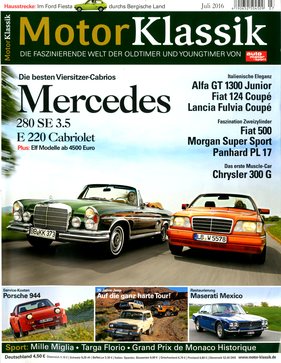
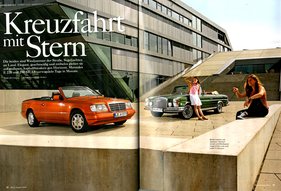
The cover story in the July issue of Motor Klassik is about two windjammers of the road - sailing yachts on land. Elegant, sleek and effortless, they glide along endless ribbons of asphalt towards the horizon. The Mercedes-Benz E 220 and the 280 SE 3.5 turn days into months.

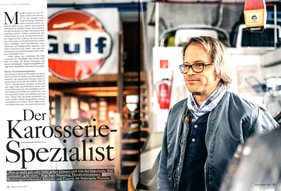
The bodywork specialist
"What didn't exist or couldn't have existed and what changes the historic image is not possible." Juice Ingo Stimming, master craftsman, racing car preparer, artist and expert for historic Porsches.

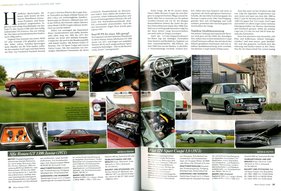
What glorious times those were when Alfa Romeo, Fiat and Lancia were still three independent Italian brands and built highly individual cars. Cars like these three compact sports cars: GT 1300 Junior, 124 Sport Coupé and Fulvia Coupé.

Two cylinders are enough!
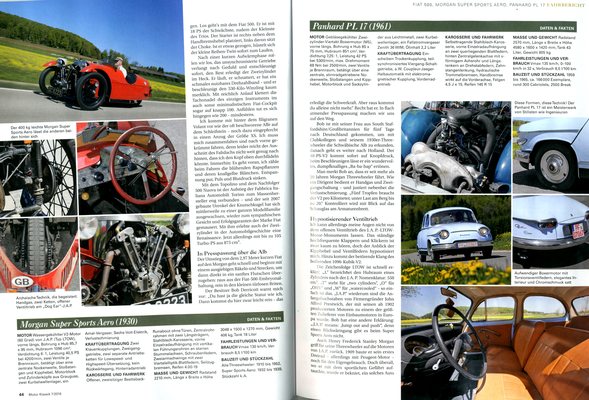
Anyone who no longer finds even a large-volume V12 exciting should perhaps try two cylinders: as a V2, boxer or in-line twin. The Fiat 500, the Morgan Super Sports Areo and the Panhard PL 17 are fundamentally different characters that have nothing in common apart from their number of cylinders.
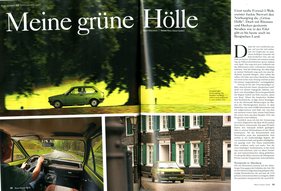
Formula 1 world champion Jackie Steward once christened the Nürburgring the "Green Hell". But roads lined with trees and hedges like those in the Eifel still exist today in the Bergisches Land.

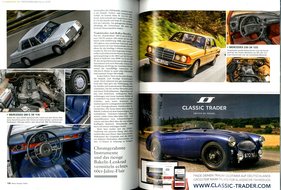
The origin of the E-Class
The Stroke Eight was Mercedes' first million-seller, and the successor model series 123 and 124 were initially even traded at black market prices. Despite their different characters, the three E-Class predecessors have evolved from used cars to collectors' cars.

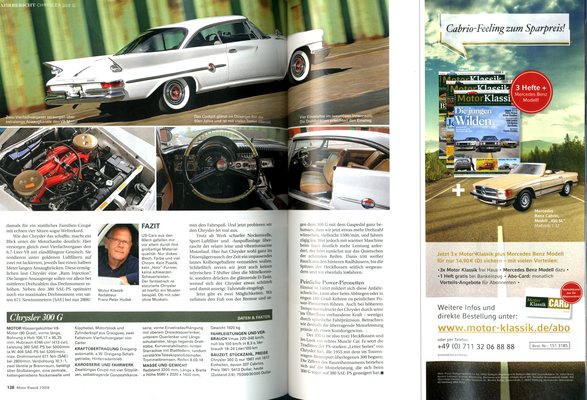
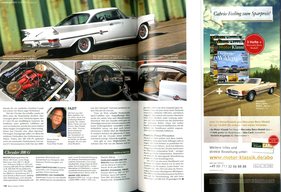
The Chrysler 300 G from 1961 is the most striking model from the Chrysler "letter car" series. From 1955 onwards, each 300 model year was given a consecutive letter. The G model was well motorized with 380 SAE horsepower.