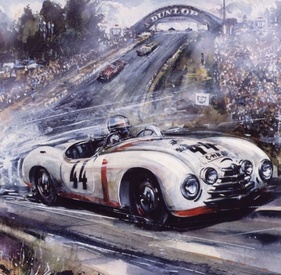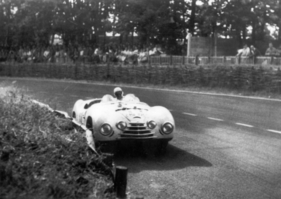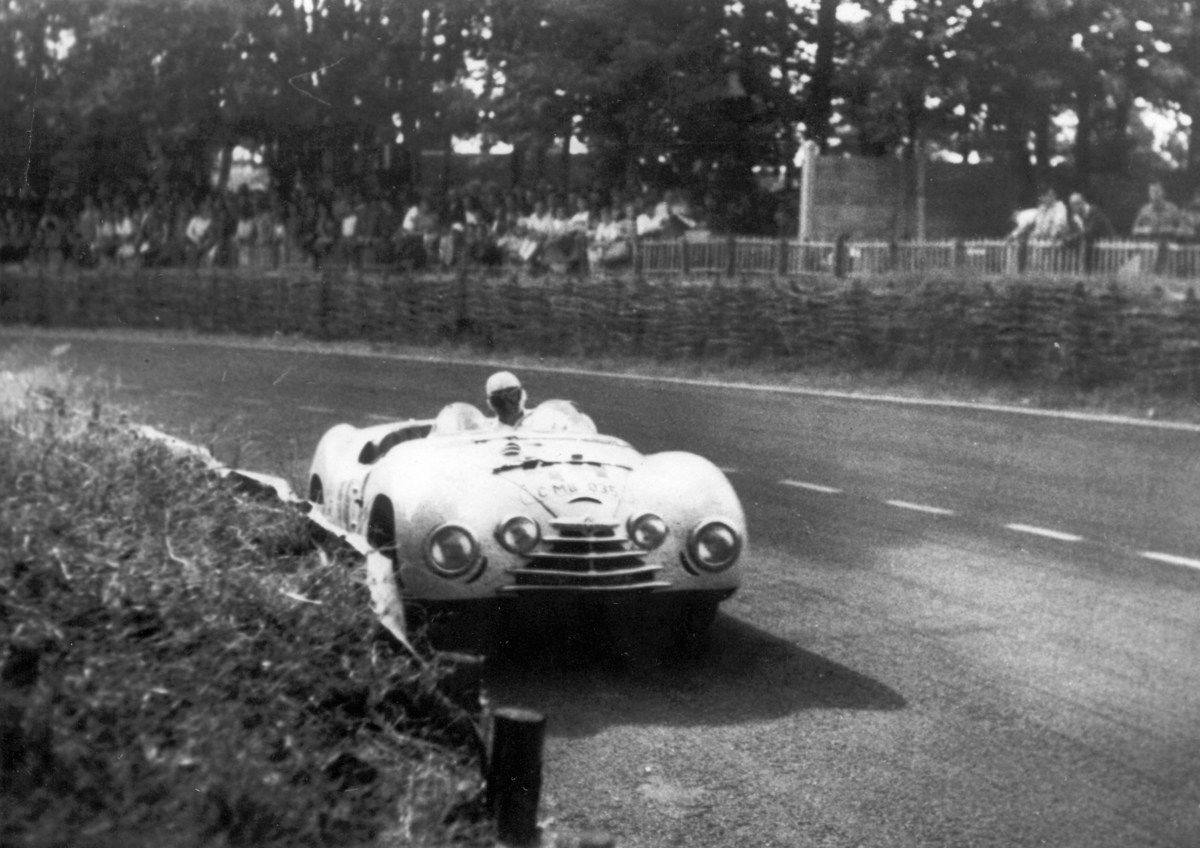
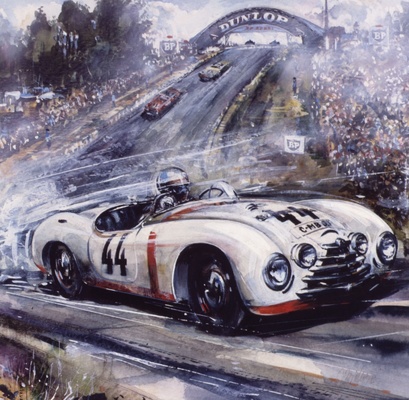



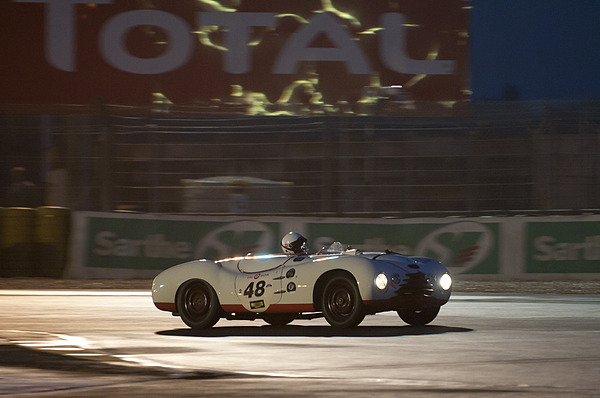

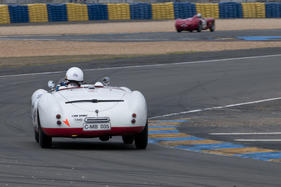


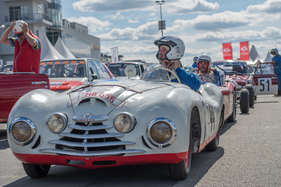

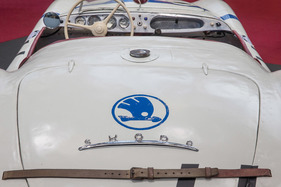
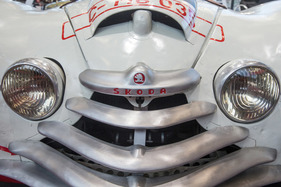
Weiterstadt - The sensation seemed to be within reach: the long night at the 24 Hours of Le Mans 1950 was almost over and the ŠKODA team was safely in second place in its class. Even the works team of the French racing car specialist Gordini, with a total of six cars in the race, had no chance against Škoda Sport, which had long finished fifth in the overall standings. This was all the more surprising as the small but proud Czech team had built its racing car with the simplest of means. Even if the really big coup ultimately failed to materialize, ŠKODA's participation in the world-famous endurance classic 70 years ago made history.
The Czechs against the international motorsport elite
In 1950, Europe was in the midst of the Cold War, the 'Iron Curtain' had divided the continent down the middle. Škoda therefore came from a literally different world when the car manufacturer decided to take part in the 24 Hours of Le Mans. There, the Czech company's works team - known as A.Z.N.P since the nationalization - met the elite of international racing. However, Škoda trusted its already impressive motorsport tradition and took up the challenge. With success: on the high-speed circuit on the Sarthe, the first Škoda Sport drove one fast lap after another on June 24 and 25, 1950. The courage of the underdogs was obviously rewarded.
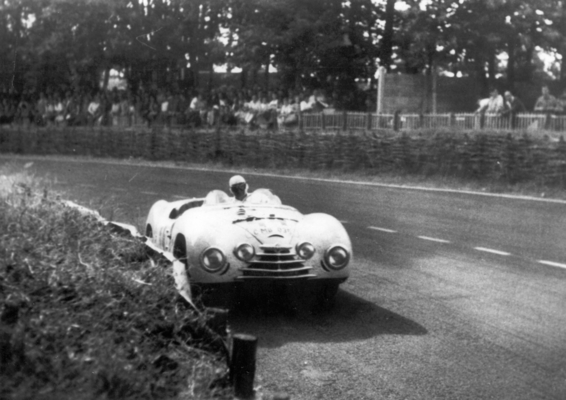
From today's perspective, it seems unimaginable how much courage, ingenuity and motorsport enthusiasm the engineers and mechanics had to muster to build a racing car in 1949 in the midst of the post-war turmoil that was to compete in one of the world's most famous races in 1950. The fact is that many large factories shied away from this effort - when Škoda entered Le Mans in 1950, for example, the toughest endurance race in the world was still taking place without any German manufacturers.
Extremely close to series production
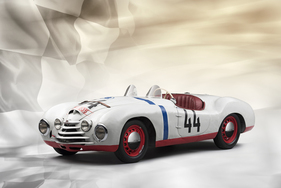
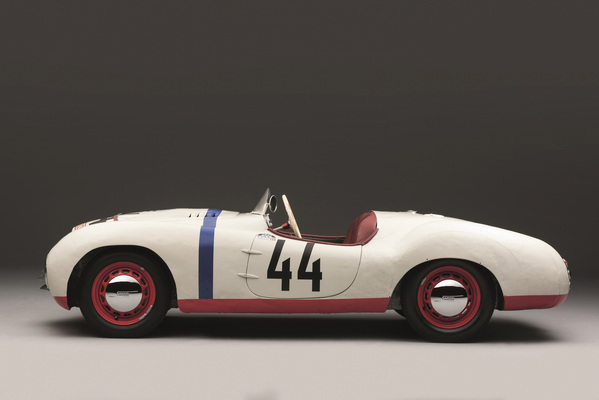
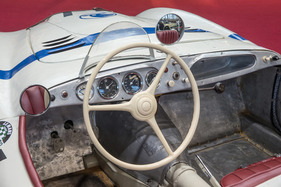
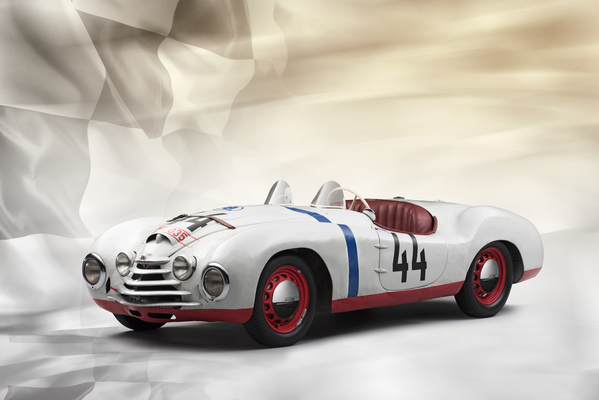
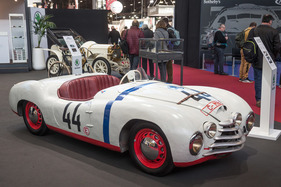
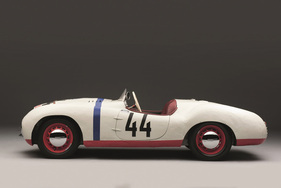
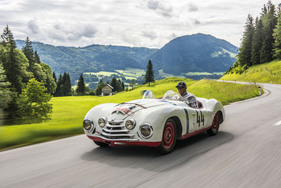
Perhaps even more astonishing is how close the Czech Le Mans racing car is to series production. The Škoda Sport was based on the brand's first post-war model, the Škoda 1101/1102, better known as the 'Tudor', presented in 1946. The central tubular frame and chassis remained unchanged, but the engineers adapted the brakes and transmission to the requirements of endurance racing. Instead of the standard sheet metal body, they tailored a tight-fitting aluminum dress for the open two-seater, which reduced the vehicle weight to 590 kilograms. The engineers almost doubled the output of the small 1.1-liter four-cylinder engine, which produced 32 hp in standard trim. An increased compression ratio of 8.6:1, the installation of a Solex 40 carburetor and the use of a racing fuel consisting of petrol, ethanol and acetone elicited an output of 50 hp (37 kW) at 5,200 rpm from the 1,089 cubic centimetre unit. In combination with the barely waist-high aluminum body, this was enough for a top speed of 140 km/h.
Failure due to 'penny part defect'
Another competitive advantage of the ŠKODA was its low fuel consumption of only around twelve liters per 100 kilometers. One tank of fuel therefore made it possible to drive for four hours. Vaclav Bobek and Jaroslav Netušil, who took turns at the wheel of the Škoda Sport, were able to complete significantly longer stints than their rivals. Bobek/Netušil moved up to second place in the S1.1 class. Everything was going perfectly until, at first light, the term 'dawn' took on a whole new meaning for the ŠKODA team: The breakage of a simple circlip on a piston pin - in other words, a classic 'penny part defect' - led to engine damage. As the racing cars could only be repaired on the open track with the spare parts and tools that were on board, this meant the end for the courageous team from Mladá Boleslav. More experienced opponents fared little better: Not even half of the competitors who started reached the finish line, and none of the favored works Gordini saw the checkered flag.
The comeback failed to materialize
With the hope of doubling its chances the following year with two cars, the team made its way back to Mladá Boleslav - but things turned out differently. The 1950 race remained ŠKODA's only appearance in the French 24-hour classic to this day. Nevertheless, the race the following year proved how fast the Škoda 1100 Sport really was: Porsche also made its Le Mans debut in the 1.1-liter class in 1951 and the lap times of the Porsche 356 fell short of those of the Škoda from the previous year.
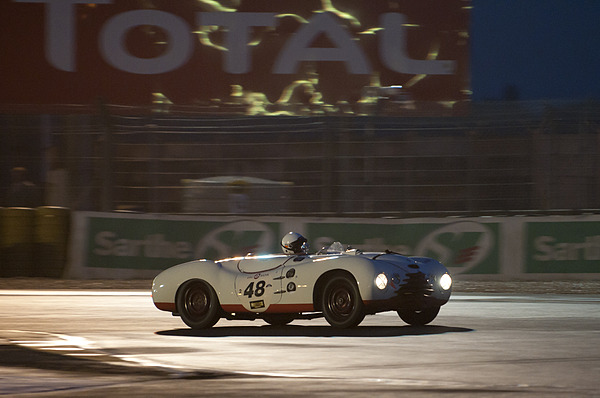
Even though it never came to a Le Mans revenge, the Škoda Sport experienced an exceptionally long and fulfilling life as a racing car. In the following twelve years after its debut, it completed over 80 further, mostly very successful races, albeit only in the Czech Republic or in friendly foreign countries. The motorsport department continued the development of the sports car unimpressed. First, another body was built, and then the two Škoda 1100 Sport cars were fitted with ever more powerful engines. The crowning glory of the search for performance was a carburetor version with 120 hp and an astonishingly powerful twin-compressor engine with 190 hp. After some aerodynamic modifications, the Le Mans car set a Czech speed record of 160.1 km/h in 1953 in the class up to 1,100 cubic centimeters.
Returning to the creator's grandson
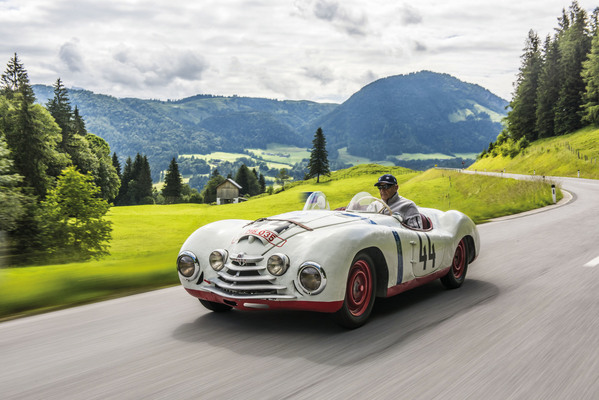
Today, this historic vehicle is privately owned by a very special family and is in the best possible hands: The grandfather of the current owner Michal Velebný was none other than Josef Velebný, one of the fathers of the Škoda Sport. Several generations of the family have worked at Škoda in development and body construction, and Michal Velebný now coordinates the restoration and maintenance of the vehicles in the ŠKODA Museum. For him, the Škoda Sport represents nothing less than the fulfillment of a long-cherished childhood dream, as his grandfather was responsible for the body shape and left Michal Velebný hand-signed design plans. "The car was considered lost for a long time," he reports. "I only found it after a lot of detective work by talking to old drivers, mechanics and organizers. It then took several years before the vehicle was fully operational again."
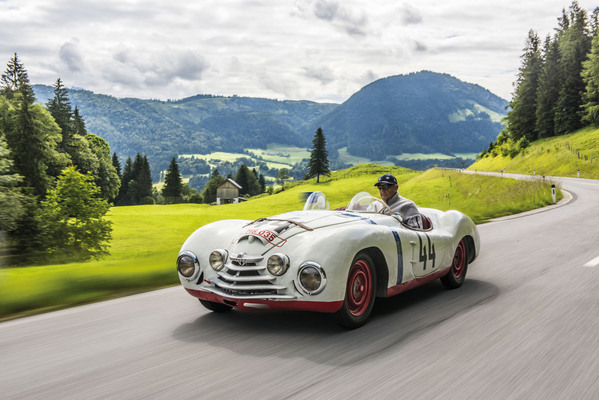
What is particularly astonishing about today's condition is the high degree of fidelity to the original. The drivers were obviously always careful with the Škoda Sport, as the bodywork remained largely intact despite the extremely long racing career. This is evidenced, for example, by the holes drilled in the bodywork for the start number lighting required at Le Mans at the time.
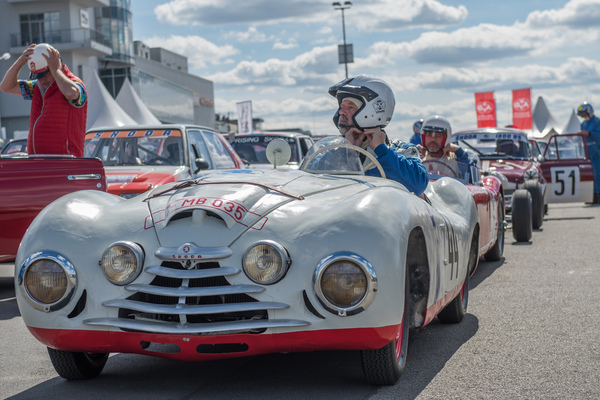
Speaking of Le Mans: the Škoda Sport will make its well-deserved comeback at the famous 24-hour race after all. The racing rarity from Mladá Boleslav is already considered one of the stars of the 2021 Le Mans Classic, when the most legendary historic vehicles of this incomparable race will take to the track again.