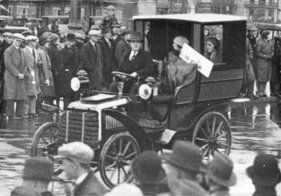
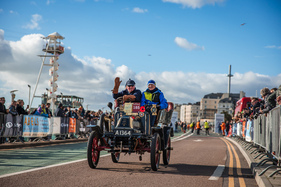
The oldest classic car event, which still takes place regularly today, has a tradition of 129 years.
First held in 1896 and repeated until 1901, the London to Brighton Veteran Car Run has been held regularly since 1927. In keeping with tradition, participants set off early in the morning after sunrise on the first Sunday in November from a corner of Hyde Park in London to the seaside and leisure resort of Brighton on the Channel coast. Only cars built before 1905 are permitted.

The first run was a rather spontaneous action to celebrate new speed regulations at the end of the 19th century in the United Kingdom. The Red Flag Act, which had been established in various stages between 1856 and 1878, was laid ad acta, or at least the absurd speed limits were repealed and the requirement that a motorized road vehicle must be preceded by a man with a red flag.
As early as 1878, the man was allowed to ride instead of having to walk, but the speed limit was 4 miles per hour out of town and 2 miles per hour in town, which was tantamount to speeding and "dawdling on foot". In the fall of 1896, however, the limit was raised to 14 miles per hour out of town, a speed at which many a car of the pioneering era had already reached its limit. However, the red flag, which is said to have been torn up at the start of the "Emancipation Run" - as the first event was called - would no longer have been necessary from 1878 onwards. Presumably, however, the object of hatred provided so much necessary symbolism for the historic event that it was brought out again.
The start of automobilism
And the first run is historically significant not only because it is an annual event and a fixture in the calendars of many enthusiasts, but also because the 32 motorists taking part at the time and the first British female motorist made their first public appearance in the UK. In doing so, they gave the British vehicle industry, which was the leader in bicycles, the opportunity to make up for the legal backlog in automobile development within a very short space of time.
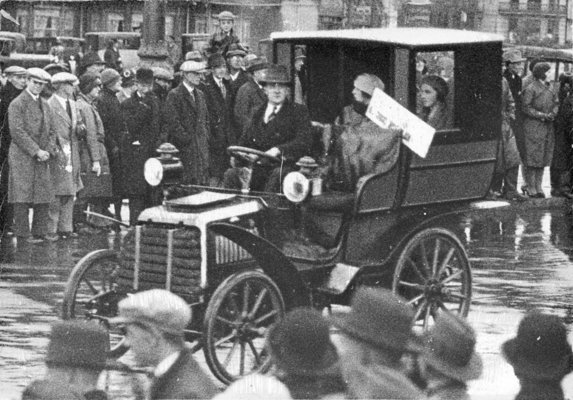
With the purchase of the first royal motor car, a British Daimler, by King Edward VII at the suggestion of the first "gentleman driver" in automotive history, Lord Montagu of Beaulieu, in 1900, the automobile had also become socially acceptable on the island. Perhaps this was one of the reasons why no London-Brighton Run was held for almost 30 years. In addition, the maximum speed was increased to 20 miles per hour in 1901, no longer a reason to celebrate the introduction of the 14-mile mark.
It was not until 1927 that the events from the early days were remembered again - on the initiative of two newspapers! - from the early days. This was sensibly just at the time when the British and international car industry was boasting a wealth of brands that had never been equaled.
Subsequently, the run was held annually until the outbreak of the Second World War. After that, events and fuel rationing forced a break until 1947.

Since then, the London-to-Brighton Run has been the largest and most important event for pioneering vehicles worldwide. The 400 or so cars and just as many two-wheelers with and without engines on the start list travel from all over the world to cover the 80-kilometer route to Brighton. It goes without saying that the route follows exclusively overland roads, mainly the old A23. At the steepest inclines, Red Hill, Hammer Hill and Clayton Hill, volunteers are on hand to help push the weak-chested bikes over the steep sections.
The original finish of the run was Preston Park in Brighton, but today's finish is of course at Madeira Drive, the seafront promenade in front of the famous Victorian cast iron balustrade right next to Brighton's famous amusement pier.
More information about this year's run on November 2 can be found here