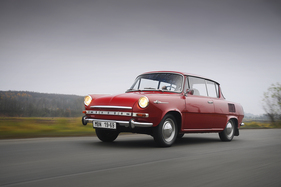
The Škoda 1000 MBX De Luxe turned 50 years old. In March 1966, the elegant two-door car celebrated its debut at the International Motor Show in Geneva.
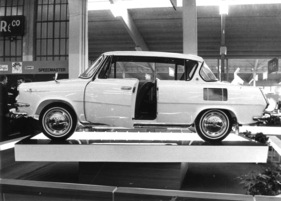
The spacious five-seater with rear engine and rear-wheel drive went into series production in October of the same year and represented the pinnacle of the 1.0-liter class at the time.
Important milestone in history
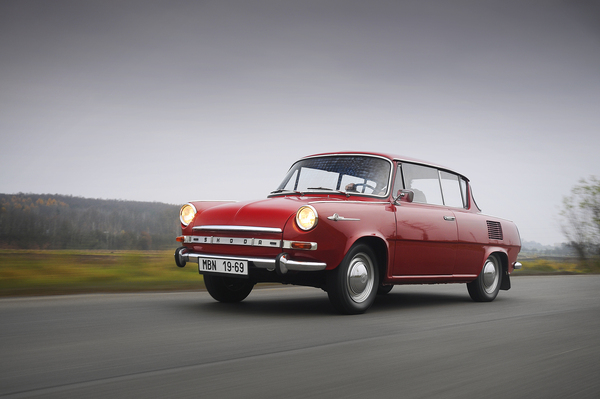
"The legendary two-door Škoda 1000 MBX with its generously glazed body crowned the success of the first Czech mass-produced car, the four-door Škoda 1000 MB," says Andrea Frydlová, Director of the Škoda Museum. "The vehicle is therefore an important milestone in ŠKODA's history. In the mid-1960s in particular, production volumes in Mladá Boleslav increased significantly. Many progressive technologies became established in modern mass production, including die-casting for cylinder and crankcases and the gearbox housing."
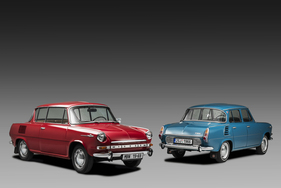
The MBX was based on the mass-produced four-door Škoda 1000 MB, which was characterized by a modern self-supporting body, rear-wheel drive and rear engine. For the construction of the Škoda 1000 MB, Škoda built a completely new plant in Mladá Boleslav in the early 1960s in the immediate vicinity of the existing factory buildings. The production facility on the 80-hectare site comprised state-of-the-art equipment in a total of more than 40 factory halls and other buildings.
Prototype ŠKODA 990 Tudor
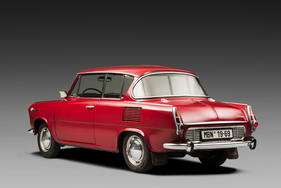
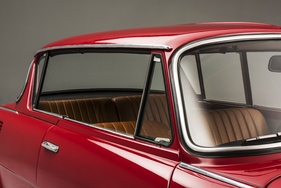
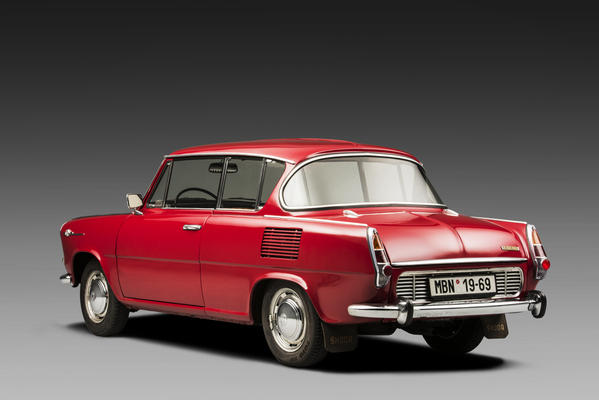
The history of the two-door MBX dates back to 1960, when two prototypes called the Škoda 990 Tudor were built. The special body with rear-facing C-pillars that merged into the panoramic rear window and two doors with frameless windows was created at the Kvasiny plant. The MBX retained the generous spaciousness of the basic stepped rear end, but as a bonus it offered a better side view. The side windows could be rolled down at the front and rear. In addition, the folding triangular windows in the doors improved the interior ventilation.
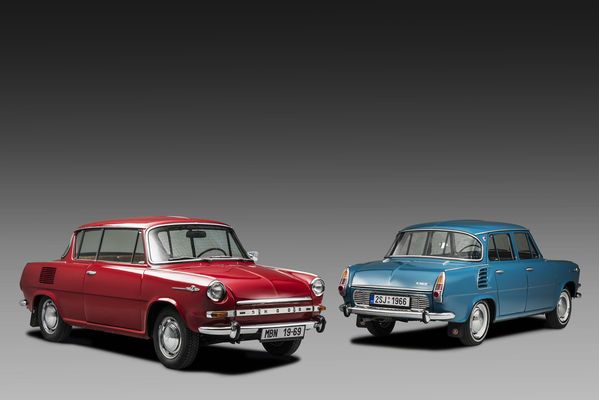
The Škoda 1000 MBX De Luxe was presented to the public for the first time at the opening of the Geneva Motor Show on March 10, 1966. It wowed visitors with its original details. With its wide side windows, the two-door car gave the impression that it had no center pillars. In fact, they ended in the middle of the body below the window line, and their narrow upper section was rolled down together with the rear side window. This allowed the occupants to enjoy an excellent view and the exceptionally airy and spacious interior.
Innovative drive technology
The Škoda 1000 MB and the two-door MBX set standards in terms of innovative drive technology. ŠKODA was the very first European car manufacturer to use the aluminum die-cast cylinder block production process for engine production. The four-speed gearbox housing was also produced using this method. Škoda thus used a process originally developed in 1922 by the Czech engineer Josef Polák. The main advantage was the significantly shorter production times.
The Škoda 1000 MBX was powered by a petrol four-cylinder engine with a displacement of 988 cm3 and an output of 38 kW (52 hp) at 5000 rpm. The car with an unladen weight of 815 kilograms and a payload of 375 kilograms reached a top speed of 127 km/h. Fuel consumption was between 7.8 and 8.0 liters of petrol per 100 kilometers. The car was equipped with two Jikov carburetors as standard, but only a few dozen units were fitted with an engine with just one carburetor. The time-consuming assembly of the Škoda 1000 MBX with a high proportion of manual labor started in October 1966 in a separate part of the Mladá Boleslav plant so as not to slow down the main production line. The last twelve MBX models of the total of 1,403 units with a 1.0-liter engine rolled off the production line at the beginning of 1968.
More dynamic version follows in 1967
The more dynamic 1100 MBX De Luxe version was added to the brand's range in November 1967. The performance of the engine with a displacement of 1107 cm3 remained unchanged, the advantage being better pulling power due to the increase in maximum torque from 75.5 to 81.4 Nm. Further optimizations included a more powerful oil pump and more effective cooling. The more powerful version was built exactly 1,114 times up to 1969, making a total of 2,517 MBX two-door models.
Although it was a small number compared to the real mass production of the four-door 1000 MB (443,156 units), this version contributed significantly to increasing the popularity of the Škoda brand in many demanding foreign markets. Today, this model is one of the most sought-after and highly valued classic cars with a significant increase in value. The success of the attractive two-door MBX version was followed by the legendary Škoda 110 R coupé (1970-1980), followed by the Škoda Garde and Rapid models.