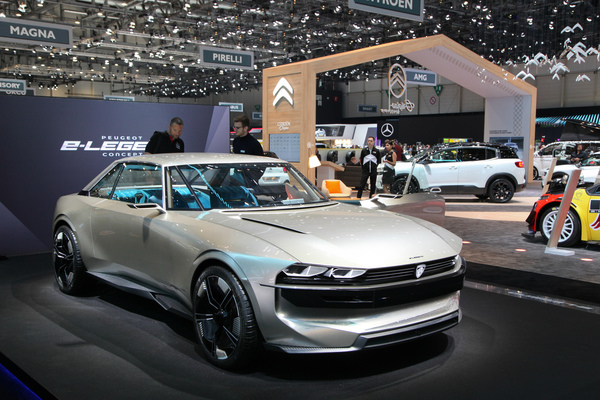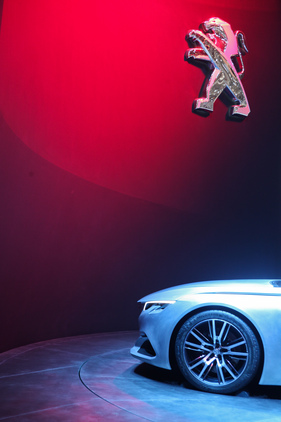

Concept vehicles play an important role at Peugeot. They are intended to do pioneering work for the series models, break new ground creatively and give a foretaste of the future of mobility.
The lion brand's first concept was presented in 1984
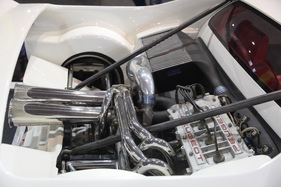
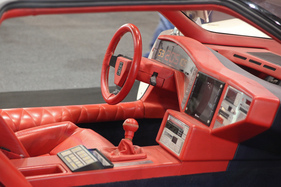
Peugeot's first study, the Peugeot Quasar, dates back to 1984, when engineers and designers were given the opportunity to create a completely new vehicle outside of industrial constraints for the first time. Gérard Welter, who was the brand's chief designer from 1998 to 2007, designed the body based on a sketch by Eric Berthet. The interior, futuristic for the time, was designed by Paul Bracq. The chassis and engine were based on the legendary Peugeot 205 Turbo 16, but the power output was increased to 600 hp.
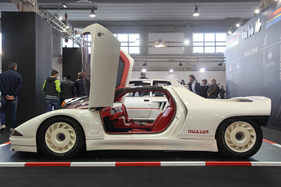
The subsequent studies were closely linked to the world of motorsport. At the "Festival of Speed" in Goodwood, England, the lion brand presented the Peugeot Proxima, which was powered by a 680 hp bi-turbo V6 engine. With a similar engine, the Peugeot Oxya reached 350 km/h on the Italian test track Pista di Nardò in 1988.
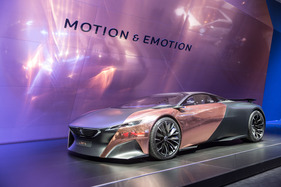
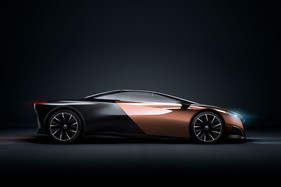
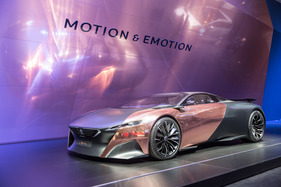
In 2010, the new chief designer Gilles Vidal ushered in a new era of design language at Peugeot with the Peugeot SR1 concept. Two years later, the brand designed the Peugeot Onyx, the first concept car to use raw materials such as copper or the new position of the lion emblem in the center of the radiator grille.
Other studies included the Peugeot 308 R Hybrid and the 508 Peugeot Sport Engineered. The latter is the forerunner for an upcoming production model, as was already the case with the Peugeot RCZ Concept.
Creation of a concept car
Peugeot designers look to emerging trends in areas such as architecture, fashion, art and mobility for inspiration. In this way, new needs are anticipated directly in the vehicles. The result is reflected in both the exterior and interior design, as well as in the choice of colors, materials or graphics.
As soon as a basic idea has been established, the designers submit their proposals for the new concept car. After a long decision-making process, the winning concept is elaborately created on a 1:1 scale with all the details and the color for the study is defined. The individual parts are then produced by the modeling and production departments.
One of the biggest challenges when building a concept car is the time constraints. Very often, the study is a highlight at a trade fair and must therefore be completed on time. In less than a year, a finished, functioning vehicle is created from sketches. Even though virtual reality helmets or the C.A.V.E (Cave Automatic Virtual Environment) make the designers' work much easier today, the finishing touches are always applied to the physical object.
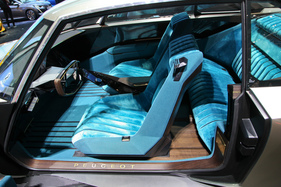
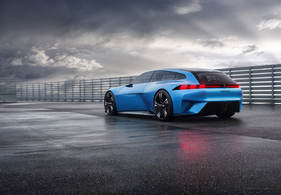
Concept cars also offer the opportunity to enter into partnerships with other companies or craftsmen who are leaders in their field. For example, a bespoke fragrance was created for the Peugeot Exalt. The Paldao wood interior of the Peugeot e-Legend was designed by the Hervet art workshop. Peugeot also cooperated with international industry leaders: the Peugeot Instinct was created with the help of Samsung, while Focal co-developed the sound system for the Le Bistrot du Lion and Peugeot Fractal concepts.
Think tank
Concept cars also played an important role in raising the profile of the Peugeot brand. They did and continue to do pioneering work in technology and design, which is followed in later series models. Below are a few examples that demonstrate this.
Peugeot Touareg: This small concept car with the appearance of a buggy was presented in 1996 and was powered by an electric motor with batteries. This gave it a running time of four hours. A small combustion engine also acted as a generator, increasing the range: the "range extender" was born.
Peugeot Moonster & Peugeot 4002: The ideas for these two studies came from two international design competitions, which Peugeot was the first car manufacturer to hold in 2000 and 2002. Peugeot built real vehicles from the winning designs.
Peugeot Sesame: This concept car was characterized by high ground clearance and electric sliding doors for a very comfortable entry - thus laying the foundation for the development of the PEUGEOT 1007
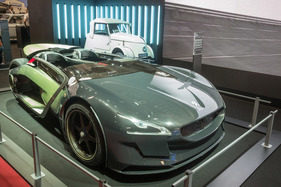
Peugeot EX1: In the brand's 200th anniversary year, the 100 percent electric Peugeot EX1 broke three acceleration world records. Including on the legendary Montlhery race track in France, where the Peugeot 404 Diesel had already broken several endurance records in 1965.
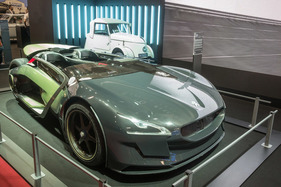
Peugeot SR1: The Peugeot SR1 introduced the lion brand's new design DNA in 2010. The flanks of the first-generation Peugeot 208 production model were inspired by the study. The Peugeot SR1 was also the first model to introduce the Peugeot i-Cockpit®.
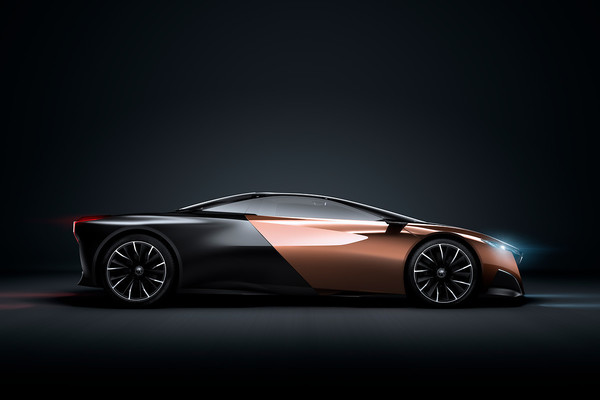
Peugeot Onyx: The body of the concept car is made of carbon fiber and pure copper and is deliberately kept raw. The interior is made of an innovative and ecological material called "Newspaper Wood", which is made from newspapers. The Peugeot Onyx has a V8 HDi Hybrid4 engine with 600 hp (+ 80 hp electric boost), manufactured by Peugeot Sport and developed for the Peugeot 908.
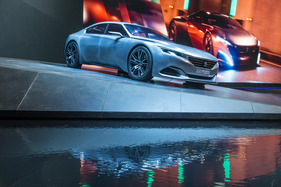
Peugeot Exalt: The silhouette and dashboard of the study can be found in the new Peugeot 508 coupé saloon. In the Peugeot 508 SW estate variant, the lion brand used the wooden trunk lining of the Peugeot Exalt for the limited First Edition version. The study's speckled seat cover with "tennis stripes" inspired the upholstery of the latest Peugeot 3008.
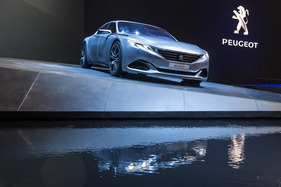
Peugeot Quartz: The dashboard of this concept car was used in the new Peugeot 3008. The 3D instrument cluster developed in the Peugeot Quartz is now available in the new Peugeot 208, as is its striking radiator grille.
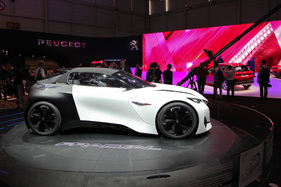
Peugeot Fractal: 80 percent of this study comes from the 3D printer. Peugeot has also developed a 9.1.2 sound system with Focal for an exceptional sound experience.
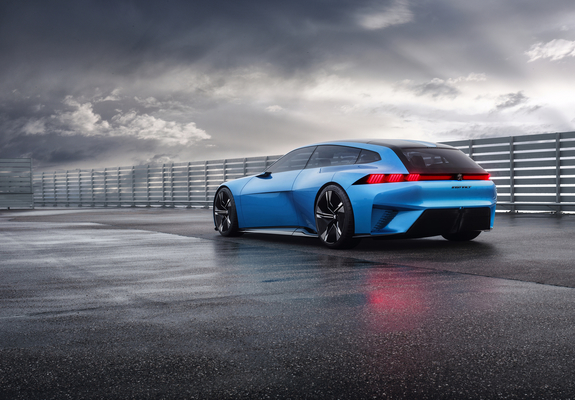
Peugeot Instinct: The "Shooting Brake" silhouette of the study influenced the new Peugeot 508 SW. For the first time in Peugeot's history, a study was not presented at an international motor show, but at the Mobile World Congress in Barcelona.
Peugeot e-Legend: The Peugeot e-Legend is the future version of the lion brand, combining driving pleasure, striking design and autonomous driving. It is radically modern and at the same time absolutely realistic.