


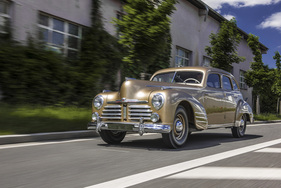


The tradition of industrial production in Vrchlabí dates back to 1864, when a local entrepreneur founded the company Ig. Th. Petera & Sons, which specialized in the production of carriages and English saddlery. The workshop evolved into a factory, which produced an automobile for the first time in 1908 and from then on manufactured tailor-made car bodies as a privately run company. In 1946, Vrchlabí became part of the then state-owned company AZNP (Automobilové závody, národní podnik), which heralded the beginning of Škoda vehicle production. The most iconic model from Vrchlabí is the Škoda 1203, the first examples of which rolled off the production line in 1968.

Vrchlabí today: CO2-neutral production
In 2012, Škoda Auto transformed the Vrchlabí plant into a state-of-the-art component production facility and built a new production hall where the production of DQ200 automatic direct-shift gearboxes was launched.

Around half of the 690,000 gearboxes produced annually in Vrchlabí are used in Škoda vehicles, the rest in other Volkswagen Group models. In October 2023, the site, which has been CO2-neutral since 2020, celebrated its five millionth gearbox. Vrchlabí achieved CO2-neutral production by switching to renewable energy and offsetting the remaining emissions through compensation measures and CO2 certificates.
Many years of inventiveness
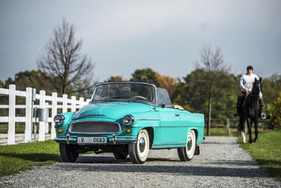
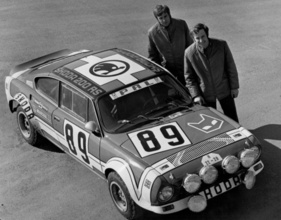
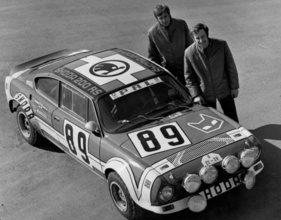
František Karel Janeček built a factory on the site of today's Kvasiny plant, where the bodies of the Java 700 were manufactured from 1934. The site was taken over by Škoda Auto in 1945, and the production lines produced models such as the 1101 "Tudor", the Felicia roadster and the 110 R Coupé. Both the Superb OHV and the Octavia Combi, as well as racing cars such as the 200 RS, were built in Kvasiny.
Production of the first modern Superb generation began in 2002 and the first plug-in hybrid model was launched in 2019. Since joining the Volkswagen Group in 1991, more than four million Škoda vehicles from a wide range of model series had rolled off the production line in Kvasiny by June 2024, currently the Karoq and Kodiaq SUV models and the revised Octavia. Kvasiny also plays an important role in Škoda Auto's sustainability initiatives, as up to 90 percent of the electricity used at the plant currently comes from renewable sources.


